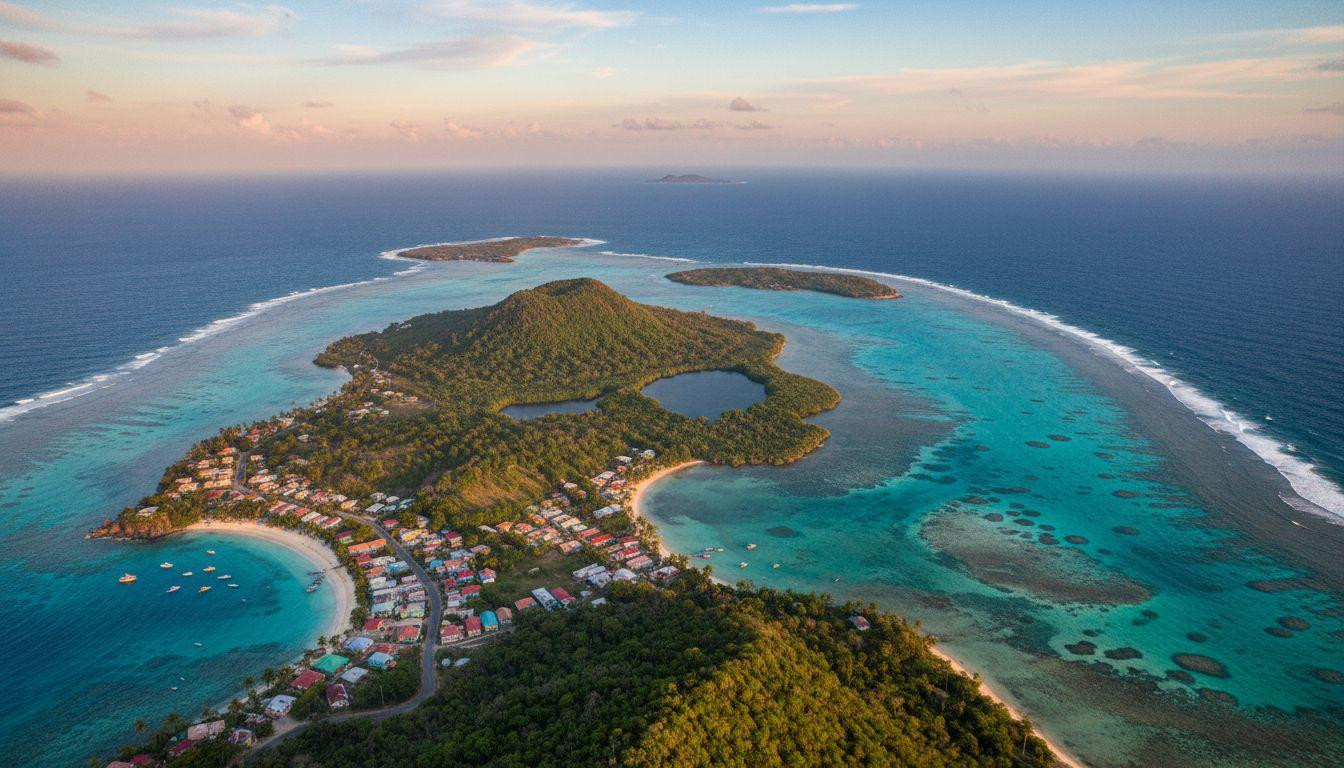
San Andrés gets a million visitors a year. Twenty minutes away by plane, Providencia sees maybe 50,000. Same archipelago, same turquoise water, completely different world. The difference shows at dawn when you climb El Pico and watch seven distinct shades of blue appear as the sun hits the reef.
The island measures 17 square kilometers. Population 6,000, mostly Raizal people speaking English Creole. You reach it via San Andrés on a 20-minute Satena flight ($50-100) or a three-hour catamaran ($40-60). The mandatory Tourist Card costs $38 at the airport. Fixed prices, no haggling, predictable costs throughout your stay.
The peak that reveals the colors
El Pico rises 360 meters above sea level. The trail covers 6-7 kilometers round trip, takes three to four hours total. Steep sections cut through tropical dry forest, cross wooden bridges, ford small streams. A certified guide costs $18 and registers your passport at Bottom House booth before you start.
Leave before 7am. The Seven Colors Sea shows clearest in early light before clouds and heat haze blur the view. Dawn temperature at the summit hovers around 68°F, cooler than the 75-80°F you left at sea level. Bring two liters of water. The climb rates moderately difficult but the trail stays well-marked with shelters at intervals.
From the top, the gradient appears as distinct bands. Shallow reef zones glow turquoise where white volcanic sand scatters light. Mid-depth sections turn azure as coral density increases. Deep water offshore fades to navy. The phenomenon results from depth variations between 15 and 130 feet, combined with the world’s third-largest barrier reef filtering wavelengths. Visibility reaches 65-130 feet in calm conditions. February sits in the dry season when water clarity peaks.
What the elevation shows you
Coral patterns invisible from shore
The reef’s spur-and-groove formations radiate from the island like spokes. You cannot see this structure from beach level where waves fragment the view. At 360 meters, bathymetric contours emerge clearly. Crab Cay sits three miles northeast with its visitor center and barrier reef backdrop. Manzanillo Beach curves southwest as a half-mile strip of white sand maybe 150 feet wide.
Mangrove channels thread the northeast coast in McBean Lagoon National Park. The green veins stand out against blue water. Depth contours extend 12 miles offshore, visible as color shifts. Similar reef protection patterns appear throughout the Caribbean, but few offer this aerial perspective without a helicopter.
Villages below in morning light
Santa Isabel and Freshwater Bay show as clusters of colorful wooden Creole houses with verandas. Fishing boats leave Rocky Point and Aguadulce around 5am, return by mid-afternoon. Roosters start calling at dawn. The fish market opens 6-8am for fresh catch. By the time you descend from El Pico around 10am, village routines have settled into their rhythm.
Ground level after the climb
Beach and water access
Manzanillo Beach stretches along the southwest coast. White coral sand, calm water, minimal crowds even in February. Rent snorkel gear ($10-15) and swim out 50 feet to see parrotfish and angelfish over brain coral formations. Almond Bay on the north side stays protected from swells. Morgan’s Head rock formation juts from the water, named for the 17th-century pirate. Locals say caves below hide treasure. You can kayak there through mangrove channels.
McBean Lagoon National Park protects the reef system. Entry fee runs $5-10 at Crab Cay. Fort Bay offers an underwater cave popular with divers. Visibility averages 65-130 feet at prime sites. Hurricane Iota hit in 2020 and damaged 98% of infrastructure, but reefs show recovery. Some bleaching remains but coral health supports snorkeling and diving. Smaller Caribbean islands offer similar reef access without the elevation views.
Island rhythm and food
Rent a scooter for $25 per day. International driver’s license recommended but basic license works. The 17-kilometer circumference takes 30-45 minutes to circle. Stop wherever looks good. Southwest Bay, Bottom House, Old Town. No schedule, no crowds pushing you along.
Rondón stew appears on every menu. Fish, crab, or conch simmered in coconut milk with yam, dasheen, dumplings. $10-20 at Miss Trinette in Bottom House or El Dorado on Santa Catalina. Coco loco cocktails (rum and coconut water) cost $5. Breakfast means fish fritters or johnnycakes for $4 at local comedores. Lobster stays in season August through March. Most places take cash only, Colombian pesos or US dollars.
The quiet that persists
San Andrés absorbs thousands of visitors daily during peak season. Providencia sees dozens, maybe hundreds. The island’s small size limits hotel capacity to a few hundred rooms total. Most accommodations are guesthouses ($40-70 per night) rather than resorts. February brings dry weather and lower crowds than December or January.
Raizal culture dominates. People greet you with “Wah gwaan” (what’s going on) or “Irie” in passing. Reggae plays from beach bars Friday and Saturday nights at Southwest Bay. Spontaneous bonfires, no cover charge, locals and visitors mixing. The pace stays unhurried. Island time means things happen when they happen. Other affordable turquoise-water destinations exist, but few combine reef quality with this level of cultural authenticity.
Your questions about Providencia answered
How do I actually get there?
Fly to Bogotá, then to San Andrés (Gustavo Rojas Pinilla Airport). Round-trip Bogotá-San Andrés runs $100-200. From San Andrés, take a 20-minute Satena flight ($50-100) or three-hour catamaran ($40-60). One to two ferries run daily. Several flights operate throughout the day. Buy the Tourist Card ($38) at your departure airport before boarding for San Andrés. You need it for Providencia entry. Total travel cost from US: $400-600 including flights and card.
What should I budget per day?
Guesthouse: $40-70. Eco-lodge: $80-120. Scooter rental: $25. Snorkel tour: $30-50. Three meals: $25-40. Daily total: $100-150 for budget travel, $150-250 for comfort. Credit cards work at maybe 30-50% of businesses. Bring cash. ATMs exist in Santa Isabel, Bottom House, and the airport but many places prefer cash transactions.
Why not just stay in San Andrés?
San Andrés has high-rise hotels, cruise ship crowds, beach vendors every 20 feet. Providencia has one-twentieth the visitors, authentic Raizal villages, no resort development, clearer reef visibility due to less boat traffic and pollution. Similar volcanic island experiences exist in Hawaii, but Providencia costs half as much and sees far fewer tourists. The cultural difference matters. San Andrés caters to tourism. Providencia tolerates it while maintaining local life.
Sunrise from Manzanillo Beach happens around 6:15am in early February. The water glows gold for maybe ten minutes before turning back to turquoise. Fishing boats motor past. A few locals walk the sand. No music yet, no vendors. Just the sound of small waves on coral sand and the day starting quiet.