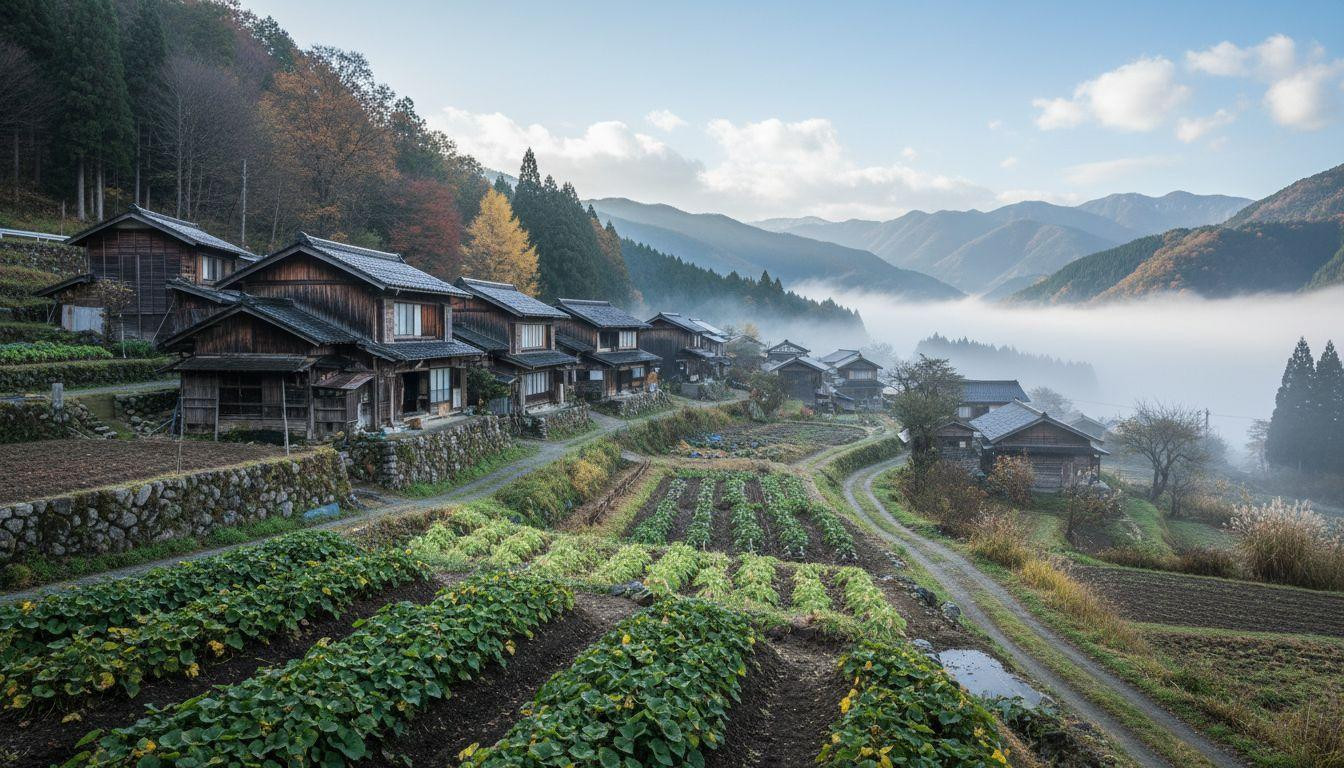
The morning mist lifts around 7am in Yuzurihara, revealing terraced fields where purple sweet potatoes grow in neat rows. An 83-year-old farmer loads his scooter with freshly harvested vegetables, engine puttering as he heads to the village center. This isn’t a heritage performance. It’s Tuesday.
Yuzurihara sits in the hills of Yamanashi Prefecture, two hours from Tokyo by train. Population hovers around 500 to 1,000, integrated into Uenohara City since 1955. The World Health Organization surveyed 990 villages in 2000 and found something unusual here. Over 10% of residents were 85 or older, ten times Japan’s national average at the time.
No UNESCO designation marks the entrance. Just a stone tablet reading “Cho-ju no Sato” (Village of Long Life). Fewer than 10,000 visitors come annually. Most miss it entirely on their way to Mount Fuji, 30 miles west.
The village where time moves differently
Wooden farmhouses with tiled roofs step down steep slopes, adapted to terrain unsuitable for rice paddies. Fog settles in the valleys most mornings, burning off by mid-morning to reveal green terraces that climb to 2,600 feet. The JR Chuo Line from Shinjuku reaches Uenohara Station in 90 minutes for $13 to $16. A local bus or taxi covers the final 6 miles.
Compare this to Okinawa’s Blue Zones, which require flights from Tokyo starting at $110 and attract millions of beach tourists annually. Yuzurihara offers mountain quiet instead of coastline, farming culture instead of resort infrastructure. Winter access stays reliable when rural roads might challenge rental cars.
ABC News visited in 2000 and found residents with smooth skin at 90, working fields four to five hours daily. The village doctor at the time had studied locals for 60 years, linking their health to what they ate. No cancer clusters. Virtually no diabetes or Alzheimer’s. Just people who kept moving through their ninth decade.
What dawn looks like here
Farmers arrive in fields by 6am, even in February when frost coats the ground. Scooters hum along narrow paths between plots. The sounds stay quiet: distant roosters, the scrape of tools against earth, occasional laughter from a community center preparing for evening karaoke. Fog diffuses the light into soft grays and greens.
Why this stayed under the radar
No formal tourism board promotes Yuzurihara. No guided longevity tours operate here. The 2000 media attention brought some hyaluronic acid enthusiasts, but development never followed. The village merged into Uenohara decades ago, erasing its administrative identity. What remains is agricultural routine, not heritage performance.
The root vegetable diet locals still follow
Purple sweet potatoes (satsumaimo), sticky potatoes (satoimo), gelatinous konyaku root, and white imoji potatoes form the core of meals here. Boiled or steamed, low in meat, minimal iron. Research tied these roots to high hyaluronic acid content, though exact measurements per serving remain unverified in recent studies. The village doctor who adopted this diet mid-20th century reported feeling healthier than his urban peers.
One 91-year-old resident observed her children’s health decline after they left the village and changed their eating habits. The pattern repeated across families. Urban descendants introduced processed foods, and heart disease rates doubled in younger generations while their elderly parents kept farming and eating roots.
Meals cost $9 to $18 at local spots, 20% to 40% below Japan’s rural average. The texture of these vegetables matters as much as nutrition. Satsumaimo brings mild sweetness. Konyaku offers a slippery, gelatinous bite. Satoimo turns sticky when boiled. These aren’t exotic superfoods. Just consistent, simple eating.
How a typical day unfolds
Four to five hours of morning farm work. Vegetable-heavy lunch around noon. Afternoon rest. Evening gatherings at community centers where 93-year-olds attend karaoke parties. The rhythm doesn’t pause for age. A resident named in the 2000 report was still delivering vegetables by scooter at 83, covering several miles daily.
The fields you’ll walk through
Purple sweet potato patches dominate the lower terraces. White sticky potatoes dry on wooden racks near farmhouses. Konyaku plants grow in shadier plots. Handmade vegetable combs, purified for hygiene, sit in workshops as a quirky local craft. The landscape stays green even in winter, though snow dusts the higher elevations from December through February.
What spending February here reveals
Arrive in low season and you’ll see fewer than 50 daily visitors. Snow touches the upper fields but rarely blocks trails. Indoor experiences suit the cold: tastings at guesthouses ($55 to $88 per night), cooking classes ($27 to $55), conversations with farmers who don’t pause work to acknowledge tourists. They’re too busy.
The feeling isn’t exotic. It’s unhurried. Time moves at agricultural pace. No timed entries. No seasonal closures. No crowds. Just fog lifting, scooters humming, and the quiet certainty that 86-year-olds will be in those fields tomorrow morning too.
Nearby onsen charge $5 to $11 for entry. Village walks pass the stone longevity tablet and traditional farmhouses. Total daily budget runs $110 to $220 per person, including meals and lodging. For context, accessible Asian alternatives offer similar value in different landscapes.
Activities beyond observation
Longevity diet tours operate informally through guesthouses, costing $22 to $55 per day. Harvest participation happens seasonally, mostly in fall. Winter suits indoor cultural exchanges: learning to prepare sticky potatoes, hearing stories from elders who’ve farmed these slopes for 70 years. Photography requires permission. Ask first.
The textures and sounds
Earthy root scents mix with wood smoke from farmhouse stoves. Soft breezes carry moisture from the valleys. Diffused mountain light filters through mist. Scooter engines putter. Karaoke reverberates from wooden community halls at dusk. The air feels thicker here, slower, like time itself has a different density.
Why winter works better than summer
February 2026 brings snow-dusted terraces and serene photo opportunities. Indoor cultural experiences suit the cold. Costs drop 20% to 40% below summer rates. Fewer than 50 visitors daily means unhurried access to everything. No reservations required. No lines. Compare this to Okinawa’s beach-dependent tourism, where weather dictates the experience. Yuzurihara works in any season because culture matters more than scenery.
The village sits at the intersection of accessibility and authenticity. Close enough to Tokyo for a weekend trip. Remote enough that mass tourism never arrived. Similar to small mountain towns where old ways persist, Yuzurihara offers immersion without performance.
Your questions about Yuzurihara answered
How do I actually get there from Tokyo?
Take the JR Chuo Line from Shinjuku or Shibuya to Uenohara Station. Trains run every 15 to 30 minutes, taking 90 minutes and costing $13 to $16 one-way. From Uenohara, local buses or taxis cover the final 6 miles ($22 to $44 for taxi, $5 to $11 for bus). Total door-to-door time: two to three hours. Winter trains prove more reliable than driving on icy mountain roads. GPS coordinates: 35.674°N, 139.088°E. Nearest lodging: Uenohara City guesthouses or Yuzurihara farm stays.
Can I meet the elderly farmers?
Village culture stays communal but not tourist-focused. Farmers work fields, not guided tours. Arrive respectfully. Join harvest festivals in fall if available. Attend karaoke nights by inquiring at guesthouses. Don’t expect English. Bring a translation app. Elders allow observation but prioritize their work. Gift-giving etiquette suggests small snacks ($5 to $11) when visiting farms. Photography requires permission.
How does this compare to Okinawa’s Blue Zones?
Yuzurihara costs 30% to 50% less than Okinawa. Access from Tokyo takes two hours by train versus flights starting at $110. Fewer than 10,000 annual visitors here versus Okinawa’s 10 million. Farming culture replaces beach resorts. Okinawa offers coastline and diving. Yuzurihara offers agricultural immersion and mountain quiet. Choose based on desired experience: active beach tourism or contemplative rural life. Both regions share longevity research, but Yuzurihara stayed quieter.
The fog settles back in by 4pm most days. Farmers finish their work and head home. Scooters line up outside the community center. Karaoke starts around 6pm. The same 93-year-olds who harvested at dawn will sing until 9pm. Tomorrow they’ll be back in the fields.