“`html
Bar Harbor closes its restaurants in January. Hotel lobbies sit empty. The famous waterfront that draws 3.5 million summer visitors to Acadia National Park turns into a ghost town when snow falls. Seventy percent of businesses lock their doors until May.
Fifteen miles south, Camden keeps its harbor working. Fishing boats leave at dawn. The bakery that opened in 1953 serves chowder to locals at noon. Four thousand nine hundred year-round residents prove Maine doesn’t hibernate.
Why Bar Harbor empties when Camden fills
Bar Harbor built itself for summer crowds. Acadia’s peak season brings 10,000 daily visitors between July and September. Hotels charge $350 per night minimum. Restaurants require reservations three days ahead.
Winter exposes the business model. When tourists leave, services vanish. The waterfront that bustled in August sits shuttered in January. Even gas stations reduce hours. The town designed for crowds can’t sustain itself without them.
Camden operates differently. The harbor never stops. Lobster boats work year-round. The general store sells bait and coffee from the same counter it has since 1947. Population stays stable at 4,900. Community events replace tourist seasons.
What winter reveals about working harbors
Schooners frozen beside fishing boats
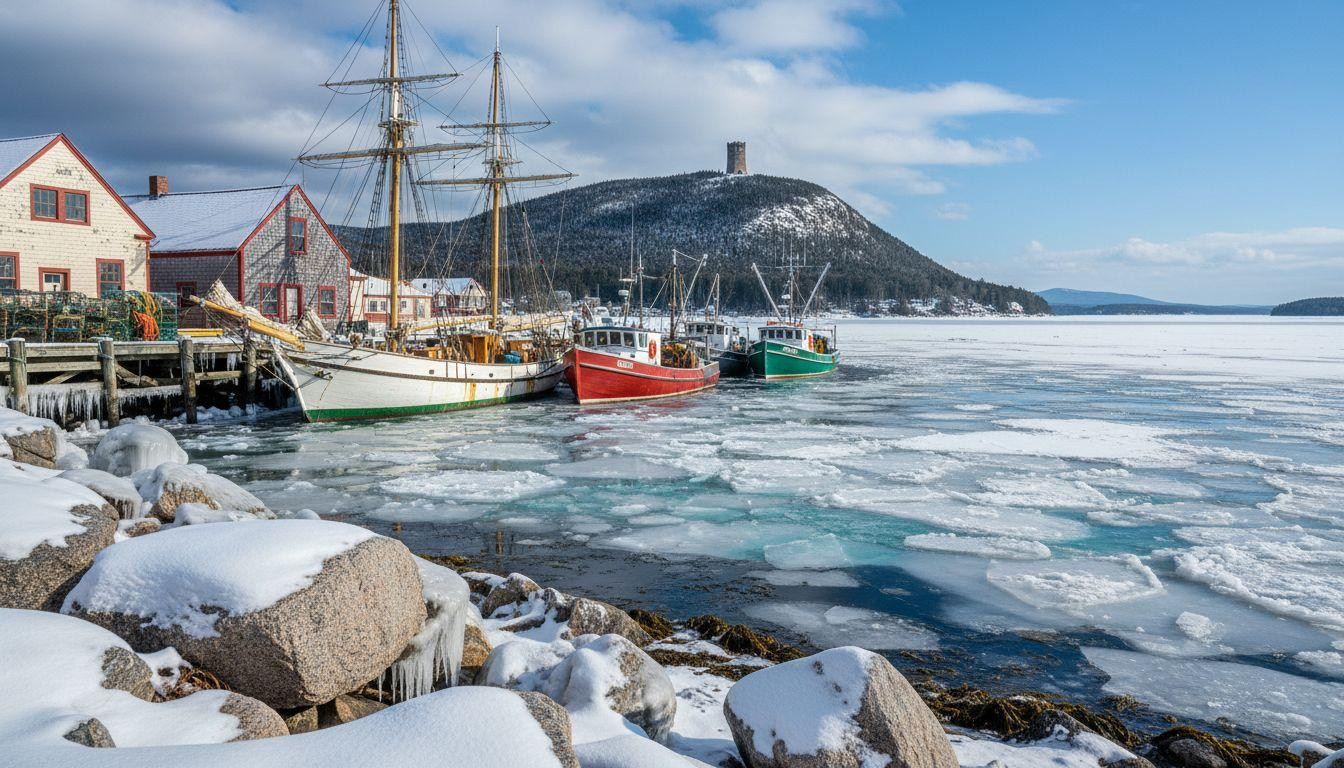
Camden Harbor holds both worlds. White wooden schooners sit preserved in winter ice while steel fishing vessels break through at 5am. The contrast tells the story. Tourism heritage meets working waterfront.
Mount Battie rises 800 feet above the harbor. The stone overlook tower built in 1921 stays accessible all winter. On clear mornings, frozen Penobscot Bay stretches 12 miles to islands. No crowds. No parking fees. Just wind and quiet.
Events that prove community exists
The U.S. National Toboggan Championships happen February 6-8, 2026. Five thousand people watch 425 teams slide down a 400-foot wooden chute built in 1936. Racers hit 40 mph on ice. The chute floods nightly to freeze smooth.
Camden Winterfest runs January 31, 2026. Ice sculptors work in Harbor Park. The polar plunge draws locals into 32-degree water. A dog fashion show follows. These aren’t tourist attractions. They’re what residents do when visitors stay home.
Compare that to Bar Harbor’s winter calendar. Whale watching boats dock until April. The Shore Path closes sections for ice. Island communities with working harbors understand this rhythm better than resort towns.
The Camden winter experience costs less
Where winter feels alive instead of closed
Morning walks along the harbor pass operational cafes. Three breweries stay open year-round. The bakery serves lobster rolls for $18 while Bar Harbor’s summer price hits $28. Local restaurants don’t close. They just get quieter.
Camden Snow Bowl sits 2 miles from downtown. Lift tickets cost $10 to $50 depending on age. The slopes overlook Penobscot Bay. It’s the only ski area in America where you see ocean while skiing. Budget winter sports exist outside major resorts.
Cross-country skiing happens on Camden Hills trails. No grooming fees. No reservations. The same paths hikers use in summer work for skis in winter. Equipment rentals run $20 per day at the Snow Bowl.
Real costs compared
Camden lodging in January averages $150-250 per night at places like Berry Manor Inn. Bar Harbor’s winter rates still hit $350 for comparable rooms. The price gap reflects operating philosophy. Camden expects winter guests. Bar Harbor tolerates them.
Dining costs follow the same pattern. A full dinner in Camden runs $25-45 per person. Bar Harbor charges $40-60 when restaurants actually open. The lobster shack behind Camden’s church operates Fridays all winter. Bar Harbor’s waterfront shacks stay shuttered until Memorial Day.
Activity costs prove the difference. Toboggan spectating costs nothing. Mount Battie access is free. The Snow Bowl’s $10 tickets beat any Vermont resort. Small town winter activities don’t require luxury pricing.
Access works the same, experience differs
Portland International Jetport sits 90 minutes from both towns. The drive follows the same coastal route. Winter road conditions affect both equally. But arrival reveals the difference.
Camden’s downtown stays walkable. Parking lots remain accessible. No timed entry systems. No advance permits. The infrastructure serves residents first, visitors second. That priority shows in January.
Bar Harbor’s summer systems don’t scale down well. Parking bans happen during storms. Many lots close entirely. The town built for 10,000 daily visitors struggles with 100. Camden built for 5,000 residents handles winter crowds easily.
Winter transforms landscapes into different destinations. Camden embraced that truth. Bar Harbor fights it.
Your questions about Camden in winter answered
When does Camden’s winter season actually work?
January through March offers the full experience. The Toboggan Championships anchor early February. Winterfest happens late January. Snow accumulation peaks in February with 18-inch averages. The Snow Bowl operates December through March depending on conditions. Harbor ice forms by mid-January most years.
Why do locals choose Camden over Bar Harbor?
Year-round employment matters. Camden’s fishing industry and shipbuilding heritage provide stable jobs. Bar Harbor’s seasonal economy forces winter unemployment. Housing costs reflect that stability. Camden’s median home price runs 30 percent below Bar Harbor. Community events happen weekly, not just during tourist season.
How does Camden compare to other Maine coastal towns in winter?
Rockland sits 8 miles south with similar working harbor culture but fewer winter events. Belfast offers 20 miles north with comparable costs but less infrastructure. Boothbay Harbor closes like Bar Harbor. Camden stands alone for combining authentic maritime work with organized winter recreation. The Snow Bowl’s ocean views make it unique among New England ski areas.
Dawn breaks over frozen schooners in Camden Harbor. Fishing boats motor past ice sculptures from yesterday’s Winterfest. The bakery’s lights come on at 5:30am. Another winter day begins while Bar Harbor sleeps through February.
“`