“`html
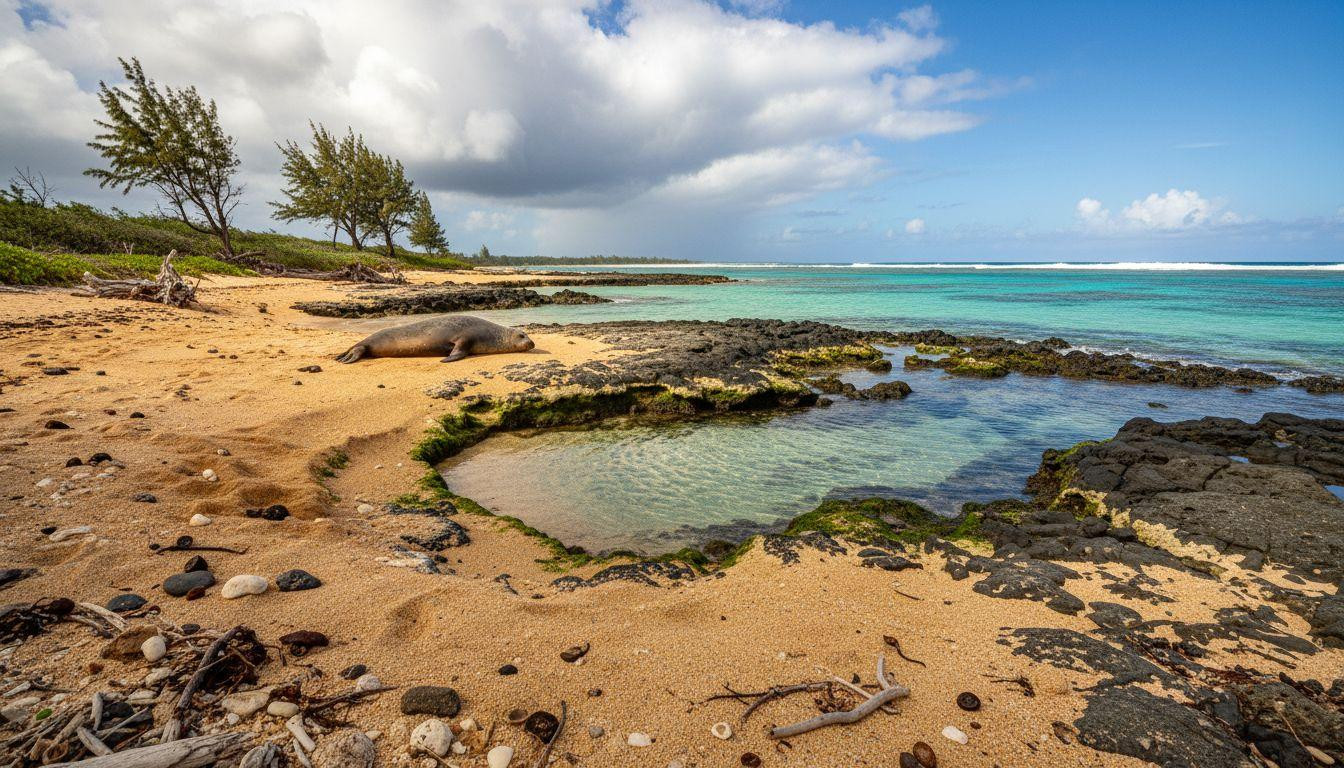
Dawn at Larsen’s Beach reveals what most Kauai visitors never see. A Hawaiian monk seal dozes 20 feet from aqua-clear tidepools where local elders flip volcanic rocks to harvest tako (octopus) using techniques unchanged for centuries. The water is so transparent you can watch octopus hiding under boulders 15 feet down. This remote north shore spot sits near Kilauea, accessible via dirt road and a 5-minute trail. Population 4,500 in the area. Fewer than 10,000 annual visitors compared to Kauai’s 500,000 north shore total.
Where north shore meets volcanic reef
Ko’olau Road turns to dirt about a mile past Kilauea town. The parking area sits at roughly 22.228°N, 159.407°W. A 4WD helps but sedans pass with caution. The short trail drops through scrubby green vegetation to golden-loamy sand. A rustic sign lists lives lost to rip currents. The offshore reef creates a protected channel where tidepools form at low tide.
The beach stretches narrow for half a mile. Ironwood trees provide afternoon shade. Winter swells (November through March) bring 3-foot waves and rough conditions. Summer (May through October) calms the water to glass. Water temperature holds steady at 77°F year-round. The reef protection makes this different from exposed beaches like nearby Anini’s calmer lagoons.
What low tide reveals
Aqua-clear pools teeming with life
The best viewing window opens 1 to 2 hours after low tide. Pools form in the volcanic rock benches at the northwest cove end. Visibility reaches 10 to 20 feet in calm conditions. Big blue octopus (Octopus cyanea) hide in crevices, arm spans stretching 1 to 3 feet. Reef fish jump between lava pools: convict tang, saddle wrasse, blueside damselfish, barred goatfish. Moray eels curl in darker pockets.
The rocks are slick and sharp. Prickly urchins cluster in shadows. Swimming is inadvisable due to severe rips and shallow coral. Morning light works best for photography before afternoon glare hits. The pools average inches to 2 feet deep. You can crouch at the edge and watch octopus shift color from rust to gray.
Monk seals haul out to rest
Hawaiian monk seals weigh 375 to 600 pounds as adults. They feed on octopus, squid, and reef fish in the channel. After hunting they haul onto the beach to rest for 6 to 8 hours. The main Hawaiian Islands support 300 to 400 seals total. Kauai’s north shore sees occasional sightings but no daily count exists. Pupping peaks in May with 35 pups recorded across all islands by late August 2025.
NOAA requires 50 meters (164 feet) minimum distance. Volunteers sometimes place yellow barrier tape around resting seals. If a seal approaches you, back away slowly. Never touch or feed them. These are critically endangered animals. Recent conservation efforts include debris removal and malnourished juvenile rehabilitation. The quiet here helps protect their recovery compared to crowded Poipu Beach where hundreds gather daily.
Traditional tako harvest continues
Local foraging practices
Elders from Kilauea still harvest octopus by hand at low tide. They flip volcanic boulders to expose hiding spots. This technique dates to pre-contact Hawaii when ocean stewardship (malama i ka aina) guided sustainable fishing. The practice ties to food security and cultural identity. Visitors cannot harvest under DLNR regulations. Only residents with proper permits may take marine life.
Watching the process teaches respect for the reef ecosystem. The elders take only what they need, replacing rocks carefully. Traditional limits embed pono (righteous) practices. No flash photography. Ask permission before observing closely. Leave no trace. The cultural protocol matters as much as the catch.
What visitors can observe
You see the patience required. An elder might spend 20 minutes at one pool. The octopus jets ink when startled. The water clouds briefly then clears. Fresh tako appears at Kilauea food trucks for around $25 per plate. Some prepare it raw in poke. Others grill it with Hawaiian salt. The taste connects directly to these tidepools.
Understanding this ecosystem changes how you see the reef. The octopus feeds the seals. The seals rest on the beach. The beach stays quiet because access requires effort. This cycle continues because fewer tourists discover it compared to boat-access snorkel sites.
Walking the tidepool trail
The drive from Lihue Airport takes 45 to 60 minutes via Kuhio Highway to Kilauea. Ko’olau Road adds another 10 minutes. Nearest gas and supplies sit 5 miles back in Kilauea at Sunshine Markets. Budget accommodations near Kilauea run $200 to $300 per night. Mid-range options cost $350 to $500. Upscale boutiques near Kilauea Lighthouse charge $600 and up.
Early morning (5:45 to 7:30am) brings empty sand. A few roosters wander. The quiet lets you hear wave murmurs over the reef. Seaweed scent mixes with scrubby vegetation. January winter conditions bring rough surf and reduced clarity. Summer offers the calmest tidepool walks. The trail back uphill takes 5 minutes. Most visitors leave by mid-morning.
Your questions about Larsen’s Beach tidepools answered
When should I visit for best tidepool viewing?
Late spring through early fall (May to October) provides the calmest waters. Check local tide charts for low tide windows. Arrive 1 to 2 hours after low tide for optimal pool formation. Morning light works better than afternoon glare for photography. Winter (November to March) brings dangerous swells and rip currents. The rustic sign at the trailhead lists lives lost to rough conditions.
How close can I get to monk seals?
NOAA requires 50 meters (164 feet) minimum distance. Volunteers may place yellow barrier tape around resting seals. If a seal approaches you, back away slowly and maintain distance. Never touch, feed, or disturb them. Report sightings to the NOAA hotline at 1-888-256-9840. These critically endangered animals need undisturbed rest after feeding. Respecting this distance helps their recovery.
How does this compare to Poipu Beach?
Poipu sees hundreds of daily visitors and frequent monk seal sightings but high commercial development. Larsen’s stays raw with fewer than 50 visitors on busy days. Poipu offers easier access and amenities. Larsen’s requires dirt road navigation and a short trail. The trade-off: authentic tidepool foraging and undisturbed wildlife viewing. Prices in Kilauea run 20 to 30 percent below Poipu’s resort area. Remote beach experiences like this reward the extra effort.
The ferry back to reality leaves when you climb the trail. Most visitors make it with time to spare. I almost stayed twice, both times because the morning light on those pools changed everything. The octopus shifts color one last time before you go.
“`