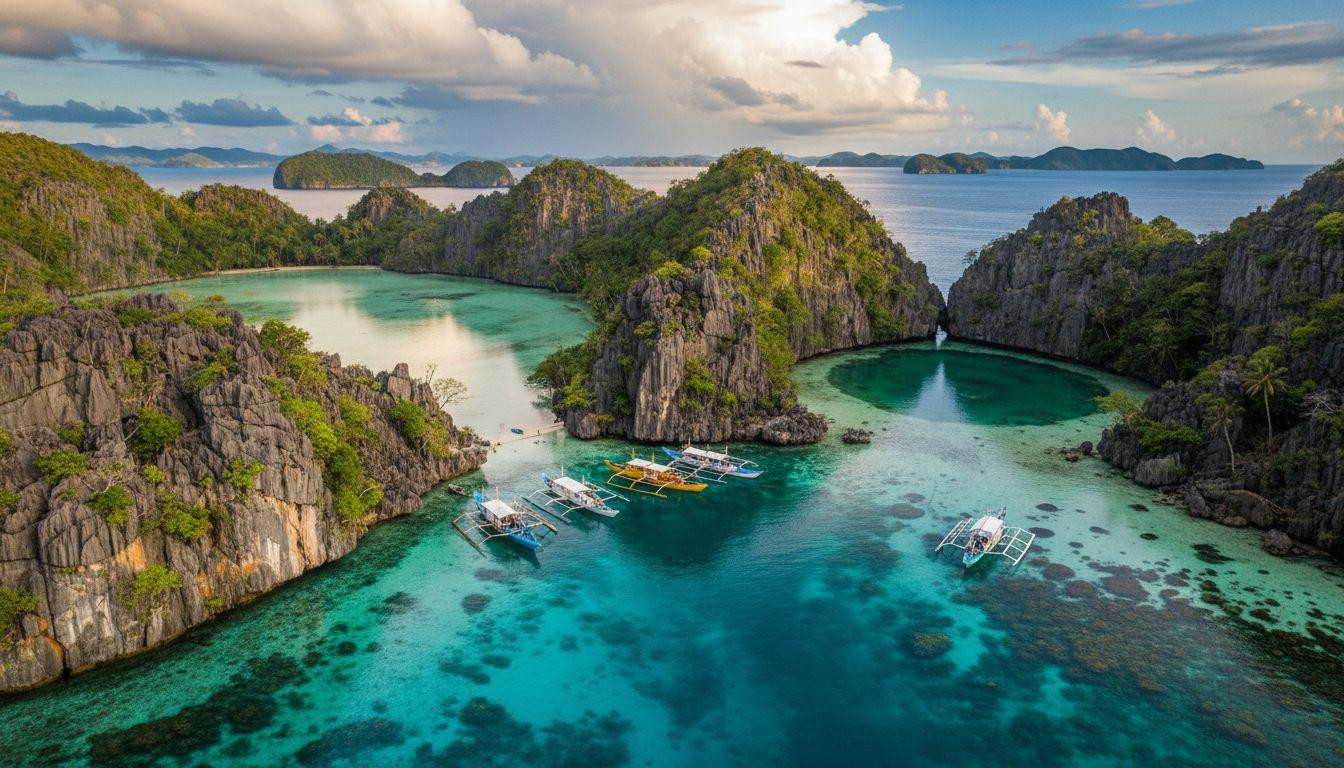
Halong Bay’s cruise boats stack up by dawn. Hundreds of passengers queue for thirty-minute kayak slots in designated zones. The water shows five meters of visibility on good days. El Nido’s Big Lagoon caps at eighty visitors per ninety-minute window. Small Lagoon takes forty people for thirty minutes. The turquoise stays clear enough to see sand fifteen feet down.
Both places deliver towering limestone karsts rising from mirror-calm lagoons. One costs $30-50 minimum and fights crowds. The other charges $22-25 for a full day and enforces limits that actually work.
Why Halong Bay lost what made it famous
Fifteen to twenty cruise boats leave Halong’s harbors daily. Each carries fifty to one hundred passengers. The math creates floating traffic jams by mid-morning. Kayaking happens in guided groups only. You get one hour in marked zones.
Water visibility dropped as boat numbers climbed. Development along the bay brought runoff. UNESCO World Heritage status didn’t slow the construction. Day tours start at $30. Overnight cruises run $150-300. The karst formations still rise dramatically. The experience feels managed, not discovered.
Pollution incidents made regional news through 2024. Coral health declined in popular snorkel spots. The famous limestone islands remain. The serenity that made them worth photographing disappeared under diesel fumes and competing tour guide megaphones.
El Nido’s lagoons work differently
Bacuit Bay’s controlled access model
Big Lagoon sits inside Bacuit Bay’s UNESCO Geopark boundaries. Rangers enforce the eighty-person cap strictly. Tour boats anchor outside the entrance. Visitors kayak in, spending up to ninety minutes inside towering limestone corridors. The water reflects cliffs like polished glass when wind drops.
Small Lagoon requires paddling through a rock slit barely wider than your kayak. Forty people maximum. Thirty-minute windows. The interior opens to an emerald pool surrounded by hundred-meter walls. You can swim freely once inside. No motors allowed past the entrance.
These aren’t suggestions. Rangers track numbers in real-time. Late afternoon slots stay emptier than morning rushes. The system preserves what Halong Bay lost to open access.
The cost advantage holds across categories
Island hopping Tour A costs 4,810 pesos, roughly $84 total. That includes Big Lagoon, Secret Lagoon, Shimizu Island snorkeling, and beach stops. Environmental fees run 200 pesos per lagoon. Daily averages hit $46-48 per person for accommodation, food, transport, and activities combined.
Halong Bay’s daily average reaches $66 before adding overnight cruise premiums. Panama’s overwater islands charge similar rates but lack the karst drama. El Nido delivers both geology and value.
What the lagoon experience actually involves
Big Lagoon’s kayak corridors
Tour boats drop you at the entrance with kayaks. You paddle fifteen to twenty minutes through channels where limestone rises vertical on both sides. Water depth stays knee to waist high in the corridor. The far end opens to deeper swimming areas.
Visibility reaches ten to twenty-five meters on calm days. You control your own pace. No guide rushes you through checkpoints. The mirror effect happens when wind dies, usually late afternoon. Crowds thin after 3pm when most tours head back.
Small Lagoon’s narrow entry
The rock slit entrance fits one kayak at a time. High tide makes it tighter. You squeeze through to find a circular pool ringed by cliffs. Forty people sounds crowded until you see the space. Most visitors stay twenty minutes then leave.
The water stays turquoise and still. Snorkeling works better here than Big Lagoon. Coral grows on the walls below water level. Belize’s Silk Cayes offers richer marine life, but El Nido’s protected reefs show healthy fish populations.
Beyond the famous two
Secret Lagoon requires climbing through a keyhole rock portal. The hidden beach inside seats maybe thirty people comfortably. Shimizu Island’s reefs support better snorkeling than Halong Bay’s degraded sites. Tour D explores quieter spots like Cadlao Lagoon where visitor numbers drop further.
Nacpan Beach stretches four kilometers with minimal development. A tricycle from town costs 300 pesos round-trip. You’ll share it with locals, not tour groups. The sand stays powdery white. Palm trees provide shade without resort infrastructure.
Practical advantages stack up quickly
Manila to El Nido takes ninety minutes by air. Flights run frequently during dry season, November through May. Hanoi to Halong Bay requires a 3.5-hour bus ride after your international flight. El Nido’s airport sits closer to the lagoons than Halong’s cruise terminals sit to the bay’s best formations.
Accommodation ranges from 800 pesos for hostel beds to 10,000+ for beachfront resorts. That’s $14 to $180+ per night. Halong Bay’s limited shoreline options concentrate prices higher. Honduras’s remote sandbars cost less but lack the limestone spectacle.
Weather stability matters. El Nido’s dry season delivers consistent calm from November through May. January 2026 sits in the sweet spot after holiday crowds but before summer heat. Halong Bay’s winter brings fog that obscures the karsts you came to photograph. Water temperature stays comfortable year-round in Palawan.
Marine life encounters happen regularly. Sea turtles feed near Shimizu Island. Reef fish populate healthy coral sections. Halong Bay’s underwater sites show visible degradation from decades of uncontrolled tourism. The difference shows in ten minutes of snorkeling.
Your questions about El Nido’s lagoons answered
When should I visit to avoid the worst crowds?
Late afternoon slots at Big and Small Lagoons empty out after 3pm when morning tour groups return to town. November and early December offer dry weather with lower visitor numbers than peak January through March. April and May bring heat but fewer tourists than winter months. Avoid weekends if possible. The eighty-person cap works better on Tuesday through Thursday.
How does the visitor cap system actually work?
Rangers at lagoon entrances track numbers in real-time using a manual log system. When Big Lagoon hits eighty people, tour boats wait offshore until others leave. Small Lagoon’s forty-person limit gets enforced the same way. The ninety-minute and thirty-minute windows aren’t strictly timed per individual but guide overall flow. Late arrivals benefit from emptier lagoons as early groups depart.
Is El Nido really cleaner than Halong Bay?
Water visibility measurements show ten to twenty-five meters in El Nido’s lagoons versus five to ten meters in Halong Bay on comparable calm days. Bacuit Bay’s UNESCO Geopark status brought active marine protection starting 2015. Halong Bay’s UNESCO designation predates modern tourism impacts. Italy’s Procida maintains similar water quality through strict limits. Recent visitor surveys from 2025 consistently rate El Nido’s water clarity higher than Halong’s polluted sections.
The ferry back to El Nido town leaves at 4:30pm. Most visitors make it with time to spare. The lagoons empty by then. Limestone cliffs turn gold in late afternoon light. That’s when the mirror effect works best.