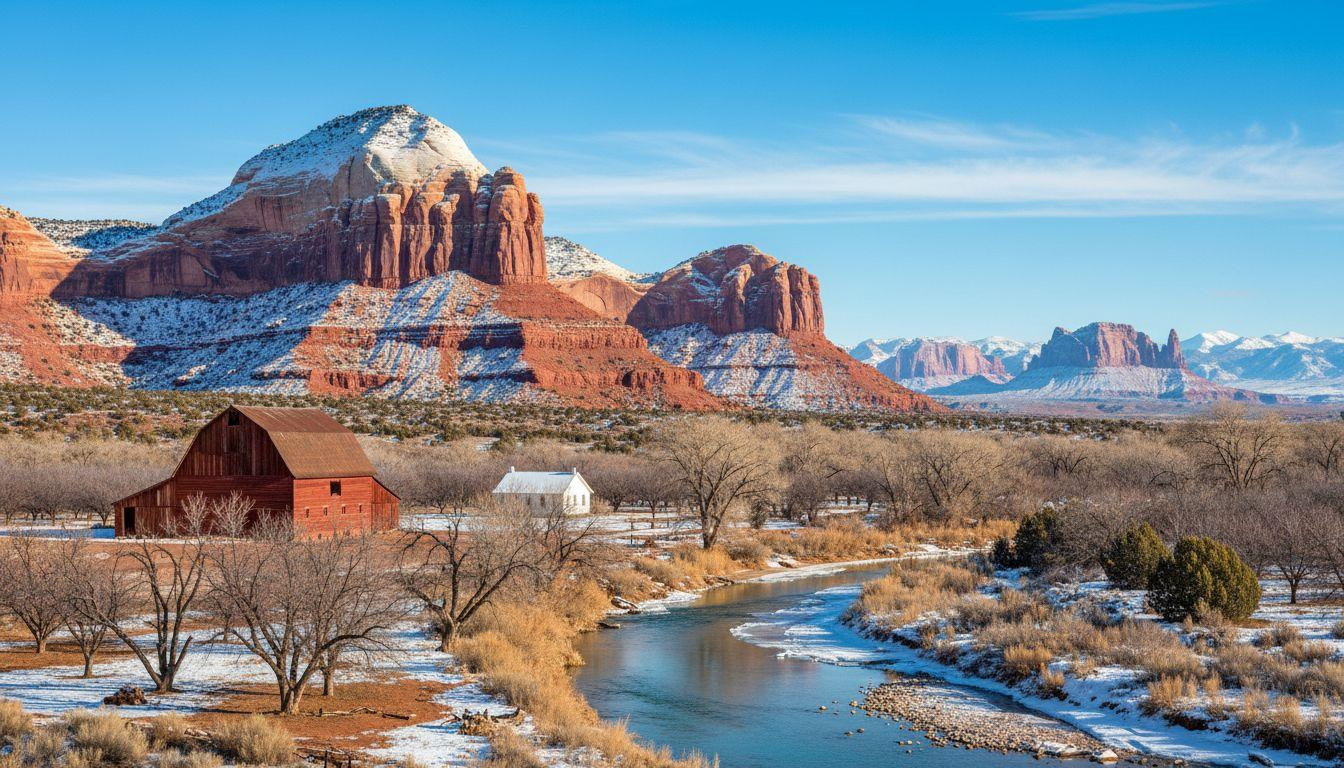
Arches National Park requires timed entry reservations from April through October. Delicate Arch Trail sees lines at sunrise. The parking lot fills by 7am. Capitol Reef’s Waterpocket Fold sits 90 miles east with the same red Navajo sandstone, fewer than 100,000 winter visitors, and zero permit systems.
Highway 24 cuts through Capitol Reef year-round. The park entrance costs $20 per vehicle for seven days. Torrey, population 500, sits 11 miles west with motels from $100 per night. In January 2026, snow dusts the red rock canyons while daytime temperatures hold at 45°F.
Why Arches became unsustainable for solitude seekers
Arches drew 1.5 million visitors in 2023. The park implemented timed entry in 2022 to manage crowds crushing Delicate Arch and Devils Garden. Reservations open months ahead and sell out for weekends. Walk-ins wait hours for cancellations.
December 2025 brought 51,096 recreation visits to Arches despite being the slowest month. The park never empties. Instagram made every arch famous. Moab lodging runs $150 to $250 per night in winter, 40% above Torrey rates.
Capitol Reef saw visitation drop slightly in 2025 while Arches increased. The difference shows in parking lots. Fruita Campground sits half-empty on January weekdays. This Utah valley charges $15 for lift tickets where Olympic slopes stay empty, and Capitol Reef follows the same quiet winter pattern.
The Waterpocket Fold delivers identical geology without crowds
A 100-mile monocline that few travelers know
The Waterpocket Fold formed 65 million years ago when Earth’s crust buckled into a wrinkle. The formation runs 100 miles north to south with elevation changes reaching 7,000 feet. Navajo sandstone dominates both parks, the same 200-million-year-old desert dunes turned to rock.
Capitol Dome rises 6,000 feet above the visitor center. Golden Throne sits at 7,048 feet. Cathedral Valley’s Temple of the Sun stands isolated in backcountry accessible by 4WD roads. Winter snow highlights the red rock texture like powdered sugar on terracotta.
Winter transforms the desert into silent sculpture
January brings 2 to 5 inches of snow per month at Capitol Reef. Morning temperatures drop to 15°F while afternoons warm to 50°F. The snow melts by noon on south-facing cliffs but holds in shaded canyons through February.
Capitol Reef earned International Dark Sky Park certification in 2015. Winter nights show the Milky Way naked-eye from Fruita Campground. No light pollution reaches the park. This Colorado town soaks in 104°F springs while snow falls at 7,040 feet, offering similar winter contrasts between snow and warmth.
What you’ll actually experience in the side canyons
Hikes without permits or lottery systems
Hickman Bridge Trail gains 400 feet in 1.8 miles to a 133-foot natural arch. Cassidy Arch adds 600 feet over 3.5 miles. Frying Pan Trail follows the Waterpocket Fold for 8 miles through remote canyons where bighorn sheep reintroduced in the 1990s now thrive.
Grand Wash cuts a narrow slot through 500-foot walls. The 2.2-mile walk stays flat on sandy canyon floor. No reservations required. Rangers at the visitor center provide current trail conditions and snowpack reports for higher elevations.
Cathedral Valley requires high-clearance 4WD vehicles. The 60-mile loop takes 4 hours minimum. Temple of the Moon and Temple of the Sun stand isolated in badlands terrain. Check road conditions before attempting in winter. 14 river canyons where paved roads drop 8,000 feet beside roaring water explores similar dramatic canyon drives across the Southwest.
Pioneer orchards and Victorian gateway towns
Fruita Historic District preserves Mormon pioneer orchards planted in the 1880s. Apple and peach trees still produce fruit harvestable by visitors for a small fee. The one-room schoolhouse and blacksmith shop remain intact.
Torrey offers three restaurants. Capitol Reef Resort serves local trout for $18 per plate. The cafe behind the church charges half that for burgers. Lodging ranges from $100 motels to $250 lodges with mountain views. Gas stations end 50 miles before the park.
The quiet that Arches lost a decade ago
Morning light hits Capitol Dome around 7am in January. The visitor center parking lot holds 12 cars. Hickman Bridge Trail sees maybe 20 hikers all day. The silence between footsteps on frozen sand carries for minutes.
Bighorn sheep appear on canyon walls at dawn. Golden eagles circle thermal updrafts by mid-morning. The Fremont River flows through Fruita with ice forming on slower pools. No crowds gather for sunrise photos. Better than Antelope where tours cost $225 and Cafayate keeps orange canyons free shows how lesser-known canyons preserve the solitude that famous sites lost.
Your questions about Capitol Reef’s Waterpocket Fold answered
When should I visit for the best winter experience?
December through February brings the lowest visitation and best snow-dusted red rock views. January averages 45°F highs and 15°F lows. Roads stay open except Cathedral Valley after heavy snow. Scenic Drive remains accessible with 2WD vehicles. Dark sky programs run year-round at the visitor center.
How does Capitol Reef compare to Arches for geology?
Both parks showcase Navajo sandstone formed 200 million years ago. Arches displays freestanding arches from salt dome erosion. Capitol Reef preserves a monocline where Earth’s crust folded rather than collapsed. The Waterpocket Fold spans 100 miles versus Arches’ concentrated 76,000 acres. Capitol Reef offers broader geological diversity with fewer visitors per square mile.
What makes the side canyons worth the remote access?
Side canyons like Grand Wash and Capitol Gorge require no permits and see minimal traffic. Frying Pan Trail delivers 8 miles of Waterpocket Fold exposure without another hiker in sight. Cathedral Valley’s temples stand isolated in badlands accessible only by 4WD. The remoteness preserves silence and wildlife encounters that disappeared from Arches years ago.
The sun sets behind snow-covered Capitol Dome around 5pm in January. The sky turns orange against white-dusted red cliffs. Torrey’s lights stay dim 11 miles west. The stars emerge before full dark. No crowds wait for the moment to end.