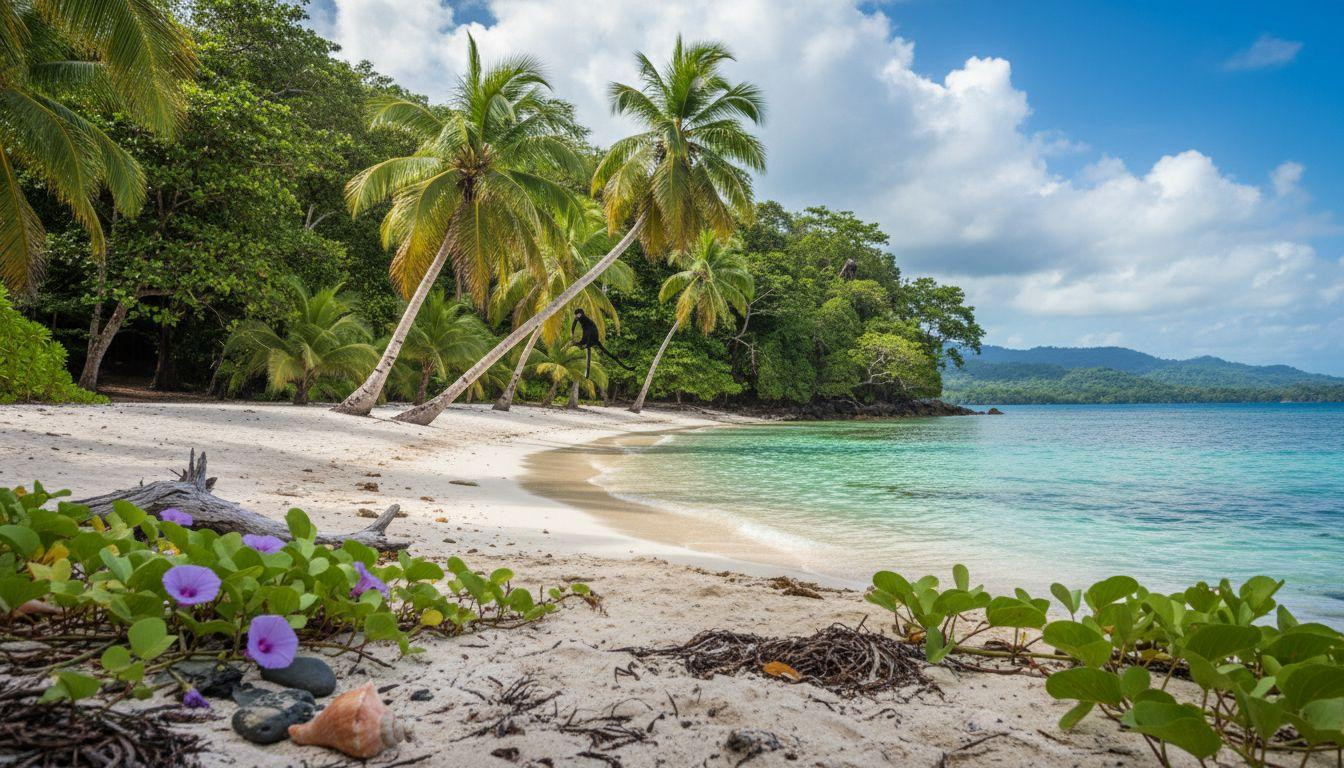
Morning light filters through palm fronds at Puerto Vargas Beach, turning turquoise shallows into liquid glass. A howler monkey roars from the canopy 50 feet inland. The white sand stretches empty in both directions. This is Cahuita National Park’s quietest entrance, where Costa Rica’s largest coral reef grows 100 feet offshore and visitors pay what they choose to enter. December through March brings calm seas and almost no crowds.
The beach sits 207 miles southeast of San José, 51 miles south of Limón Airport. Most travelers skip it entirely. They enter Cahuita National Park at the busier Playa Blanca gate 3 miles north, missing this southern section where rainforest meets Caribbean water without a single hotel in sight.
Where jungle trails open to white sand
Puerto Vargas occupies the southeast corner of Cahuita National Park’s 22,400-hectare marine protection zone. The park was established in 1970 to preserve Costa Rica’s largest living coral reef system. Dark volcanic sand marks the entrance area. Walk north 1 mile and the beach transforms into pristine white stretches backed by dense coastal jungle.
Palm trees lean over the shoreline at 45-degree angles. Their fronds create natural shade across half the beach. Water temperature holds steady at 79-84°F December through March. Visibility reaches 50 feet on calm days. The reef parallels the shore 50-150 feet out, close enough to reach by swimming from the beach.
A ranger station sits at the park entrance with free parking and restrooms. The suggested donation runs $10 per person. Pay-what-you-want means exactly that. Rangers accept any amount. No plastic bottles or single-use items allowed inside. The policy keeps the beach litter-free.
The national park that stayed wild
Protection over resort development
Cahuita National Park protects 2,700 acres of coastal land and 55,000 acres of marine habitat. The 1970 designation came as banana plantations and logging threatened the reef. Today the park sees roughly 50,000 annual visitors. Puerto Vargas accounts for less than 20% of that traffic.
Compare this to Tulum’s resort-packed beaches drawing 2 million visitors yearly. Or Manuel Antonio on Costa Rica’s Pacific coast, where parking costs $25 and beaches fill by 9am. Puerto Vargas has no beach clubs, no lounge chairs, no vendors. Just ranger patrols and wildlife moving freely through the forest.
The pay-what-you-want model runs 20-30% below standard Costa Rican park fees. It reflects the community-focused approach of nearby Cahuita village, population 500, where Afro-Caribbean and indigenous Bribri traditions shape daily life.
Afro-Caribbean heritage alive
Cahuita village sits 2 miles north of Puerto Vargas. The town traces its roots to 19th-century Jamaican laborers who built Costa Rica’s railroad system. Their descendants maintain cultural traditions through food, music, and language. Local sodas serve rondón, a coconut milk stew with fresh-caught fish, breadfruit, and yams. Meals cost $8-12.
Annual Cahuita Carnival happens each February or March, bringing calypso music and street dancing to the main road. The Bribri indigenous community sells handwoven baskets and tagua nut carvings at small stands near the park entrance. These crafts use techniques passed down through generations.
Walking into empty coves
Trails through coastal jungle
The main trail runs 5 miles north from Puerto Vargas to Playa Blanca, hugging the coastline through humid lowland rainforest. Dappled sunlight penetrates the canopy. The air smells of damp earth and salt. Howler monkey calls echo every few hundred yards. White-faced capuchins move confidently through the trees, unbothered by hikers below.
The trail opens periodically to small coves with golden-white sand and zero development. Punta Vargas Beach appears after 1.2 miles. Punta Cahuita sits 2.5 miles in. Each section offers different reef access points. Three-toed sloths hang motionless in cecropia trees. Green basilisk lizards dash across the path.
Recent visitor surveys note the “exotic path” quality. One hiker described spending three days exploring different trail sections, encountering monkeys on every walk. The forest stays dense enough that wildlife sightings feel like discoveries rather than zoo exhibits. Similar national park beach experiences exist in Hawaii, but Costa Rica’s Caribbean coast sees far fewer tourists.
Reef snorkeling from shore
No boat tours needed at Puerto Vargas. Wade 50-100 feet into turquoise shallows and coral gardens appear below. The reef system supports roughly 500 fish species including parrot fish, angelfish, and sea urchins. Green sea turtles nest along the beach February through March under ranger supervision.
December through March offers the best snorkeling conditions. Calm seas and minimal rainfall keep visibility high. Rainy season from May through November reduces water clarity to 15-20 feet. Strong riptides occur in certain sections despite the protected bay setting. Rangers post warnings and advise safe swimming zones.
Snorkel gear rents for $10-15 in Cahuita village. Most visitors bring their own. The shallow reef depth makes it accessible for beginners. Manta rays and small reef sharks occasionally pass through deeper channels beyond the main coral formations.
The quiet Caribbean you expected
Puerto Vargas receives a fraction of the attention given to Panama’s Bocas del Toro islands 64 miles southeast. It lacks the resort infrastructure of Jamaica’s Negril, where beach clubs charge $250 for day passes. This absence defines its appeal.
Nearby Puerto Viejo village, 7 miles south, offers budget lodging from $20-50 per night in hostels and $60-100 for eco-lodges. Mid-range hotels rarely exceed $120. Total daily costs including meals, park entry, and activities run $30-60. That compares to $80-150 for similar Caribbean beach experiences in Tulum or Playa del Carmen.
December through March brings low to medium crowds. Weekdays see perhaps 50-75 visitors at Puerto Vargas. Weekends double that. The Pacific coast parks draw 10 times more traffic during the same period. Even at peak season, finding an empty stretch of beach takes only a short walk north along the trail.
Your questions about Puerto Vargas answered
When should I visit?
December through March offers ideal conditions. These dry season months bring minimal rainfall (50-100mm monthly), calm Caribbean seas, and the best snorkeling visibility. Water stays warm at 79-84°F. Avoid May through August and November when heavy rains (400-500mm monthly) muddy trails and reduce water clarity. The park stays open year-round but trails become challenging when wet.
How do I get there?
Fly into Limón Airport (LIO) 51 miles north or San José (SJO) 207 miles northwest. From San José, drive 4 hours via Route 32 through Guápiles and Siquirres to Cahuita. Buses and shuttles cost $15-25 and take 5-6 hours. From Limón Airport, taxi or shuttle service runs about $50-80 for the 1-hour drive. The park entrance has free parking. Puerto Viejo village 7 miles south serves as the main lodging and dining base.
What makes this different from other Caribbean beaches?
National park protection prevents resort development. Wildlife encounters happen naturally. Monkeys, sloths, and sea turtles share the space with visitors. The pay-what-you-want entry model removes cost barriers. Coral reefs grow close enough to reach by swimming from shore without boat tours. Afro-Caribbean cultural traditions remain intact in nearby villages. Costs run 20-30% below Pacific coast alternatives. Even during peak season, the beach stays relatively empty compared to similar turquoise-water destinations.
Late afternoon light turns the water amber-green. A sloth moves one branch closer to a cecropia fruit. The howler monkeys go quiet. This is the moment most visitors miss because they entered at Playa Blanca instead.