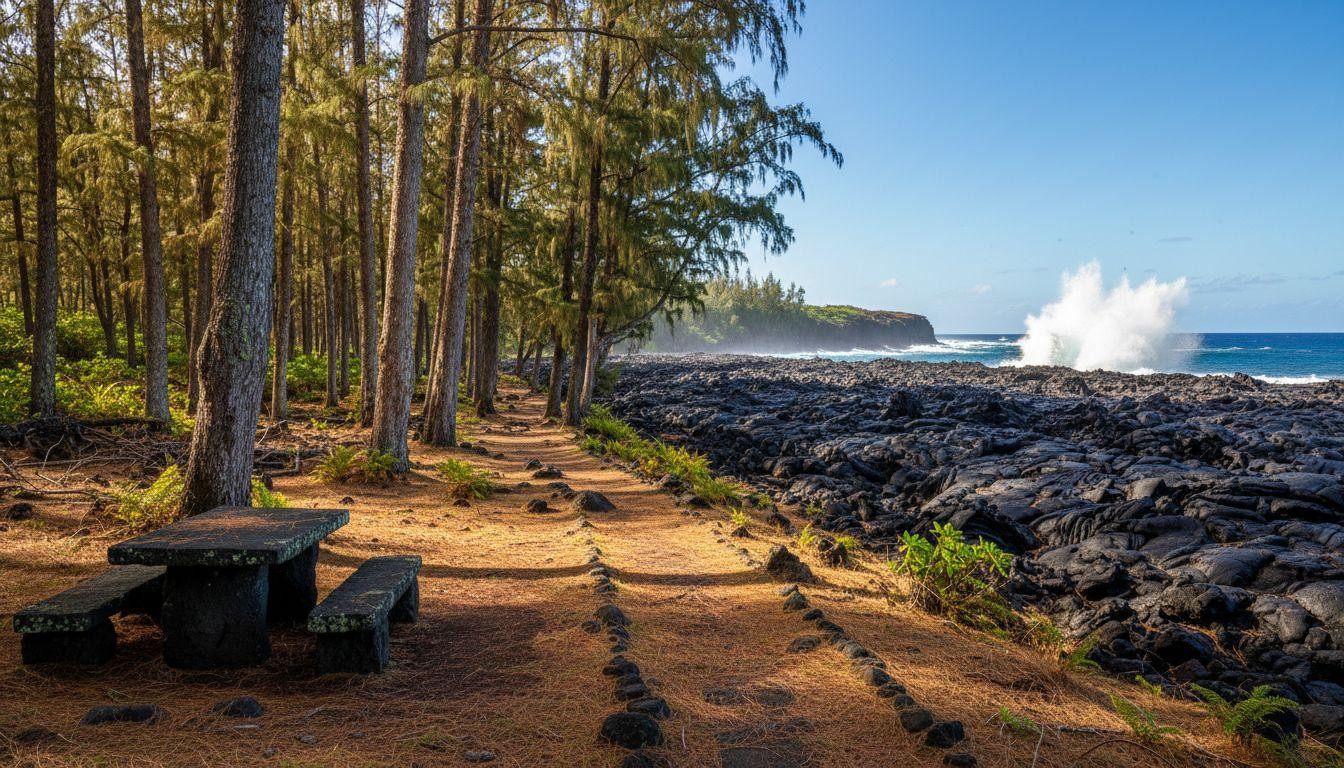
Highway 137 ends at a state park nobody mentions. Free parking. No gate. Thirteen acres of ironwood trees and black lava cliffs where the Pacific crashes hard enough to feel through your shoes. MacKenzie State Recreation Area sits in southern Puna, 30 miles from Hilo, and most days you’ll have it to yourself. The 2018 Kīlauea eruption stopped 400 yards away and left something raw behind.
The ironwood grove starts at the parking lot. Tall trees with feathery needles create soft carpet underfoot. Morning light filters through in gold stripes. The quiet here feels deliberate, like the forest swallowed all the noise from Highway 137 behind you.
Where ancient trails meet fresh volcanic rock
A brown sign marks the King’s Highway, an old Hawaiian coastal path ordered built by King Kamehameha. Convicts repaired sections in 1850. You can still walk parts of it through the ironwood stand, following the same route Hawaiians used centuries ago.
The trail northeast leads through the grove for about a mile. Watch your footing on fallen needles. The path opens suddenly onto the 2018 lava field, massive and jagged, still black as the day it cooled. This flow entered the ocean on May 19, 2018, and lasted 10 days. It created submarine lava deltas with rough, hummocky surfaces and elongate ridges.
The park closed during the eruption and reopened by September 8, 2018. Highway 137 was blocked. Malama flats adjacent to the park took direct hits. Now you can walk right up to where molten rock stopped moving. The contrast hits hard: soft ironwood needles to sharp volcanic glass in 15 minutes.
What the coastline reveals
Black cliffs and turquoise water
Turn left from the picnic area and the trail follows low volcanic cliffs. Black lava fingers reach into the Pacific. Waves crash over the top with enough force to send spray 20 feet inland. Stay back. The ocean here doesn’t forgive mistakes.
The water shifts from deep blue offshore to turquoise where it hits shallow lava shelves. White foam explodes against black rock. The sound is constant, a low rumble that drowns conversation. Early morning light makes the spray glow gold for maybe 10 minutes before the sun climbs higher.
Lava tubes and geological time
Natural cave openings dot the park, remnants of ancient flows. These hollow chambers formed when lava drained out while the surface cooled. Bring a flashlight and solid shoes if you want to explore. The tubes stay cool and dark, offering contrast to the exposed coastline.
The rock here represents thousands of years of volcanic activity, not 1.7 billion. Hawaii’s geology is young. Holocene volcanism shaped this coast. The 2018 flows added the newest layer to an ongoing story.
What you actually do here
Walking to where lava stopped
The hike from parking to the 2018 lava field takes 10-15 minutes through ironwoods. The terrain is uneven but manageable. Once you reach the flow, walking on it requires care. The surface is extremely sharp and rough. Wear closed shoes with thick soles.
In November 2018, visitors reported steam vents and warm spots. By 2026, the lava has stabilized. No recent volcanic activity has occurred on the Big Island since 2018. The field remains accessible, dramatic, and photogenic. Bring water, sunscreen, and a hat. The black rock absorbs heat.
Picnic tables carved from lava
The park has restrooms and a covered pavilion. Picnic tables and chairs are hewn directly from lava rock, creating furniture that looks like it grew from the ground. No potable water. No food vendors. Bring everything you need.
Fishing is allowed along the cliffs. Swimming is not recommended due to rocky shores and strong currents. Dogs are not permitted. Camping requires a permit but isn’t advisable given the park’s remote location and sparse visitation.
The solitude that defines this place
MacKenzie gets few visitors despite free entry and unique features. The park sits at the end of a dead-end road created by the 2018 flows. Most Hawaii travelers never hear about it. Those who come find ironwood silence, powerful ocean energy, and geological drama without crowds.
The remoteness shapes the experience. No ranger presence. No cell coverage guaranteed. The isolation feels both peaceful and humbling. You’re standing where lava entered the ocean eight years ago, walking trails Hawaiians used for centuries, surrounded by trees planted decades back. Time layers here in ways most state parks don’t allow.
For context, Punalu’u Black Sand Beach draws tour buses daily. MacKenzie stays empty. The drive from Pahoa takes about 20 minutes on narrow roads. From Hilo, allow 45 minutes. Gas stations are limited in Puna, so fill up before heading out.
Your questions about MacKenzie State Park answered
When should I visit for the best experience?
Late April through September offers the driest weather in Puna. The district receives considerable rainfall, especially November through March. Winter swells make the ocean more dramatic but also more dangerous. Early morning visits provide the best light and the most solitude. The park is open daytime only.
Is it safe given the remote location?
The park’s isolation requires caution. Travel in groups when possible. The area has a reputation for occasional criminal activity due to sparse visitation. Keep valuables out of sight. Stay away from cliff edges where waves crash over. The 2018 lava is stable but sharp. Solid footwear is mandatory.
How does this compare to Hawaii Volcanoes National Park?
Volcanoes National Park offers extensive infrastructure, visitor centers, and maintained trails. It charges $30 per vehicle and receives over a million visitors annually. MacKenzie provides a more intimate volcanic experience with no crowds, no fees, and direct access to recent lava flows. The trade-off is minimal amenities and no ranger services. For a complementary experience, other overlooked Hawaii coves offer similar solitude.
The ironwood needles crunch softly underfoot as you walk back to your car. Behind you, the Pacific keeps crashing against cliffs that didn’t exist a decade ago. The grove filters afternoon light into patterns that shift with every breeze. Most people drive past the turnoff without knowing what they missed.