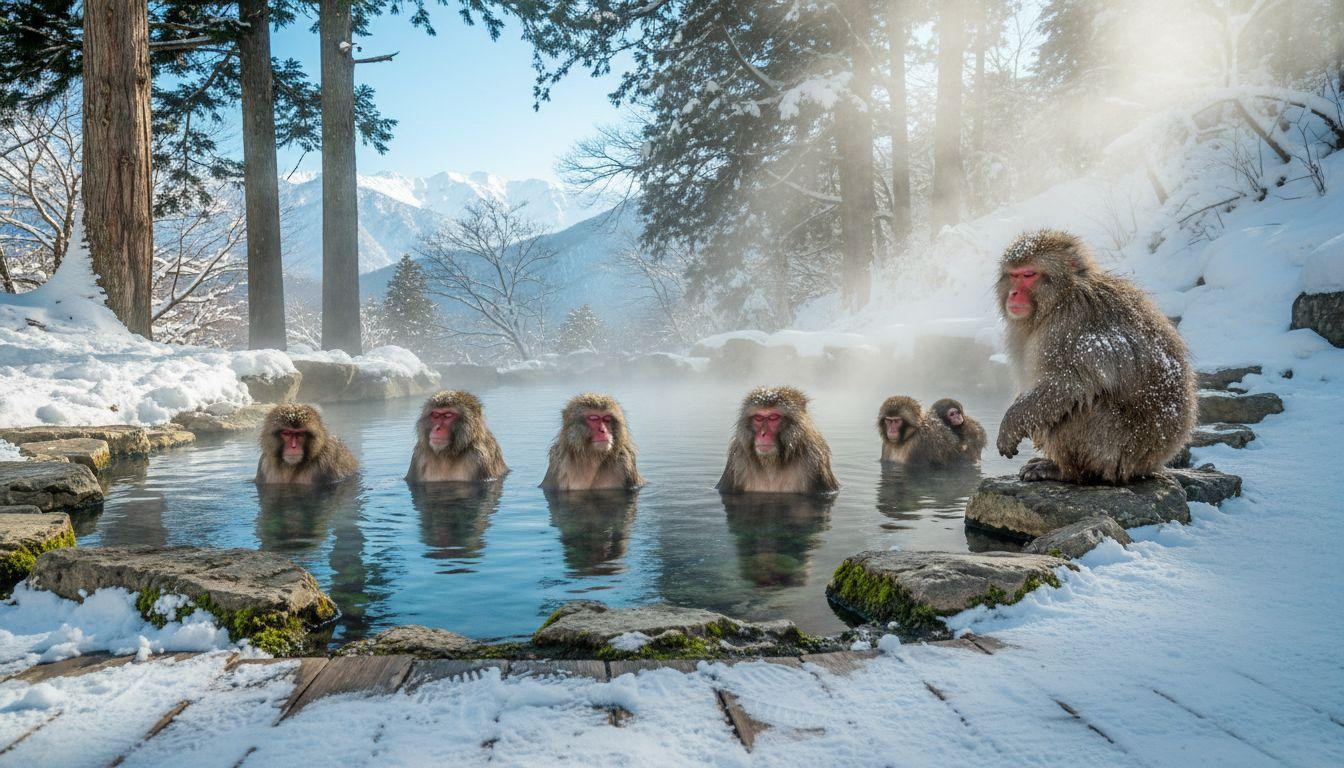
Hakone’s Lake Ashi cruise dock fills with selfie sticks by 9am. Tour buses idle outside Owakudani’s sulfur vents. Ryokan rooms with kaiseki dinners cost $170 per person. Two hours north by Shinkansen, Nagano’s mountain villages offer something Hakone lost decades ago: wild snow monkeys bathing in geothermal pools, Edo-era post towns where residents still live in 400-year-old buildings, and stays for $100 that include private onsen under stars.
The Hokuriku Shinkansen from Tokyo reaches Nagano City in 90 minutes. Local buses connect to villages scattered across the Japanese Alps. No crowds. No queues. Just cedar forests and steam rising through winter silence.
Why Hakone stopped feeling like Japan
Hakone draws visitors for proximity to Tokyo. The Lake Ashi cruise takes 30 minutes. Owakudani’s black eggs cost $5 for five. Ryokan rates start at $140 per person but peak season pushes them past $270. Kaiseki dinners add another $55 minimum. The Hakone Freepass covers transport for $35 but doesn’t skip the crowds.
Weekend occupancy hits 55% across accommodations. International tourists make up half the visitors now. The onsen experience comes with time slots and rules posted in eight languages. Hot spring culture works better when you’re not checking your watch.
Hakone delivers convenience. Nagano delivers immersion. The difference shows up in morning silence.
What Nagano’s villages kept intact
Yamanouchi sits 25 miles from Nagano City. The village surrounds Jigokudani Monkey Park where 200 wild Japanese macaques soak in natural hot springs. Entry costs $5.50. The monkeys discovered the pools in the 1960s. They descend from surrounding peaks when snow covers their usual territory.
Snow monkeys without the tour bus theater
January through March brings peak viewing. Snow blankets the cedar forest. Steam rises from the pools at dawn. The monkeys arrive around 8am when temperatures drop below freezing. They stay until mid-afternoon. No feeding allowed. No touching. Just observation from wooden walkways.
The park sits 15 minutes by foot from the nearest parking area. Tour groups thin out after the first viewpoint. Early morning or late afternoon sees fewer visitors. The monkeys ignore cameras. They groom each other. Young ones play in shallow water. Older ones sit chest-deep in 104°F pools.
Post towns that never became museums
Narai-juku stretches one kilometer along the old Nakasendo Trail. The main street preserves Edo-period architecture from the 1600s. Wooden buildings with lattice windows line both sides. Stone gutters channel mountain water. No power lines. No vending machines. Residents operate shops selling lacquerware and soba.
Minshuku guesthouses cost $55-80 per night. Breakfast included. Tsumago-juku sits 12 miles south with similar preservation. The villages connected samurai-era Kyoto to Tokyo. Walking the forest trail between them takes three hours. Living history beats reconstruction every time.
The actual experience difference
Hakone offers packaged tourism. Nagano offers participation. The distinction matters when you’re spending money and time.
What you do in Nagano that Hakone can’t match
Togakushi Shrine sits at 4,000 feet elevation. The approach path runs two kilometers through 500-year-old cedar trees. Trunks measure 20 feet around. Morning mist filters through branches. The shrine complex dates to the 12th century. Ninja training happened here. The Togakure school taught espionage techniques. A small museum demonstrates trap doors and hidden weapons.
Hakuba Valley offers skiing 30 miles northwest. Day passes cost $55. Vertical drop reaches 3,000 feet. The 1998 Winter Olympics used these slopes. Kamikochi alpine valley opens April through November. Turquoise rivers. 10,000-foot peaks. Zero development beyond a few lodges. Mountain clarity you can taste in the air.
Food culture without the kaiseki markup
Shinshu soba uses buckwheat grown in Nagano’s high valleys. Cold soba with dipping sauce costs $7. Oyaki dumplings stuffed with vegetables sell for $3.50 at village shops. Local apples appear in everything from pie to cider. Farm-to-table cooking classes run $28 per person in Yamanouchi. You make soba from scratch. You pickle vegetables. You eat what you prepared.
Hakone’s kaiseki dinners present beautiful food. Nagano’s meals taste like someone’s grandmother cooked them. Both have value. One costs 60% more.
The quiet Hakone traded for accessibility
Evening onsen in Yamanouchi means walking to a public bath house. Locals soak alongside visitors. Water temperature hits 107°F. Sulfur smell. Wooden tubs. Stars visible through steam if you time it right. No attendants. No English signs. Cash box for the $4 entry fee.
Hakone’s resort onsen have reservation systems and towel service. Nagano’s village baths have unwritten rules learned by watching. The difference feels like the gap between staying in a hotel and staying in someone’s home. Authentic immersion requires accepting some discomfort.
Your questions about Nagano mountain villages answered
How do I get from Tokyo to Jigokudani Monkey Park?
Take the Hokuriku Shinkansen from Tokyo Station to Nagano Station. Journey takes 90 minutes. Cost runs $80 one-way. From Nagano Station, express buses reach Kanbayashi Onsen near the park in 55 minutes for $14. Buses depart hourly. The final 15-minute walk follows a forest trail. Total travel time: three hours.
When should I visit to see snow monkeys?
January through March offers peak viewing. Heavy snow drives monkeys down from higher elevations to the warm pools. They arrive around 8am and stay until 3pm. April through December sees fewer monkeys as they forage in forests. Summer visits still show some individuals but winter delivers guaranteed sightings.
How does Nagano compare to Hakone for first-time Japan visitors?
Hakone sits 90 minutes from Tokyo with English signage and tourist infrastructure. Nagano requires two hours travel and basic Japanese helps. Hakone costs 40% more for accommodation and meals. Nagano offers wildlife encounters and preserved villages Hakone lacks. Choose Hakone for convenience. Choose Nagano for immersion and value.
The morning train from Nagano City to Narai-juku passes through valleys where mist clings to rivers. Old wooden stations. Unstaffed platforms. The kind of Japan that exists in the gaps between famous destinations. The kind worth the extra hour of travel.