“`html
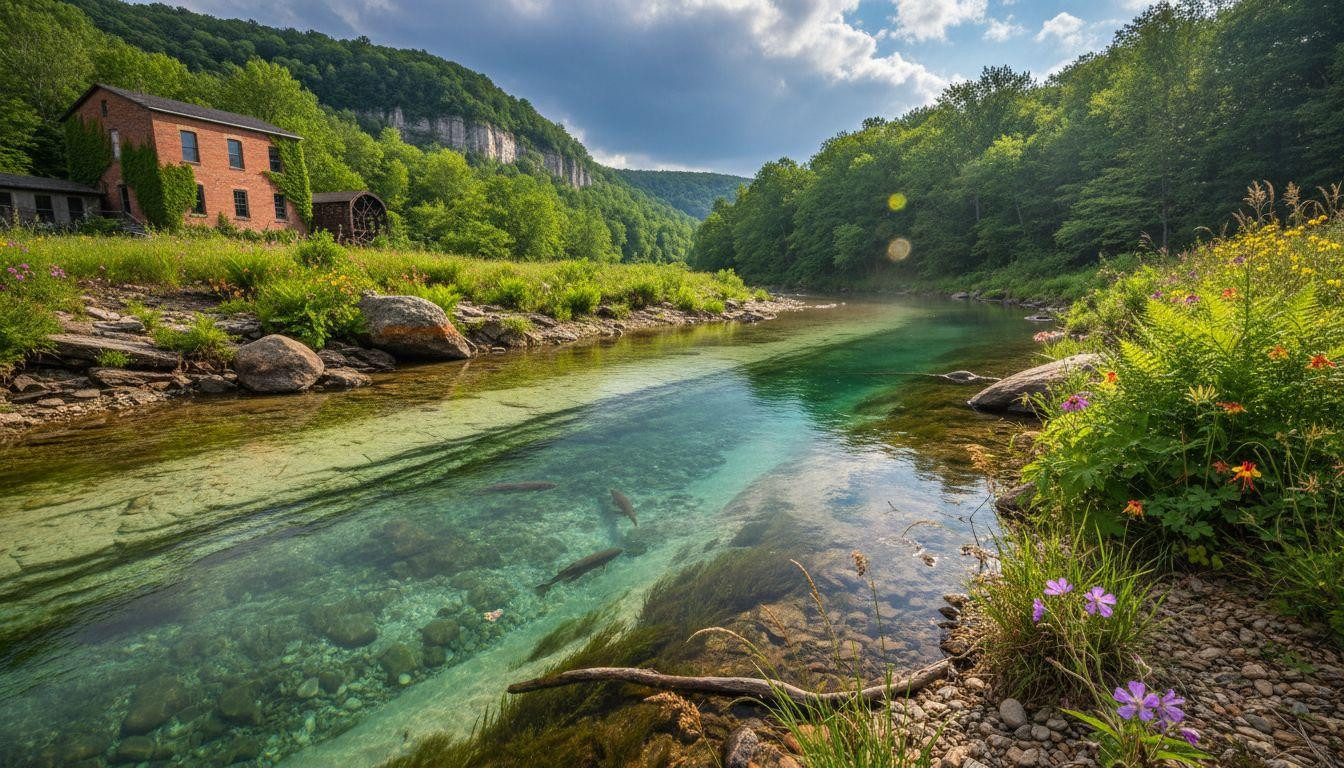
The Upper Iowa River runs so clear through Decorah that you can see limestone bedrock eight feet down. Stand on the bridge at dawn and watch trout hover in cold spring water while fog lifts off Norwegian-era mill buildings. This town of 7,500 keeps its heritage alive without turning it into a theme park.
Decorah sits in northeast Iowa’s Driftless Area, where glaciers never flattened the land. Rolling bluffs rise 400 feet above the river. Norwegian immigrants settled here in the 1850s, built mills along the water, and stayed. Their descendants still run shops on Water Street.
Where Norwegian mills met limestone springs
The town grew around flour mills powered by the Upper Iowa River. Those brick buildings still stand downtown, converted to breweries and shops. Vesterheim Norwegian-American Museum occupies 12 historic structures across four acres. Inside: 33,000 artifacts spanning 200 years of immigration history.
This is not a reconstructed village. These are actual homes, churches, and workshops moved here and preserved. The museum earned National Trust for Historic Preservation status in 2018. Walk through a stave church built in 1850. See rosemaling painted on wooden trunks that crossed the Atlantic.
Luther College, founded in 1861, anchors the east side of town. Its Norwegian-American Archives hold the largest collection of immigrant letters in the United States. Students walk the same bluffs their ancestors farmed.
The river that reveals everything
Eight feet to the bottom
Cold springs feed the Upper Iowa River year-round. Siewers Spring, Iowa’s second largest, pumps 20,000 gallons per minute into Trout Run Creek. This water stays 48°F in summer. Clarity comes from limestone filtration through underground karst systems.
Decorah Fish Hatchery sits on Trout Run, one mile from downtown. Rangers stock 300,000 trout annually into Iowa streams. You can watch them feed for 25 cents. The hatchery’s eagle cam has drawn over one million viewers since 2006. Three eagles nest above the raceways each spring.
Trout Run Trail follows the creek for 11 miles through town and countryside. The path is paved, flat, free. Morning walkers see mist rising off pools where trout hold in current. No permit needed. No crowds before 9am.
Nordic Fest meets fishing culture
The last full weekend of July brings Nordic Fest. Lutefisk dinners, rosemaling demonstrations, Viking parades. Hotels book six months ahead. But the real Norwegian life happens year-round at family tables and church basements.
Locals fish the same holes their grandparents did. They know which spring seeps hold trout in August heat. They don’t advertise these spots. If you ask politely at the bait shop, someone might point you toward Odessa Spring.
Walking through working heritage
Main Street without museums
Water Street runs eight blocks through downtown. Over 100 independent businesses operate in Victorian-era buildings. No chains. Toppling Goliath Brewing opened a new riverside taproom in October 2025. Their King Sue IPA sells for $7 a pint.
Pinter’s Gardens occupies an 1870s storefront. They bake lefse daily, Norwegian potato flatbread rolled thin as paper. A dozen costs $8. The bakery also sells krumkake and rosettes during holidays. Three generations work the counter.
Hotel Winneshiek, built in 1905, renovated its spa in fall 2025. Rooms start at $130 per night. The lobby still has original woodwork and a working fireplace. Breakfast includes Norwegian waffles with lingonberry jam.
Trails where locals actually go
Dunnings Spring Park sits two miles south of downtown. A 200-foot waterfall drops year-round over limestone cliffs. The park has picnic tables, a short loop trail, no entrance fee. Ice formations build up in January, creating frozen columns 30 feet tall.
Seed Savers Exchange operates an 890-acre heritage farm three miles north. They preserve 20,000 heirloom vegetable varieties. Gardens open free to visitors May through October. Their eagle cam on TikTok has reached 500,000 views under #DecorahEagles.
Ice Cave Hill Park holds a natural cave that stays below freezing year-round. The entrance collapsed decades ago, limiting access to ten feet. Locals joke it is Iowa’s mini Arctic. The park also has cross-country ski trails groomed all winter.
The quiet that stays real
Winter brings cross-country skiers to empty trails. Steam rises off the river when air temperatures drop below zero. Summer means tubing without the crowds you find at Wisconsin Dells. Fall colors peak in early October. The unhurried pace feels authentic because it is.
Decorah costs 20-30% less than Door County or Galena. B&Bs run $80-120 per night off-season. Meals average $12-20. Vesterheim admission is $20 for adults. Most trails and parks charge nothing. This town does not manufacture charm for tourists. It just keeps living.
Your questions about Decorah answered
When should I visit?
Summer brings Nordic Fest in late July and warm weather for river activities. Fall offers fewer visitors and brilliant foliage from late September through mid-October. Winter suits cross-country skiing and cozy museum visits. Spring means prairie wildflowers and baby eagles at the hatchery. Each season works.
How much cheaper than Door County?
Hotels in Decorah run $80-220 versus $150-400 in Door County. Restaurant meals cost $12-20 versus $25-45. Museum entry averages $15-20 versus $25 and up. Overall savings reach 20-30%. You get authentic Norwegian heritage without resort pricing.
Is it too small?
At 7,500 residents, Decorah feels small enough to stay authentic but large enough for good food and lodging. You will not blink and miss it. The town has craft breweries, a college, working farms, and real culture. It is not Branson. It is not a ghost town either.
Morning light hits the bluffs around 7am. The river turns gold for maybe ten minutes. Then the day starts and fishermen head to their spots and the town goes about its business. You can stay or leave. The place does not change either way.
“`