Multnomah Falls draws 2.3 million visitors each year to its 620-foot cascade in Oregon’s Columbia River Gorge. The paved trail stays packed from sunrise to sunset. Gift shops line the parking lot. Tour buses idle while groups snap identical photos from the bridge viewpoint. The waterfall still flows, but the wilderness feeling disappeared years ago.
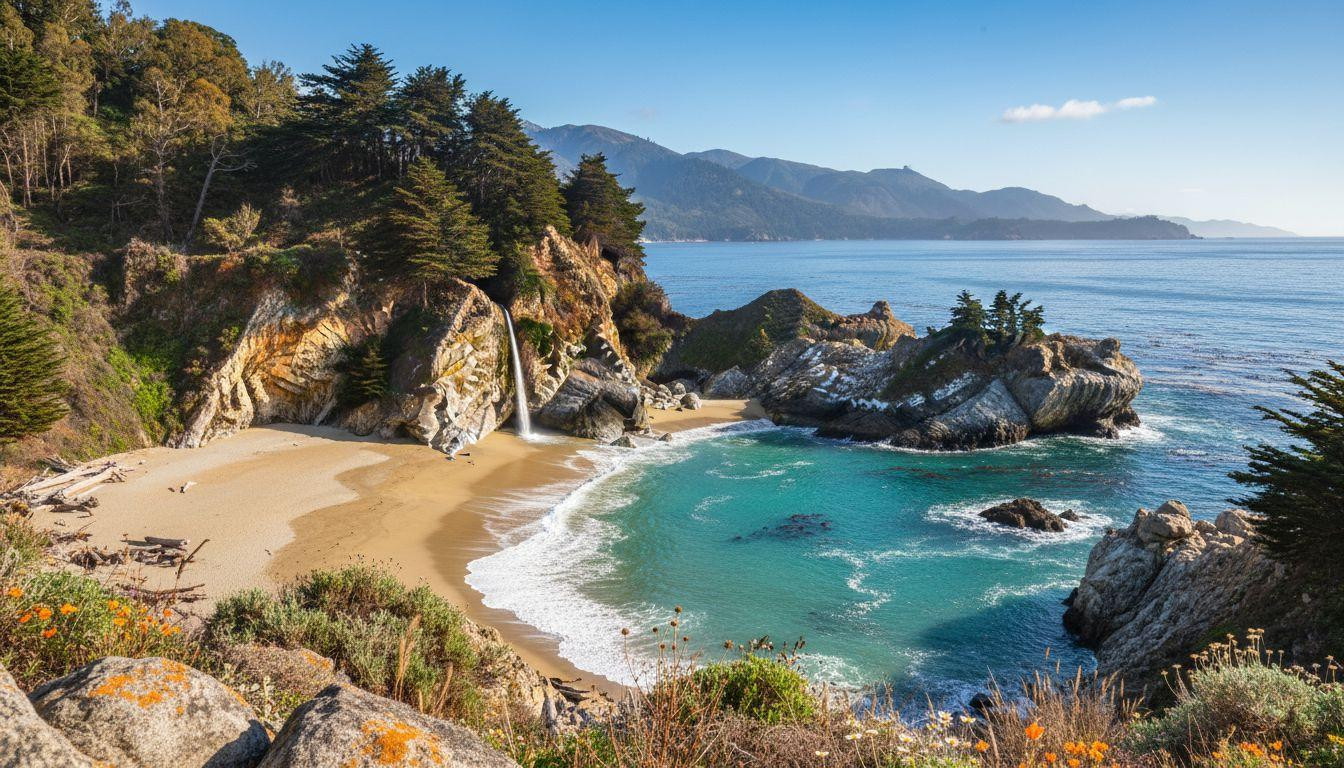
McWay Falls offers what Multnomah promised before the crowds arrived. This 80-foot waterfall drops directly into a turquoise Pacific cove along California’s Big Sur coast. No bridges. No visitor center. No tour buses. Just granite cliffs, ocean spray, and a half-mile trail through coastal chaparral that stays quiet even in summer.
Why Multnomah Falls lost its appeal in 2026
The Columbia Gorge waterfall became a victim of its own beauty. Parking costs $5 per vehicle at the overcrowded lot. The 0.2-mile paved path handles thousands daily. Selfie sticks outnumber hiking poles. Time limits get enforced during peak hours.
Ice storms and wildfire damage closed sections repeatedly between 2017 and 2024. When trails reopen, the crowds return heavier. The Lodge restaurant serves 400 people at once. The gift shop sells waterfall-themed merchandise. What was once a quiet forest walk became an outdoor shopping mall with a view.
Winter temperatures in the Gorge drop to the 30s and 40s Fahrenheit. Rain turns trails muddy. The falls freeze partially, creating ice formations that draw even more visitors. Solitude became impossible regardless of season.
Meet McWay Falls along Highway 1
The coastal advantage over forest streams
McWay Creek flows year-round from the Santa Lucia Mountains. The water drops 80 feet from a granite cliff directly onto a golden sand beach. During high tide, the cascade hits turquoise ocean water instead of sand. This makes it one of only two tidefalls in California.
The cove sits within Monterey Bay National Marine Sanctuary. Gray whales migrate past from December through January. Harbor seals rest on offshore rocks. California condors with 9-foot wingspans soar above the cliffs. The Pacific Ocean provides a backdrop no forest waterfall can match.
Julia Pfeiffer Burns State Park charges $10 for day-use parking. The overlook trail runs 0.5 miles roundtrip through a tunnel under Highway 1. A retaining wall project closed the trail through at least 2026, but roadside viewpoints along the highway still frame the falls perfectly. Fewer people visit because of the closure, creating accidental exclusivity.
Access reality versus price comparison
Big Sur sits 140 miles south of San Francisco, a 3-hour drive on Highway 1. From Los Angeles, the route covers 330 miles in 5-6 hours. Monterey Regional Airport lies 60 miles north. No public transit serves this remote coastline. A rental car becomes essential.
Winter weather stays mild. Daytime temperatures reach the 50s to 70s Fahrenheit. Morning fog burns off by 10am most days. Oregon’s Gorge shivers through freezing rain while Big Sur enjoys calm, clear afternoons. The $10 park fee seems expensive until you factor in Multnomah’s hidden costs: gas for the crowded Interstate 84 corridor, parking fees, and overpriced Lodge meals.
The experience McWay delivers in winter 2026
Solitude as the main attraction
Sunrise arrives around 7am in late January. The overlook stays empty until 9am on weekdays. Fog clings to the cliffs, softening the granite into gray-blue layers. When the mist lifts, the turquoise cove appears suddenly, almost shocking in its clarity.
Whale watching peaks from December through January. Gray whales breach 100 yards offshore during their southern migration. Binoculars help, but the spouts are visible without magnification. Three or four whales pass each morning. No tour boats crowd the view.
The trail closure forces visitors to appreciate the falls from a distance. You can’t descend to the beach. Rangers cite trespassers who ignore the fences. The restriction preserves the cove’s untouched appearance. What seems like a limitation actually protects the experience from Instagram-driven destruction.
Big Sur culture versus Columbia Gorge commercialization
No visitor center operates at Julia Pfeiffer Burns. The 2020 Dolan Fire damaged infrastructure that was never rebuilt. This absence feels intentional now. The park offers wilderness without interpretation panels or guided tours.
Big Sur Bakery sits 12 miles north on Highway 1. Wood-fired pizzas cost $18. Fresh pastries run $5. The dining room overlooks coastal meadows instead of parking lots. Nepenthe restaurant, 8 miles north, serves local rockfish for $32 with ocean views from 800 feet above sea level. These spots feel authentic rather than tourist-designed.
For comparison, frozen waterfalls near Yellowstone offer similar winter drama in a completely different landscape. California’s inland canyons provide granite scenery without ocean access.
Practical realities for visiting in 2026
The retaining wall project keeps the main trail closed indefinitely. Park officials haven’t announced a reopening date. Highway 1 pullouts near mile marker 35.8 provide viewing angles. Arrive before 9am to claim roadside parking spots. Weekend crowds triple compared to weekdays.
Monterey makes a logical base 60 miles north. Winter hotel rates average $150-250 per night at mid-range properties. Budget motels run $100-150. Luxury resorts like Ventana Big Sur charge $600 and up. Camping at Pfeiffer Big Sur State Park costs $35 per site when available.
Nearby alternatives include Pfeiffer Beach, 2 miles north, where purple sand and a keyhole rock arch draw photographers. The steep access road requires careful driving. Partington Cove, 1.5 miles north of McWay, offers a 1-mile trail to a secluded inlet. Both see fewer visitors than McWay despite being easier to reach.
For waterfall variety, roadside cascades with short trails provide moss-draped alternatives. Mediterranean coastal pools offer different turquoise water experiences.
Your questions about McWay Falls answered
When should I visit to avoid crowds completely?
January through February sees the lightest traffic. Weekday mornings before 9am guarantee parking and solitude. Whale migration adds value during these months. Summer brings fog and heavier crowds despite the trail closure. Fall offers clear skies but weekend congestion increases.
Why can’t visitors access the beach below the falls?
California State Parks closed beach access permanently due to safety concerns. The cliffs are unstable. Multiple rescue operations for trespassers prompted strict enforcement. Citations start at $250. Rangers patrol regularly. The restriction protects both visitors and the fragile coastal ecosystem from erosion damage.
How does McWay compare to Oregon’s waterfall options?
Multnomah Falls exceeds McWay in height at 620 feet versus 80 feet. But McWay’s ocean setting creates unique drama. The turquoise cove and tidefall phenomenon don’t exist in Oregon. Crowds at Multnomah average 10 times higher year-round. Big Sur’s mild winter weather beats the Gorge’s freezing rain and ice.
Morning light turns the McWay cove gold for about 20 minutes after sunrise. The granite cliffs glow pink. Then the color fades back to gray-blue. The waterfall keeps falling. The ocean keeps rolling in. No gift shop interrupts the view.