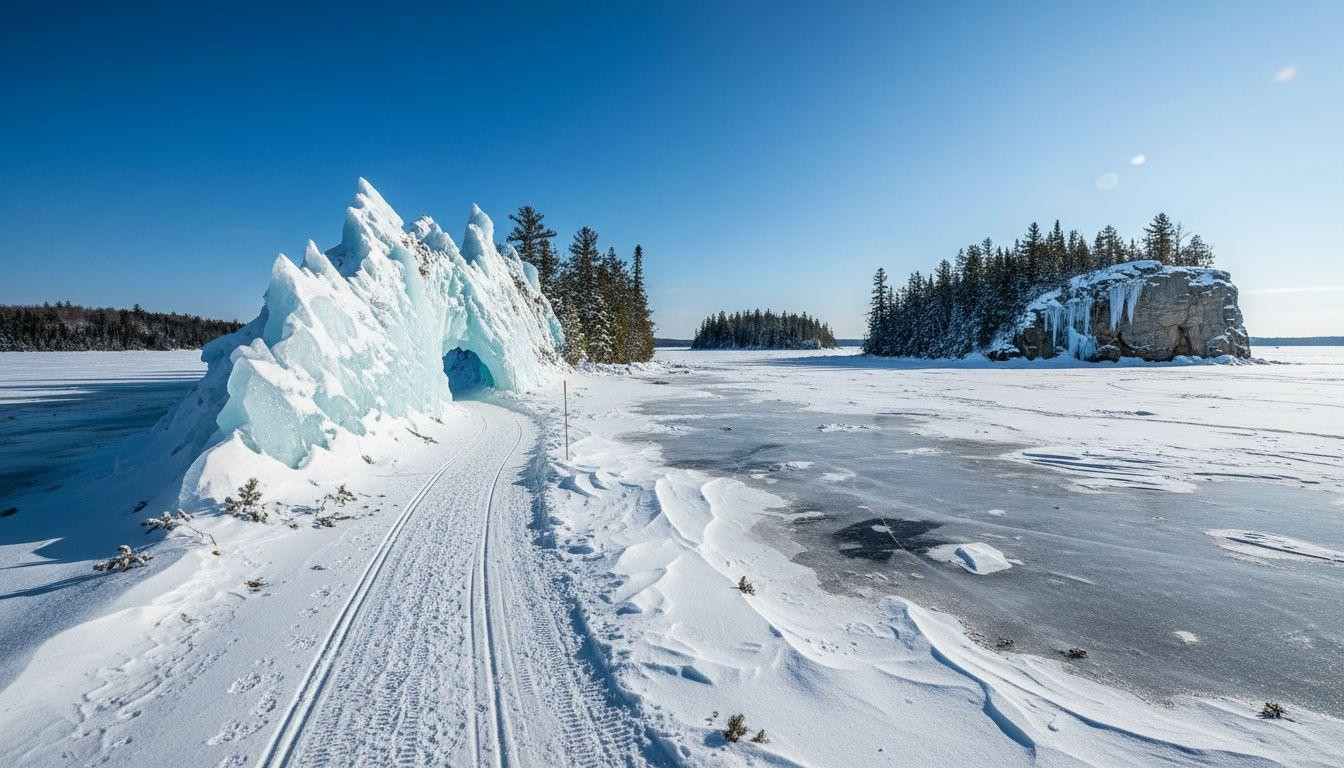
The Boundary Waters Canoe Area fills up with summer permits in February. Winter visitors face portaging heavy gear across frozen terrain with no motorized support. Minnesota hides a better winter secret. Namakan Lake’s frozen archipelago opens only when ice creates 126 miles of groomed snowmobile trails across a 27,000-acre winter wonderland.
Snowmobile tracks crisscross white expanses toward forested islands that simply don’t exist in summer. Northern lights dance over pressure ridges cut weekly for safe passage. The silence here feels deeper than anywhere else in Minnesota.
Why Boundary Waters disappoints in winter
BWCA winter camping requires permits at $16 per adult plus gear that weighs 40-60 pounds per person. Portaging frozen trails means hauling sleds over hilly terrain described as “easy to very difficult” by park officials. Multi-day commitments become mandatory when temperatures drop to -10°F.
No motorized access means snowshoeing or skiing every mile to reach campsites. Winter resupply becomes nearly impossible without extensive backcountry experience. The raw wilderness attracts experts but excludes most winter travelers seeking accessible solitude.
Summer’s canoe magic disappears under ice and snow. What remains challenges even seasoned outdoors enthusiasts with logistics that few can handle comfortably.
Meet Namakan Lake’s frozen archipelago
The landscape transformation
Winter transforms Namakan Lake into Minnesota’s most accessible frozen archipelago. Islands emerge from white expanses like ancient settlements waiting for discovery. Grassy Bay’s 125-foot granite cliffs create stark contrasts against the ice below.
Pressure ridges form 10-20 foot ice walls where shifting forces create natural mazes. Trail crews cut passages weekly with large groomers reported by National Park Service rangers. The boreal forest hangs heavy with snow while northern lights illuminate groomed trails at 48°N latitude.
The access revolution
Voyageurs National Park maintains 126 miles of staked and groomed snowmobile trails from mid-December through March. Kabetogama lodges like Voyageur Park Lodge offer direct lake launches to reach the 3K Snowmobile Trail system. No backcountry permits required.
Snowmobile rentals cost $200-300 per day including safety gear and ice reports. Day trips to remote islands become possible where summer requires multi-day boat camping. International Falls airport sits 50 miles away with $200-400 flights from Minneapolis.
The winter experience
What you actually do
Snowmobile island-hopping covers 10-20 mile routes across frozen Namakan Lake toward Kettle Falls and Black Bay. Ice fishing houses dot the landscape 50+ feet from groomed trails where walleye and northern pike thrive beneath thick ice. The 25 mph lake speed limits keep noise minimal.
Cross-country skiing follows staked routes through pressure ridge mazes and boreal forests dusted in powder. Northern lights viewing from accessible frozen bays requires no backcountry expertise. Temperatures of -10°F to 20°F create perfect conditions for hard ice formation.
The solitude factor
Under 10% of Voyageurs’ 200,000 annual visitors arrive in winter according to park tourism data. Icebox Days in January features frozen turkey bowling and “smoosh races” among the 500 residents in gateway towns. Boreal Stargazing Week runs February 9-15, 2026 with free ski and snowshoe rentals.
Lodge accommodations cost $100-150 per night compared to BWCA’s gear-intensive camping requirements. The park rewards winter visitors with an “unmatched experience of solitude and beauty” noted by regional tourism boards.
Practical winter reality
Voyageur Park Lodge provides winter base access with direct snowmobile trail connections. The Kabetogama-Ash River ice road operates when conditions allow with regular plowing services. Visitor centers at Rainy Lake and Kabetogama provide daily ice reports and safety updates.
Mid-January through February offers the hardest ice conditions and longest daylight hours. Grooming begins mid-December as snow and ice conditions allow according to lodge owners familiar with local trail systems. Icebox Days celebrates winter culture while Boreal Stargazing Week showcases the park’s Dark Sky certification.
Cell phone coverage varies across Namakan Lake. Safety gear comes included with snowmobile rentals from established operators. Park entry costs $35 per vehicle with no additional winter fees or quotas.
Your questions about Namakan Lake frozen islands answered
How much does a 3-day winter trip actually cost?
Lodge stays average $100-150 per night compared to BWCA winter camping at $16-32 in permits plus extensive gear costs. Snowmobile rentals run $200-300 daily including safety equipment. Meals cost $15-25 featuring local walleye and wild rice specialties. Total costs run 15-25% below national park averages.
Is winter access really safer than BWCA portaging?
Groomed and staked trails eliminate the “easy to very difficult” portaging required in BWCA winter conditions. Trail crews cut pressure ridge passages weekly for safe snowmobile passage. Ice thickness monitoring and daily reports reduce risks compared to backcountry winter camping.
How does this compare to other frozen lake destinations?
No other North American destination offers 126 miles of groomed snowmobile trails across frozen archipelagos with this level of accessibility. Sweden’s frozen Stockholm Archipelago requires international travel while Namakan sits 8 hours from Minneapolis with domestic flight connections.
Sunrise gilds frozen islands from snowmobile lookouts where summer boat traffic never reaches. The soft crunch of snow under winter boots echoes across 27,000 acres of ice. This is Minnesota’s winter secret hiding in plain sight.