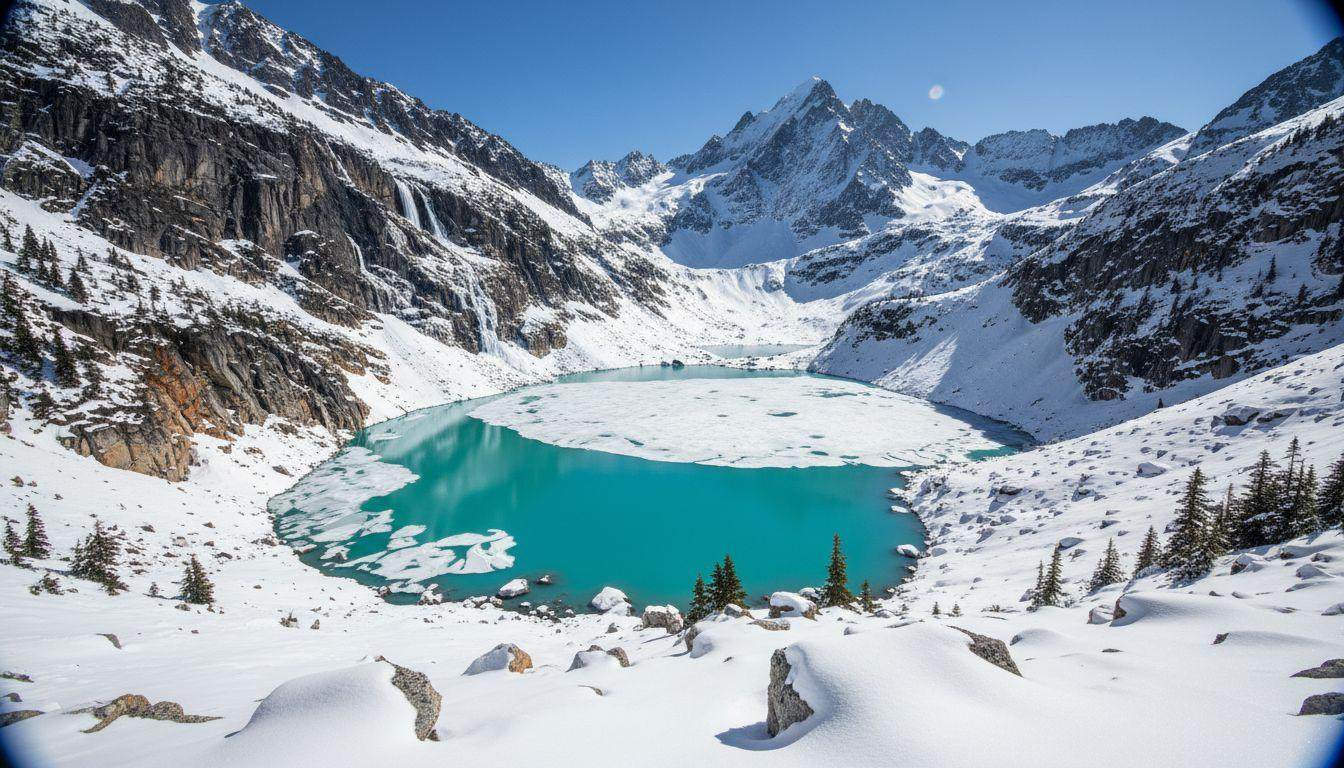
The soft crunch of snowshoes on crystalline snow breaks the absolute silence at Thornton Lakes. No voices echo across the frozen alpine basin. No engine noise disturbs the winter stillness. Just three impossibly turquoise glacial lakes nestled in a North Cascades cirque, their color vivid even against January’s pristine snowfields. This is wilderness earned through effort, where Highway 20’s seasonal closure transforms a challenging summer hike into an otherworldly winter pilgrimage.
The cirque setting
Thornton Lakes sits hidden in North Cascades National Park, 11 miles east of Marblemount via a rough gravel road that remains passable in winter. The three alpine lakes occupy a dramatic glacial cirque at elevations between 4,800 and 5,700 feet, carved by ancient ice into steep granite walls. Glacial activity created this natural amphitheater thousands of years ago.
Highway 20 closed for winter on December 4, 2025, sealing off casual access from November through April. The seasonal closure transforms this already under-the-radar destination into true wilderness solitude. Pacific Northwest alpine wilderness experiences like this become increasingly rare as tourism spreads to formerly quiet places.
Winter’s turquoise revelation
The color that defies cold
Glacial silt creates the lakes’ signature turquoise hue through a process called light scattering. Fine rock flour, ground by glaciers into particles smaller than light wavelengths, reflects blue and green spectrum light while absorbing reds and yellows. This phenomenon persists even in winter where open water remains unfrozen.
The color intensity rivals Lake Louise in Banff but without tourist crowds or commercial infrastructure. Local tourism data shows fewer than 10,000 annual visitors reach Thornton Lakes compared to Diablo Lake’s hundreds of thousands.
A landscape frozen in time
Winter snowpack buries trail markers and modern intrusions, creating a pre-civilization atmosphere. Snow platforms at 6,000 feet offer views across the Picket Range and Mount Triumph. The cirque walls rise dramatically from the lake basin, with waterfalls frozen into sculptural ice formations.
Recent visitor surveys show winter travelers describe the experience as “meditative” and “spiritually restorative.” The absence of summer’s wildflower meadows reveals the raw geological architecture beneath.
The snowshoe experience
Earning the solitude
The 10-mile round-trip journey gains 2,200 feet in elevation through increasingly challenging terrain. Initial miles follow gentle forest paths with intermittent snow coverage. Steep slopes near 5,000 feet require proper winter gear including crampons and ice axes for safe passage.
Winter completion typically requires a full day or overnight backpacking. Capitol Reef’s winter slot canyons where snow creates natural barriers offer similar earned solitude experiences. Average winter visitors number fewer than 50 per month during December through March.
What silence actually sounds like
The frozen landscape amplifies subtle sounds while muffling human noise. Snowshoe steps create rhythmic compression against crystalline snow. Distant avalanches rumble occasionally from surrounding peaks. Frozen waterfalls produce delicate tinkling sounds as ice shifts with temperature changes.
Morning temperatures hover between 20-35°F, with crisp pine-scented air carrying no exhaust fumes or mechanical sounds. The sensory deprivation creates heightened awareness of natural phenomena.
The winter advantage
Highway 20’s closure from late November through April preserves Thornton Lakes as Washington’s most accessible yet secluded alpine destination. While North Cascades National Park’s dramatic winter landscapes attract increasing attention, Thornton Lakes remains overlooked due to access challenges.
Winter visitation stays below 1% of summer numbers. This natural crowd control preserves the wilderness character that makes the North Cascades exceptional. Free park entry (unlike 90% of national parks) keeps costs minimal for prepared winter adventurers.
Your questions about Thornton Lakes answered
Is winter access safe?
Winter travel requires avalanche awareness and proper gear including snowshoes, crampons, ice axes, and zero-degree sleeping bags for overnight trips. The Northwest Avalanche Center provides current conditions. Cell coverage remains spotty throughout the trail system. Self-issue backcountry permits are required year-round.
How does it compare to summer?
Summer brings wildflower meadows and snow-free trails from July through September, with moderate crowds of 200-300 visitors weekly. Winter offers absolute solitude but requires advanced outdoor skills. Snow typically persists until late June due to high elevation and north-facing exposure.
What makes this different from Diablo Lake?
Diablo Lake offers roadside turquoise water views with minimal effort and significant crowds. Thornton Lakes requires 5-6 hours of hiking and 2,200 feet of elevation gain. Norwegian fjords where mirror-calm water reflects mountain peaks provide similar reflective beauty but lack the earned wilderness experience.
Dawn light touches the frozen cirque walls as steam rises from patches of open water. The turquoise glow intensifies with early morning sun, creating natural cathedral lighting across granite amphitheater walls. Silence returns as footsteps fade into memory.