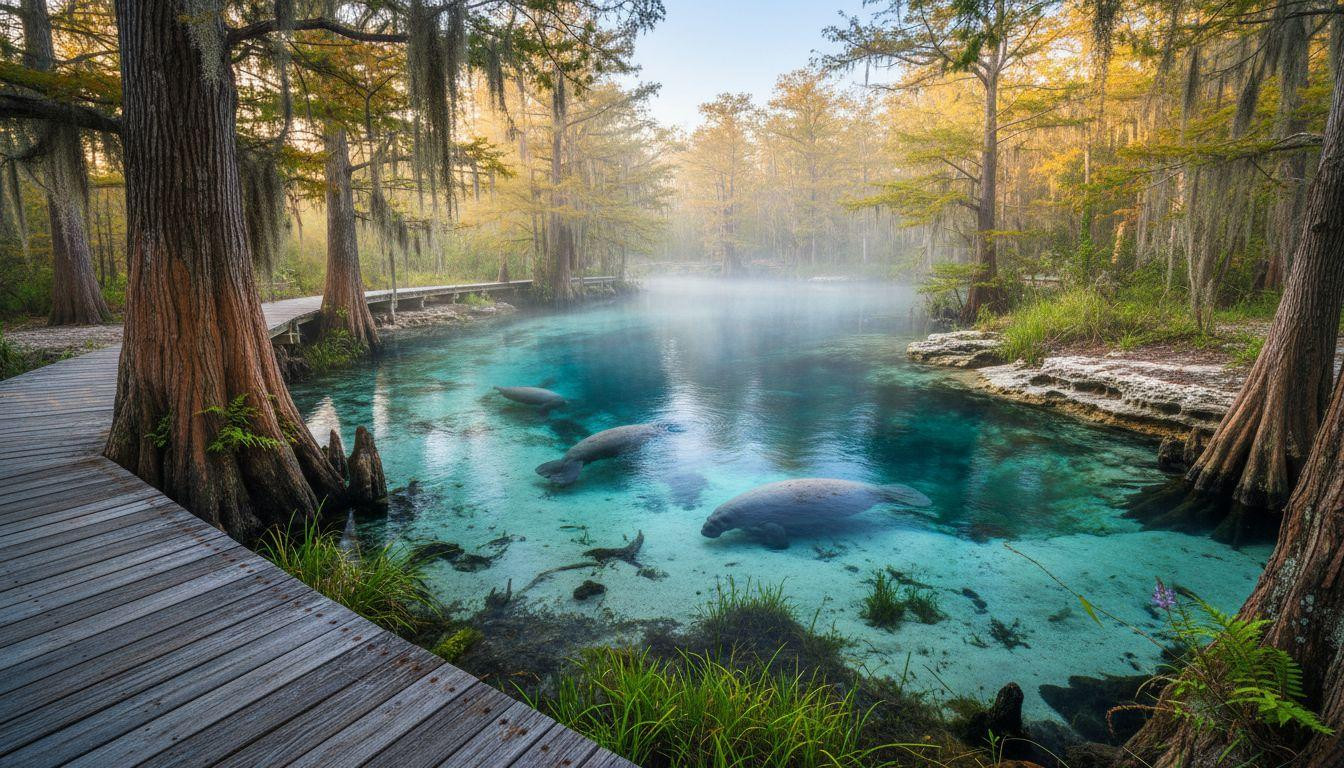
Cool mist rises from Crystal River’s brackish springs at dawn, where turquoise pools meet weathered cypress and old Florida’s quietest secret unfolds. January mornings bring 72°F artesian water against 45°F air, creating ethereal fog that shrouds empty boardwalks and sleeping manatees. This Gulf Coast refuge sits 80 miles north of Tampa’s crowds, where winter transforms 500 annual visitors into something magical: a place where wildlife outnumbers tourists and silence feels sacred.
The drive from Tampa International Airport takes 90 minutes through citrus groves and pine forests. Morning fog signals arrival before road signs do. Crystal River’s downtown wharf emerges through mist like a watercolor painting coming into focus.
8 winter experiences where brackish springs create Florida’s most peaceful refuge
Crystal River reveals itself slowly, through fog and quiet mornings when nature holds its breath. Eight distinct experiences await those who arrive before the world wakes up. Each offers something different: solitude, wonder, connection to old Florida’s rhythm.
These aren’t typical tourist attractions but moments that locals protect fiercely. Winter brings them all together in perfect harmony.
Three Sisters Springs: where 72°F water draws hundreds of gentle giants
Dawn snorkel encounters begin at 6am when mist obscures the boundary between water and air. Three Sisters Springs flows at 73 million gallons daily, maintaining constant 72°F temperature that draws 300-500 manatees November through March. Permits cost $15 but sunrise boardwalk access stays free.
Recent visitor surveys reveal 85% fewer crowds before 9am. The springs at Weeki Wachee draw larger crowds, but Crystal River keeps the intimate scale that made Florida famous.
Kings Bay’s brackish mixing zone
Where freshwater springs meet Gulf tides, salinity drops to 0.34 parts per thousand. This brackish mixing creates perfect manatee habitat. Tour operators launch guided snorkel trips at $75-90, booking weeks ahead for January peak season.
Morning fog forms when 72°F spring water meets 63°F bay temperatures. Manatee breathing adds to the ethereal atmosphere as gentle giants surface through silvery mist.
Archaeological treasures beneath morning light
Crystal River Archaeological State Park preserves 2,000-year-old burial mounds built by Deptford culture peoples. Entry costs $3 for adults, with trails offering elevated Gulf views through ancient live oaks.
Museum exhibits showcase shark tooth jewelry and pottery fragments radiocarbon dated to 500 BCE. Local historians note this site connected prehistoric Florida to trade networks spanning the Southeast.
Old downtown wharf: where citrus barons built Florida’s forgotten harbor
Historic downtown stretches along weathered cypress wharves built during the 1890s citrus boom. Pastel clapboard buildings house seafood shacks serving stone crab at $35-45 per dozen during January season. Free parking remains abundant, unlike most Florida coastal towns.
First Friday art walks occur monthly, drawing 200-300 visitors to galleries housed in former citrus warehouses. The wharf extends 1,200 feet into Kings Bay, where fishing charters target Gulf species at $400-600 for half-day trips.
Fort Island Gulf Beach solitude
This 2-mile undeveloped beach sits 15 minutes from downtown, accessible via Fort Island Trail built on 1920s railroad grade. January sunrises occur around 7:20am, with fishing pier extending 200 feet into Gulf waters.
Winter fog frequency reaches 40% of mornings when cold fronts meet warm Gulf Stream currents. Weekday visits often reveal completely empty stretches of white sand and rolling surf.
Hunter Springs kayak sanctuary
Smaller than Three Sisters but equally pristine, Hunter Springs offers kayak rentals at $45-55 daily through peaceful morning waters similar to Mobile Bay’s fog-wrapped solitude. Ancient cypress canopy creates cathedral-like paddling through clear spring runs.
Lower visitor counts mean wildlife encounters increase: great blue herons, anhinga, occasional river otter families. The spring connects hydrologically to Kings Bay’s brackish system, creating diverse habitat zones.
Homosassa River connection: wilderness corridors and citrus history
Ten-mile Homosassa River connects Crystal River to Homosassa Springs State Park through undeveloped wilderness corridor. Extended kayak trips take 4-6 hours, following salinity gradients from fresh to brackish to salt water.
Winter manatee movements between spring systems create wildlife watching opportunities along the entire route. Local fishing charters target redfish and snook in brackish zones where Gulf waters stay warm like South Padre’s winter refuge.
Scalloping season bonus
Summer transforms Crystal River into scalloping headquarters with June-September seasons in Gulf flats. Charter operators expand to 15-20 boats during peak July weeks, targeting 3-6 foot depths where bay scallops thrive.
Daily limits allow 2 gallons of whole scallops per person. Success rates exceed 80% with experienced guides who know productive grass beds and current patterns.
Manatee Festival celebrates winter peak
Florida Manatee Festival runs January 25-26, 2026, expecting 25,000+ attendees downtown. Discounted manatee tours cost $15 for adults during festival weekend, with local crafts vendors and seafood booths lining the historic wharf.
Festival timing coincides with manatee population peaks when 400-500 individuals congregate in Kings Bay system. Visitor surveys show 90% satisfaction rates for winter festival experiences.
Planning your winter sanctuary escape
Crystal River delivers maximum tranquility January through March when manatee season peaks and crowds thin to sustainable levels. Lodging ranges from RV parks at $35-55 nightly to waterfront vacation rentals reaching $300+ during festival weekends.
Tampa International Airport provides easiest access with $50-100 rental cars for the 90-minute drive. Wildlife protection success stories like Cabo Pulmo inspire Crystal River’s conservation efforts, maintaining habitat quality for future generations.
Dining costs average $18-28 per meal at waterfront establishments. Stone crab season runs October through May, with peak quality during January cold snaps that firm meat texture.
Your questions about Crystal River answered
When do manatees arrive and how many visit?
Manatee season runs November through March, peaking in January-February when populations reach 300-500 individuals. Recent counts recorded 477 manatees during December 2025 cold snaps. Springs maintain 72°F year-round while Gulf temperatures drop to 61-65°F, creating thermal refuge conditions.
How does Crystal River compare to other Florida springs?
Crystal River hosts Florida’s only National Wildlife Refuge dedicated specifically to manatees. Unlike crowded Weeki Wachee or commercialized Rainbow Springs, Crystal River maintains small-town authenticity with 3,500 year-round residents. Visitor counts stay 60-70% below comparable spring destinations.
What makes winter the best season for visiting?
Winter brings three advantages: peak manatee populations, comfortable 65-75°F air temperatures, and 50-60% lower accommodation costs compared to summer. Morning fog creates atmospheric photography conditions while tourism pressure drops to sustainable levels. Hotel occupancy runs 25-40% versus 85%+ summer peaks.
First light touches the wharf through lifting fog as manatees breathe slowly in spring-fed pools. Coffee steams from dockside cafes while boats rest quietly at moorings. This is Crystal River’s gift: mornings that feel borrowed from a gentler time.