Woodstock draws 100,000 visitors annually to Vermont’s most famous village. Tour buses clog Route 4 during fall foliage season. Hotels charge $250-350 nightly when maples turn gold.
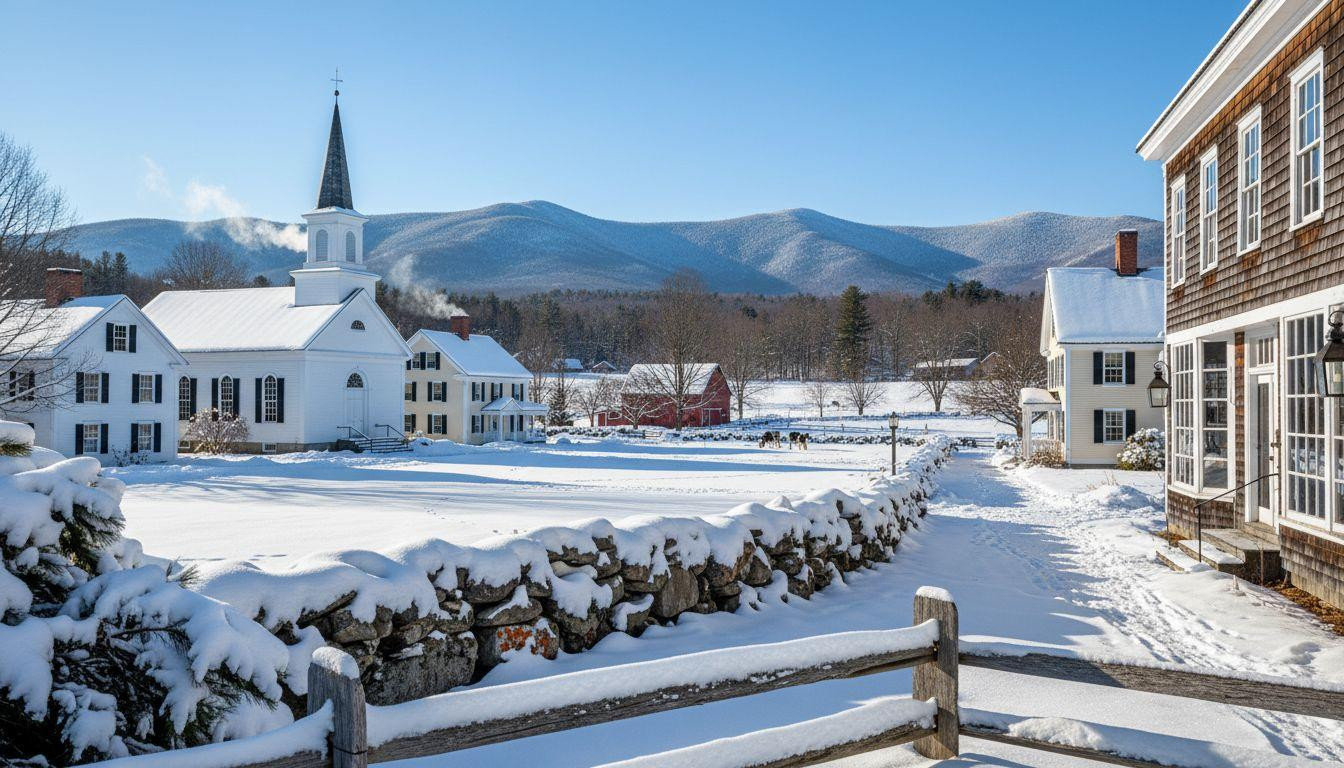
Twenty minutes away, Weston preserves the same postcard charm. White churches reflect in snow-covered greens. Stone walls frame rolling meadows against Green Mountain peaks.
This village of 600 residents offers Vermont’s quintessential experience. No crowds fight for parking spaces. Local inns charge $100-150 nightly year-round.
Why Woodstock lost its village soul
Cloudland Road transforms into a parking lot each October. Tour buses line the streets. Visitors outnumber residents 30 to 1 during peak foliage weeks.
Boutique shops replaced authentic general stores. Chain restaurants moved into historic buildings. Local families sold properties to vacation rental companies.
Route 4 bottlenecks create hour-long delays. Parking costs $20 daily downtown. The village green disappears under crowds seeking Instagram photos.
Woodstock generated $300,000-400,000 in tourism taxes during 2023. Success destroyed the authenticity visitors came to experience. Commerce overwhelmed community character.
Meet Weston – Vermont’s time capsule village
Same postcard beauty, different experience
Weston’s Village Green anchors 18th-century architecture. The white-steepled church dates to 1820. Covered bridges span crystal streams through maple forests.
Farrar-Mansur House preserves Federal-style elegance from 1820. Stone walls built by colonial farmers still border country roads. Red barns dot meadows where Holstein cattle graze peacefully.
The numbers tell the story
Weston welcomes 10,000-20,000 visitors annually versus Woodstock’s 100,000 crowds. Population stays steady at 600 residents. Lodging costs average $100-150 nightly.
The village spans just 26 square miles. Distance from Country Store to Theater measures 0.2 miles. Route 100 access avoids Woodstock’s traffic congestion completely.
What makes Weston worth the drive
Heritage that still operates
Vermont Country Store opened in 1897 as a working general store. Penny candy fills glass jars. Cast-iron cookware hangs from wooden beams unchanged since Victorian times.
Weston Playhouse launched in 1937 as Vermont’s oldest professional theater company. Live performances continue despite 2023 flood repairs. Community cabarets support the volunteer fire department.
These aren’t tourist attractions. Local families shop at the Country Store weekly. Theater volunteers live in town year-round.
Winter brings the best access
Seven ski resorts operate within 30 minutes. Okemo Mountain lies 20 minutes north. Day passes cost $100-150 versus Stowe’s $200 rates.
Christmas in Weston returns in December 2025 after flood repairs. Fireworks arrive via fire engine with Santa. Hot cocoa costs $3 at the volunteer fire tent.
January through March sees minimal crowds. Snowshoeing trails remain empty weekdays. Maple syrup producers welcome visitors to sugarhouses.
The practical case for Weston
Rutland sits 20 minutes southeast for supplies and regional airport access. Albany International Airport lies 1.5 hours south. Car rentals cost $50-80 daily.
Winter temperatures average 30°F highs and 10°F lows. Snow accumulation reaches 80-100 inches annually. All-wheel-drive vehicles handle mountain roads safely.
Village restaurants serve Vermont classics. Maple-glazed pork costs $20 at the Country Store eatery. Apple cider donuts sell for $8 per dozen fresh from local orchards.
Weston preserves what Woodstock commercialized. Authentic community life continues unchanged. Visitors experience real Vermont instead of tourist performance.
Your Questions About Weston answered
When should I visit Weston for the best experience
Winter offers uncrowded access to skiing and village life. Fall brings peak foliage but higher prices. Summer provides warmest weather for hiking. Spring sees maple syrup production and wildflowers.
How does Weston compare culturally to other Vermont villages
Weston maintains working institutions like the 1897 Country Store. Other villages became museums. The 1937 Theater Company still produces live shows. Community traditions continue organically rather than for tourists.
What makes Weston different from Woodstock practically
Weston costs 40-60% less for lodging and dining. Traffic remains light year-round. Parking costs nothing. Local businesses serve residents first, visitors second. The village functions as a real community.
Morning light filters through evergreens onto snow-covered streets. Church bells echo across the frozen village green. Wood smoke curls from chimneys of homes where families have lived for generations.