Taos, New Mexico attracts nearly 100 galleries and organized art walks that funnel tourists through commercial spaces. Tour buses cluster around the plaza while artists work behind closed doors. Jerome, Arizona offers something Taos lost decades ago: authentic creativity in open studios where welders work with sparks flying and painters chat without sales pressure.
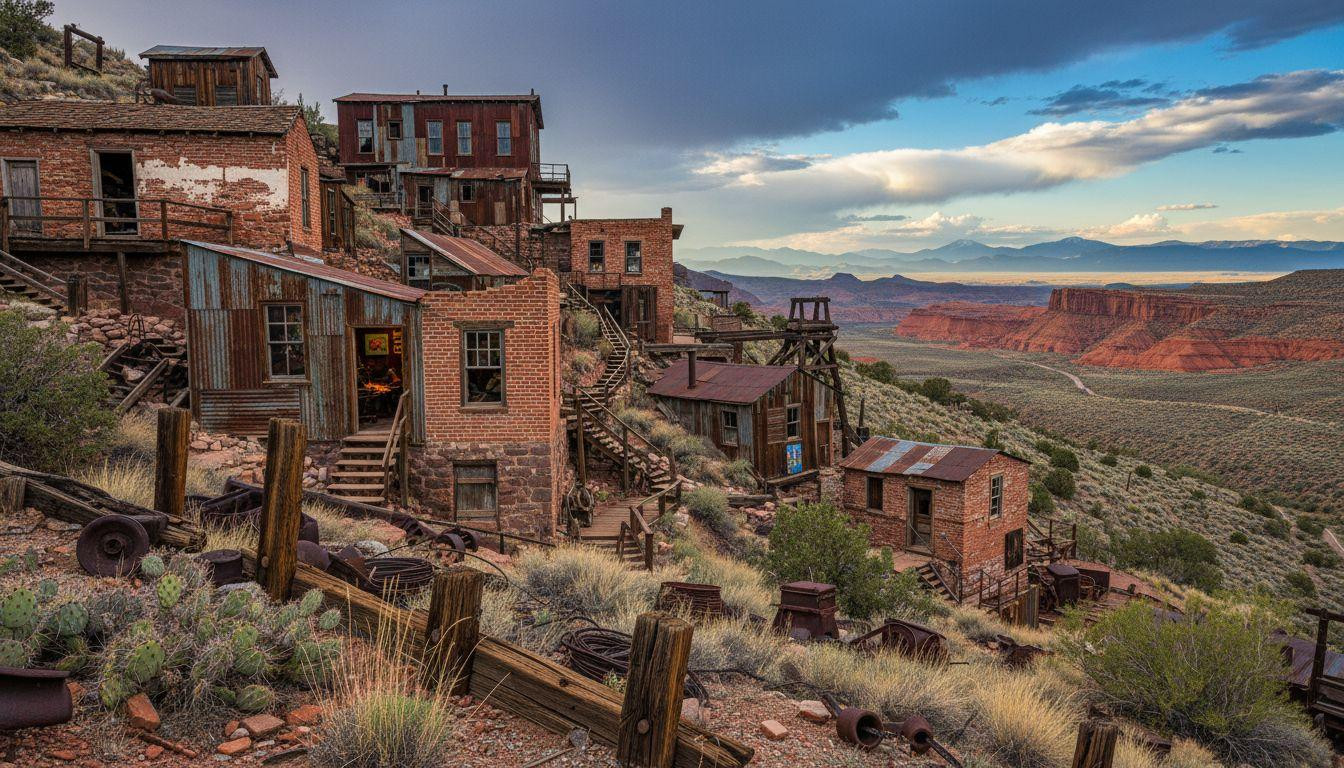
This former copper mining ghost town clings to Cleopatra Hill at 5,200 feet elevation. Artists discovered Jerome in the 1970s when the population had dropped from 15,000 to just 50 residents. Today’s 450 residents include 30+ working artists who’ve transformed mining buildings into visible studios.
Why Taos became a tourist product
Taos County ranks second in the US for working artists per capita after Brooklyn. But success bred commercialization that buried authentic interactions. Tour buses arrive daily carrying visitors through structured gallery walks that prioritize sales over creative process.
Winter lodging in Taos averages $200-300 per night for historic adobe inns. Restaurant meals cost $20-35 in establishments that cater to art tourism circuits. The experience feels scheduled rather than discovered.
Distance compounds the challenge. Albuquerque to Taos requires 2.5-3 hours through high desert plateaus. Once there, visitors join organized flows through nearly 100 venues during peak seasons.
Jerome delivers what Taos promises
Studios you can actually watch
Jerome’s steep switchback streets wind past studios with open doors. Metalworkers weld sculptures while visitors pause to watch sparks cascade down vertical streets. Oil paint and clay dampness mix with the metallic tang of active creation.
Artists work where tourists can see the process. Conversations happen naturally without gallery staff mediating interactions. This approach mirrors European artist communities that preserve authentic creative environments.
Ghost town atmosphere intact
Mining subsidence moved Jerome’s Sliding Jail 225 feet downhill from its original foundation. Rusty ore carts dot slopes where weathered facades blend authentic decay with tasteful restoration. No Disney polish masks the town’s industrial heritage.
Verde Valley stretches 30 miles below Jerome’s perch. Winter light sharpens the view of rust-red mesas and sage valleys dotted with distant San Francisco Peaks. Ravens call across empty streets at dusk.
The Jerome advantage over Taos
Costs that make sense
Phoenix Sky Harbor sits 2 hours from Jerome via scenic Black Canyon Highway. Historic properties like Ghost City Inn and Connor Hotel charge $150-250 per night during off-season winter months. Restaurant meals average $15-25 in the handful of local eateries.
A weekend visit costs approximately $600-900 for lodging, meals, and gallery browsing. Similar cost advantages appear in other authentic alternatives to overtouristed destinations.
Access without crowds
January brings Jerome just 50 daily visitors compared to summer peaks of 500. Temperatures reach comfortable 40-60°F during winter days with minimal precipitation. Studios stay open with fireside warmth and clear slanting light perfect for photography.
Jerome’s 0.5-mile walkable radius covers the core hillside community. Free street parking eliminates Taos’s plaza congestion. Other small historic towns maintain similar intimate scales that resist mass tourism.
Jerome preserves what Taos commercialized
National Historic District status protects Jerome from commercial overbuilds that could destroy its artist haven character. Monthly art walks remain self-guided affairs where studios open doors without high-pressure sales environments.
Local residents favor measured tourism that keeps the community alive without overwhelming it. Artists moved here for authentic creative freedom, not commercial success. Similar preservation efforts protect other transformed industrial towns across America.
Jerome lacks formal artist residencies like Taos’s Helene Wurlitzer Foundation. But this absence reinforces the town’s commitment to working residents rather than temporary cultural programming.
Your questions about hidden mill towns that became artist communities answered
Which former industrial towns offer the most authentic artist experiences?
Jerome, Arizona leads for authentic studio access with 30+ visible working spaces. Berea, Kentucky specializes in Appalachian craft traditions. Salida, Colorado maintains Colorado’s largest historic district with restored cultural hubs.
How do costs compare between established and emerging artist communities?
Emerging communities like Jerome average 25-40% lower lodging costs during off-seasons. Established destinations like Taos command premium pricing year-round due to organized tourism infrastructure and reputation.
What makes mill town artist communities different from purpose-built art colonies?
Former industrial sites offer authentic architecture and community stories that purpose-built colonies lack. Mining buildings, textile mills, and manufacturing spaces provide character that new construction cannot replicate.
Golden morning light cascades down Jerome’s vertical streets. Weathered mining facades cast long shadows on zigzagging staircases. Artists work where miners once extracted copper from Cleopatra Hill. This is what authentic creativity looks like when tourism hasn’t scheduled it.