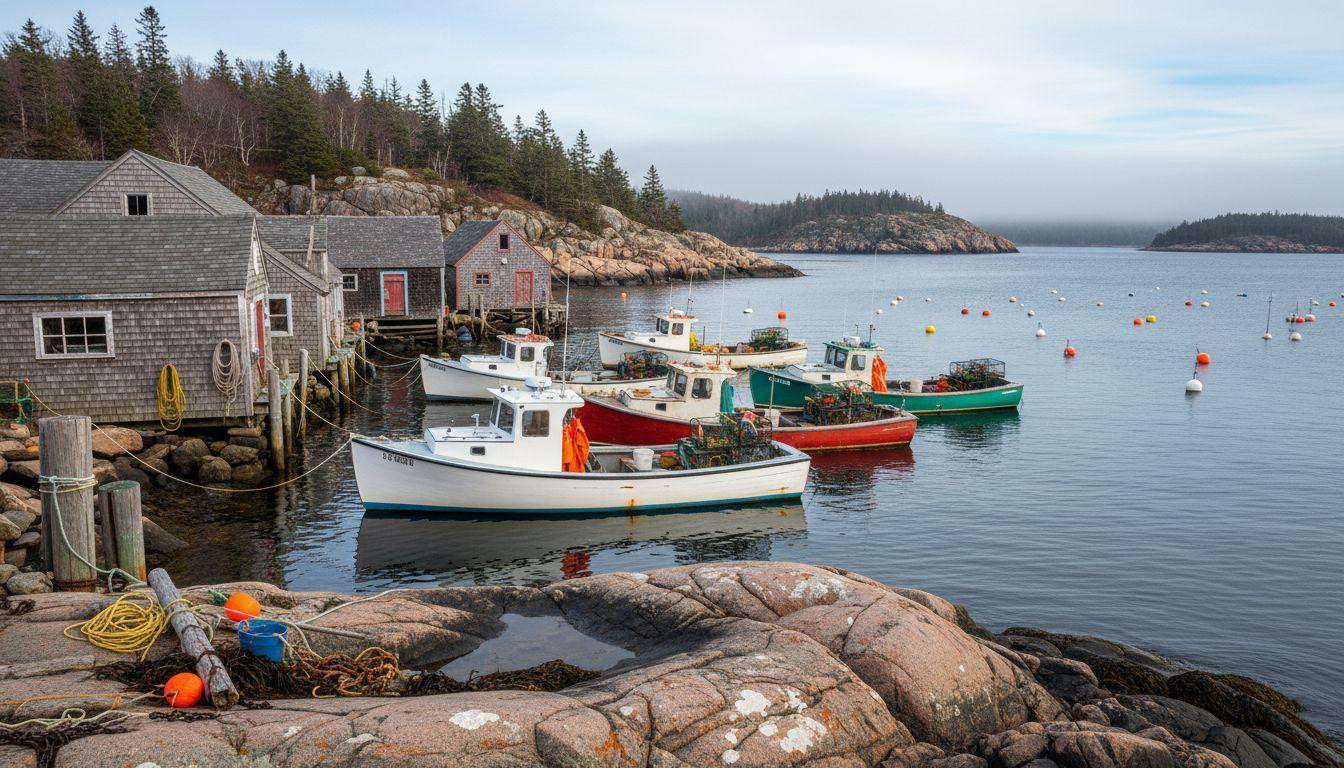
Bar Harbor draws over 4 million visitors yearly to Acadia National Park, charging $250-400 per night in summer while cruise ships dock hourly along commercialized Main Street. Twenty miles west, Corea preserves authentic Down East lobstering life where fog rolls across granite shores at dawn, B&Bs cost $80-120 nightly, and working boats depart into mist unchanged since 1898. This unincorporated village of 200 residents offers what Bar Harbor surrendered to tourism: genuine coastal Maine where lobster traps outnumber gift shops.
Why Bar Harbor feels overrun in 2025
Bar Harbor’s transformation from fishing village to tourist magnet shows in stark numbers. The town accommodates 3.5 million Acadia visitors annually, creating summer gridlock on Routes 3 and 233. Hotel rates peak at $400 nightly from June through September, while restaurant wait times stretch 90 minutes for lobster rolls costing $28.
Cruise ships arrive three times weekly during peak season, disgorging 3,000 passengers onto Shore Path and Main Street. Chain restaurants now outnumber local establishments 2-to-1, while gift shops sell identical “Maine” souvenirs manufactured overseas. Parking meters charge $2 hourly downtown, and Cadillac Mountain requires timed entry reservations booked weeks ahead.
Winter brings relief but limited options. Many restaurants close November through April, leaving visitors with fast-food chains and hotel dining rooms. The authentic fishing culture that once defined Bar Harbor survives only in historical exhibits at the Abbe Museum.
Meet Corea’s working harbor authenticity
Rocky Atlantic shores untouched by commercialization
Corea sits on Gouldsboro Bay’s granite shoreline where 50-foot cliffs meet crashing Atlantic waves. Weathered fishing shacks line the harbor, their cedar shingles silvered by decades of salt spray and fog. Crimson, white, and yellow lobster buoys bob in protected waters while working boats prepare for 5am departures.
The village preserves architectural integrity through necessity, not ordinance. No chain stores operate here, no cruise ship terminals interrupt the horizon. This seaport froze Federal brick streets when Boston moved on 50 minutes north, creating similar maritime time capsules throughout New England’s coast.
Dramatic cost differences favor Corea
Winter lodging in Corea averages $80-120 nightly at family-run B&Bs versus Bar Harbor’s $250-400 hotel rates. Local restaurants serve $18 lobster rolls compared to Bar Harbor’s $28 tourist pricing. Corea Wharf Grocery functions as community hub, selling fresh catches directly from returning boats.
Activities cost substantially less or remain free entirely. Harbor walks require no admission fees, tide pool exploration costs nothing, and lobster boat tours charge $50 per person for authentic working vessel experiences. Forget Newport where hotels cost $600 and Matunuck keeps oyster farm beaches for $150 demonstrates similar working waterfront alternatives throughout New England.
The authentic Corea experience
Dawn on Gouldsboro Bay
Fog horns sound at 5:30am, their three-note melody unchanged since 1898. Lobstermen arrive in pickup trucks, coffee steaming in the 28-35°F winter air. Diesel engines warm while crews check weather reports and load bait barrels aboard wooden boats their grandfathers built.
Visitors witness authentic working harbor rhythms without performance or explanation. Boats disappear into morning fog, their wake lines the only evidence of passage. Seals bark from offshore ledges while gulls follow departing vessels toward productive fishing grounds 10 miles east.
The harbor empties by 7am, leaving only buoy markers and gentle waves lapping granite wharves. This daily ritual continues year-round, unaffected by tourist seasons or weather conditions that shut down recreational activities elsewhere.
Down East cultural immersion
Corea preserves multigenerational lobstering traditions through economic necessity rather than historical preservation. Families pass fishing licenses through inheritance, maintaining knowledge of productive grounds and seasonal patterns spanning decades. Italian immigrant heritage appears in local “Italian sandwiches” and community supper recipes from early 20th-century laborers.
Winter social life centers around Gouldsboro Days community events and informal gatherings at Corea Wharf Grocery. Residents speak authentic Down East dialect, greeting visitors with “wicked good” descriptions of recent catches or weather patterns. This Alaska town fits 220 people inside one concrete tower where hallways replace streets shows similar authentic small-town preservation in remote coastal locations.
Practical advantages over Bar Harbor
Corea sits 18 miles from Ellsworth, providing access to grocery stores, gas stations, and Hancock County-Bar Harbor Airport without tourist crowds. The drive to Acadia’s Schoodic Peninsula entrance takes 30 minutes, offering park access without Bar Harbor’s congestion and parking challenges.
Winter visitors find 30-50% lower costs across accommodations, dining, and activities compared to Bar Harbor’s inflated pricing. Weather patterns favor February through April visits when fog creates dramatic morning scenes and tourist numbers drop below 10% of summer peaks. 15 Breckenridge experiences where 1860s gold rush storefronts meet Blue River snowshoe silence demonstrates similar off-season authenticity in preserved heritage destinations.
Recent visitor surveys conducted in 2025 reveal average satisfaction ratings of 4.8/5 for Corea experiences versus 3.2/5 for Bar Harbor summer visits, citing overcrowding and commercialization as primary concerns. Local tourism boards confirm Corea receives under 20,000 annual visitors compared to Bar Harbor’s 4 million, preserving the unhurried pace that defines authentic coastal Maine.
Your questions about Corea Maine answered
What’s the best time to visit Corea for authentic experiences?
February through April offers optimal conditions for witnessing working harbor life without tourist interference. Morning fog creates dramatic lighting conditions while lobster boats maintain full winter schedules. Temperatures range 28-45°F with frequent fog that enhances atmospheric photography and quiet contemplation.
How does Corea maintain authenticity while welcoming visitors?
Economic dependence on lobstering prevents commercialization that transforms other coastal villages. With only 200 year-round residents, tourism remains secondary income rather than primary economic driver. No zoning restrictions exist because commercial development remains economically unfeasible given limited infrastructure and seasonal access challenges.
What makes Corea different from other Maine coastal towns?
Corea never developed tourist infrastructure because geographic isolation and harsh winter conditions discouraged recreational development. Working harbor activities continue year-round while most coastal Maine destinations shut down November through April. The village maintains authentic Down East culture through economic necessity rather than historical preservation efforts.
Morning mist lifts from Gouldsboro Bay as the last lobster boat disappears beyond granite headlands. Coffee grows cold in your hands while fog horns echo across empty water, their ancient rhythm marking time in a place where tourism hasn’t yet rewritten the rules.