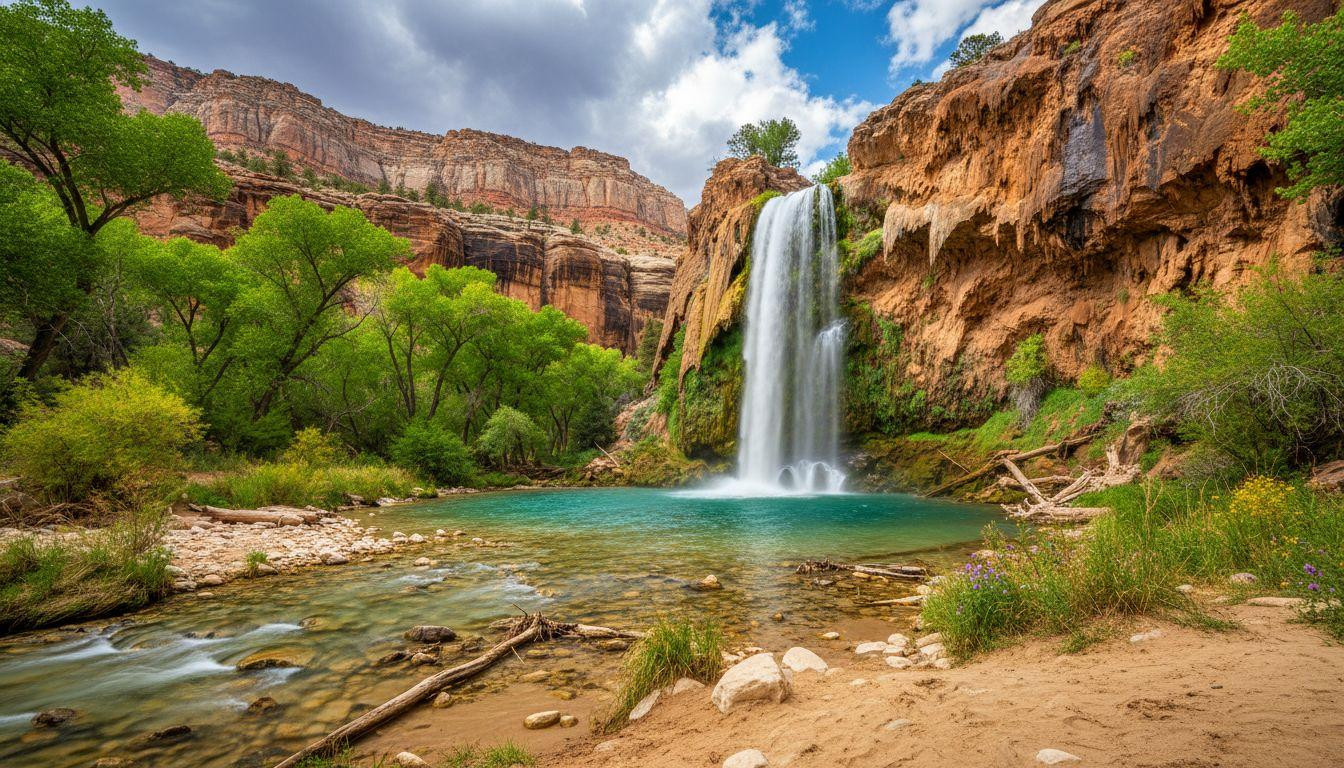
Fine sand infiltrates every step of the 6-mile trail, but the turquoise pool beneath 126 feet of cascading water makes every grain worth it. This Utah waterfall sits 50 minutes from Escalante, where Grand Staircase-Escalante’s most accessible desert oasis rewards moderate effort with water clarity that rivals Arizona’s famous falls. Winter 2026 timing offers serenity without summer heat, perfect for the destination’s unhurried pace.
The desert oasis setting
Grand Staircase-Escalante National Monument spreads across 1 million acres of southern Utah’s high desert. Calf Creek carves through towering Navajo sandstone cliffs 15 miles east of Escalante along Highway 12. The riparian corridor creates a green ribbon through golden slickrock, where cottonwoods and water birches frame beaver ponds below the trail.
The approach builds anticipation through numbered trail markers. Post 5 reveals ancient Fremont granaries tucked into canyon walls. Post 6 showcases pictograph panels across the creek, where Native Americans recorded their presence thousands of years ago.
Highway 12’s scenic designation draws travelers through Navajo sandstone canyons that mirror this destination’s geological drama.
The waterfall revelation
Visual impact
The 126-foot cascade emerges around the final bend like a mirage. Water plunges into an emerald pool so clear you can count every pebble on the bottom. Sandstone amphitheater walls frame the falls in warm golden-red hues, while fine mist creates rainbow effects in afternoon light.
Desert varnish streaks the cliff faces black and brown. These patterns form from iron and manganese oxides, darkened over centuries by bacteria and weathering.
Geological character
Navajo sandstone dominates this canyon, formed from ancient wind-blown desert dunes. Creek erosion via flash floods carved the narrow gorge over millennia. The contrast of lush pool in arid landscape creates that oasis illusion, where a single creek sustains life in barren slickrock country.
Similar turquoise waters appear in remote mountain lakes where mineral content creates electric-blue clarity.
The trail experience
The 6-mile journey
Deep sand sections demand beach-walk effort, making ankles work harder than the minimal 200-foot elevation gain suggests. Creek crossings punctuate the route through marshy areas where beaver dams control seasonal floods. Trail markers create anticipation games around endless canyon bends.
The moderate difficulty filters casual visitors naturally. Official BLM ratings confirm the sandy terrain adds challenge beyond typical desert hiking. Most hikers complete the round-trip in 3.5 hours, including waterfall contemplation time.
Desert details
Pinyon-juniper woodland provides occasional shade along the wide trail. Bird calls echo from riparian habitat where species abundance increases near water sources. The crisp, mineral scent of damp sandstone mingles with desert greenery.
Winter’s cooler temperatures make the hike comfortable without summer’s 100-degree heat. High-altitude destinations offer similar seasonal advantages for shoulder-season exploration.
Earned solitude
The 3-hour commitment creates natural crowd control without artificial barriers. Unlike permit-restricted Havasupai Falls or reservation-required Zion, Lower Calf Creek demands only determination and sturdy shoes. Mid-week winter visits reward hikers with empty amphitheater views.
A fallen tree log provides seating for waterfall contemplation. Recent visitor feedback consistently mentions spending 20-30 minutes simply watching the cascade. Swimming remains possible in warmer seasons, though winter mist cools the narrow canyon 10-20 degrees.
The destination costs 10-20% below Utah national park averages due to free BLM day-use access. Unique geological formations elsewhere require similar effort but deliver different sensory rewards.
Your questions about Lower Calf Creek Falls answered
When should I visit for the best experience?
Spring (March-June) and fall (September-October) offer ideal weather with creek flow guaranteed. Winter 2026 provides serene conditions with fewer visitors and comfortable hiking temperatures. Summer heat exceeds 100 degrees but refreshing waterfall mist compensates. Avoid winter ice on sandy sections.
How does this compare to Havasupai Falls?
Both offer turquoise pools in desert settings, but Lower Calf Creek requires no permit lottery and charges only $5 vehicle access. The 6-mile round-trip proves easier than Havasupai’s 10-mile trek. Water clarity matches Arizona’s famous falls with 80% of the visual drama for 10% of the logistics hassle.
What are the exact trail logistics?
Trailhead sits at Calf Creek Recreation Area with camping and picnicking facilities. GPS coordinates 37.794049, -111.414733 mark the parking area 270 miles from Las Vegas, 310 miles from Salt Lake City. Cell coverage drops to zero along the trail. Bring cash for the $5 day-use fee.
Soft morning light illuminates turquoise water against dawn-lit sandstone walls. Fine mist rises from the pool surface while desert silence surrounds the cascade’s gentle thunder.