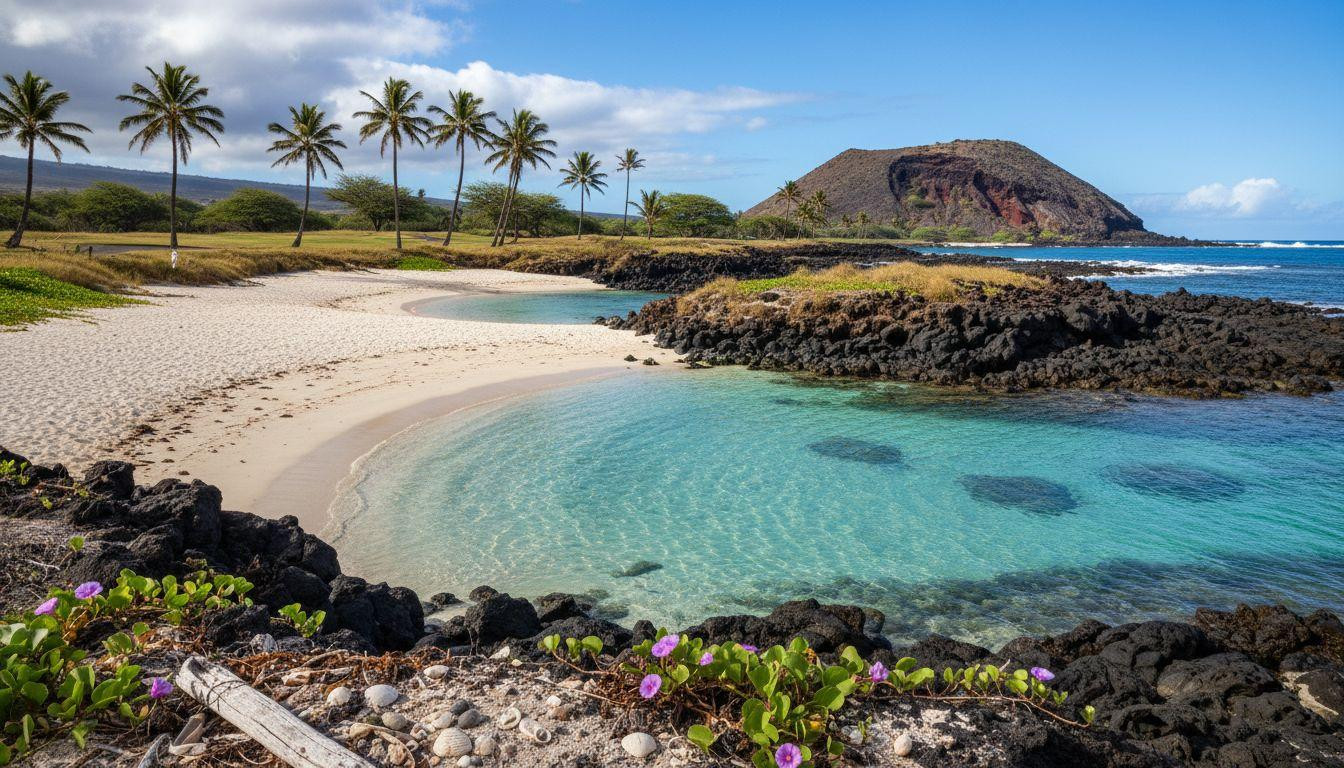
The abandoned golf cart trail ends where black volcanic rock meets white sand in two perfect crescents. Pohakumauliuli Beach keeps what Molokai’s 1970s resort boom couldn’t commercialize: pure solitude backed by a dramatic cinder cone. A 5-minute walk from Kepuhi Beach reveals tide pools shimmering in turquoise water, where fewer than 500 visitors discover this overlooked corner of Hawaii each year.
Where the golf course surrendered to the shore
Kaluakoi Golf Course closed in April 2008 when Molokai Ranch shut down. The 18-hole course designed by Ted Robinson now serves as nature’s reclamation project. Coconut trees block former cart paths, and the absence of watering systems has returned the land to its ranch heritage.
The shoreline walk from Kepuhi Beach follows these ghost trails. No signage marks the way, no facilities interrupt the coastline. Park free at Kepuhi and walk north along the old cart path for 5-10 minutes. The route passes through former fairways where native grasses have replaced manicured greens.
GPS coordinates remain approximate at 21.15°N, 157.25°W. The nearby village of Kamalo offers similar solitude with easier access, but Pohakumauliuli rewards those who seek the path less traveled.
The black cone that frames two coves
Pohaku Mauliuli’s volcanic drama
Pohaku Mauliuli translates to “black rock” in Hawaiian. The cinder cone rises from Maunaloa volcano eruptions that shaped this coastline 1.5 million years ago. Loose cinder rock contains olivine basalt and picrite-basalt lavas, creating the dramatic backdrop that defines these coves.
The contrast strikes immediately: white sand against black volcanic rock, turquoise water reflecting the cone’s shadow. This geological arrangement occurs rarely in Hawaii, making each photograph feel like discovering an untouched landscape. Similar volcanic beaches exist across the Pacific, but few offer this level of seclusion.
The Make Horse Beach legacy
Local ranching history gave this beach its alternate name. A horse fell from nearby cliffs and died on the shore during Molokai’s 19th-century cattle era. “Make” means “dead” in Hawaiian, creating an enduring reminder of the island’s ranching heritage.
Molokai Ranch operated 60,000 acres until 2008, when community opposition to development led to its closure. The $260 million ranch remains for sale, preserving this coastline from resort development. West shore traditions emphasize quiet respect for the land and sea.
What the coves offer today
Low tide exploration
Two distinct coves separated by lava boulders create protected swimming areas. Summer months from May through October bring calm conditions ideal for wading and tide pool exploration. Winter surf makes swimming dangerous, but the rocky formations remain spectacular for photography.
Tide pools along the shoreline teem with marine life. Reef shoes prove essential for navigating volcanic rock safely. The coves span roughly 200-300 feet each, offering intimate spaces where small groups can spread out comfortably. Maui’s similar coves attract hundreds daily, while Pohakumauliuli sees perhaps a dozen visitors on busy weekends.
The west shore ranch atmosphere
No development interrupts the coastline view. Evening brings local residents who gather for casual conversations and sunset viewing. The authentic paniolo (Hawaiian cowboy) culture persists in these informal gatherings, where aloha spirit means unhurried interactions and shared appreciation for natural beauty.
Views extend toward ‘Ilio Point and distant Oahu on clear days. The irony strikes visitors familiar with Waikiki: sand from nearby Papohaku Beach was historically shipped to create those famous resort beaches. Here, untouched sand remains where nature intended.
The satisfaction of earned solitude
Molokai welcomes roughly 70,000 visitors annually compared to Oahu’s millions. This beach sees fewer than 500 people per year, making encounters with other travelers genuinely surprising. The walking access filters out casual beach-goers, leaving space for those who value discovery over convenience.
Morning hours offer complete solitude when sunrise illuminates the cinder cone. Soft light reveals textures in volcanic rock while tide pools reflect the sky. Similar empty beaches exist worldwide, but few combine dramatic geology with such accessible mystery.
The absence of facilities becomes part of the appeal. Visitors carry their own water, plan their own timing, and leave only footprints. This self-sufficiency creates deeper connection to the landscape and respect for its preservation.
Your questions about Pohakumauliuli Beach answered
How do you actually reach the coves?
Drive 45 minutes from Ho’olehua Airport via Maunaloa Highway to Kaluakoi Road. Park free at Kepuhi Beach, then walk north along the abandoned golf cart trail. The path takes 5-10 minutes and requires no special equipment beyond reef shoes for tide pool exploration. No alternative parking exists if Kepuhi fills, though this rarely occurs.
When should you plan your visit?
Summer months from May through October offer calm seas and safe swimming conditions. Winter brings high surf and dangerous currents unsuitable for water activities. Early morning provides the best solitude and optimal photography light. Water temperatures average 78-82°F in summer, similar to other Hawaiian beaches.
How does this compare to Maui’s volcanic beaches?
Pohakumauliuli offers similar black rock and white sand contrasts without Maui’s crowds or parking fees. While Maui beaches often charge $5-20 daily for parking, this remains completely free. The geological drama matches places like Makena Cove but with 95% fewer visitors and authentic Hawaiian ranch heritage still intact.
Golden light touches the cinder cone as another day ends at Molokai’s forgotten shore. Two coves hold their turquoise secrets while tide pools mirror the sky above.