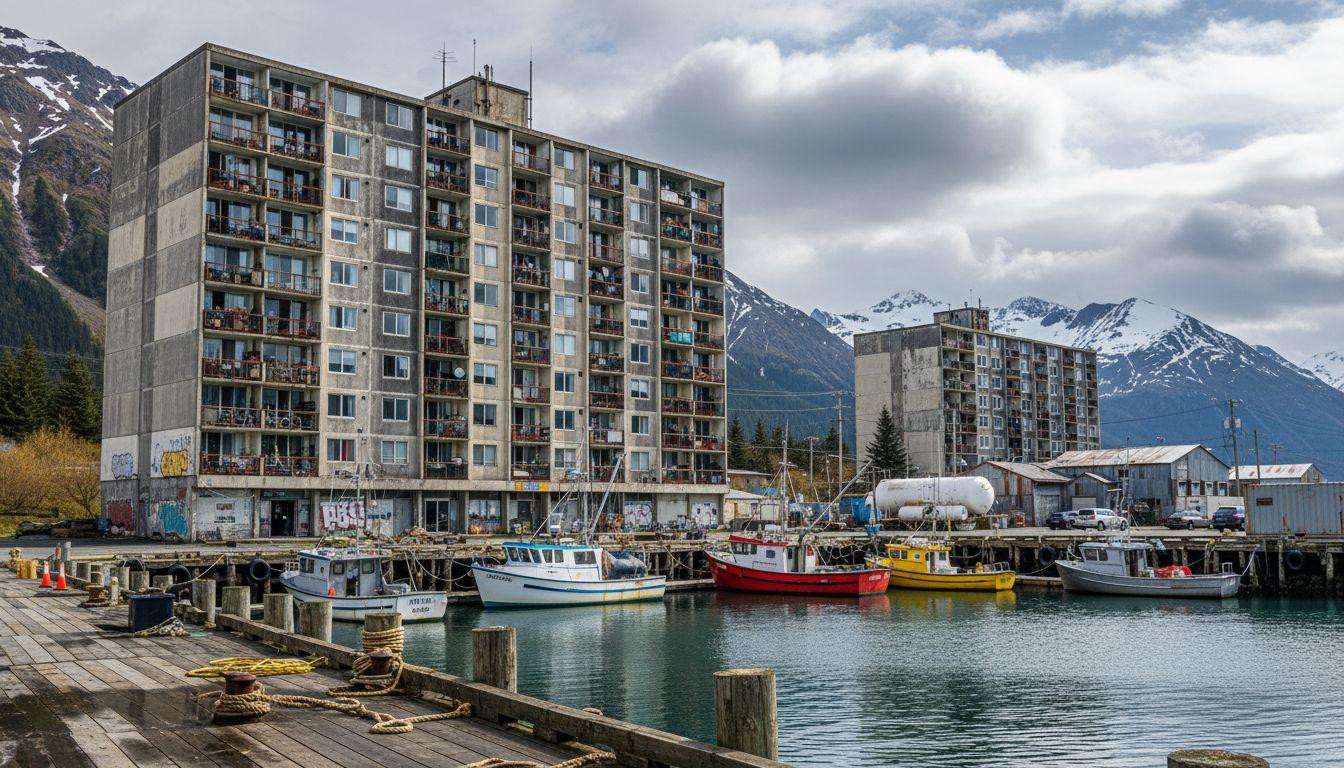
The Anton Anderson Memorial Tunnel opens every 30 minutes, releasing a handful of cars into what might be America’s strangest town. Whittier, Alaska sits at the end of a 2.5-mile passage, but the real shock comes when you park. Nearly every resident of this 220-person community lives inside a single concrete tower.
Begich Towers rises 14 stories above Prince William Sound like a brutalist monument to survival. Built in 1957 as Cold War military housing, this concrete monolith now contains an entire civilization.
The building that swallowed a town
Inside Begich Towers, fluorescent hallways stretch past 196 apartments where most of Whittier’s population calls home. The post office operates on the first floor. The police chief lives on the seventh floor, two flights above the mayor.
Underground tunnels connect residents to the elementary school without stepping outside. Winter temperatures drop to 20°F while 60-mph winds tear across the sound. The building becomes a self-contained universe.
What started as military barracks for 1,200 soldiers now houses families who chose vertical community over urban sprawl. Historic seaports preserved their character differently, but Whittier concentrated its entire identity into concrete and steel.
What living vertical means
The social architecture
Hallway encounters replace street conversations in Begich Towers. Children race through carpeted corridors during Alaska’s endless winter months. Shared laundry rooms become community gathering spaces where neighbors discuss weather, fishing conditions, and tunnel schedules.
Everyone knows everyone in a building where privacy means closing your apartment door. The grocery store, medical clinic, and church all operate within walking distance of your front door. No driving required, no outdoor weather battles.
When winter closes in
November through April, some residents never leave the building. Internal climate control maintains 70°F while storms rage outside. The psychological adaptation to vertical living creates unique social dynamics found nowhere else in Alaska.
Extended daylight during summer months changes everything. Residents venture onto harbor walkways and hiking trails, but many return to their concrete haven as temperatures drop and winter locks the landscape until spring.
Beyond the tower
The glacier portal
Whittier serves as the gateway to Prince William Sound’s 26 glaciers. Phillips Cruises operates 5-hour excursions costing $260-310 per person during the May-September season. Portage Pass Trail offers a free 4-mile hike to glacier viewpoints.
Harbor windows in Begich Towers frame fishing boats and cruise ships arriving from Vancouver. Residents watch tourism seasons change from their apartment balconies while maintaining their year-round glacier access.
The tunnel life
The Anton Anderson Memorial operates on strict schedules, opening every 30 minutes starting at 5:30 AM during summer. Winter reduces access hours significantly. Residents plan grocery runs to Anchorage (90 minutes away) around tunnel timing.
This infrastructure constraint shapes community rhythm unlike any other American town. Cold-climate destinations develop unique survival strategies, but Whittier’s single-building solution remains architecturally unprecedented.
The atmosphere inside
Institutional lighting illuminates corridors designed for efficiency, not aesthetics. Footsteps echo through hallways while mechanical systems hum constantly. The building smells like shared cooking, cleaning supplies, and recycled air.
Apartment windows reveal stunning contrasts: pristine wilderness surrounds this concrete island. Glacier-carved peaks frame the harbor while residents live in climate-controlled isolation. The abandoned Buckner Building nearby stands as a 14-story reminder of what happens when communities leave.
Children grow up knowing neighbors by apartment number. Frontier towns scattered across landscapes, but Whittier stacked its entire population vertically.
Your questions about Whittier answered
How do you visit Begich Towers respectfully?
Begich Towers remains private residential property, not a tourist attraction. Visitors can photograph the exterior from public harbor areas and explore the abandoned Buckner Building instead. The tunnel operates year-round but reduces winter hours significantly.
Why do people choose building life over houses?
Rent ranges from $500-900 monthly compared to $1,500+ in Anchorage. Fishing and maritime work provide income opportunities. Some residents prefer extreme community intimacy and winter protection over suburban isolation and heating costs.
How does this compare to other Alaska towns?
Most Alaskan communities spread horizontally across available land. Whittier’s vertical concentration creates unique social dynamics and winter survival strategies. Remote mining towns built company housing, but none achieved Whittier’s single-building town status.
Evening light touches concrete balconies where residents watch fishing boats return to harbor. Inside Begich Towers, dinner conversations echo through hallways while glaciers gleam in the distance.