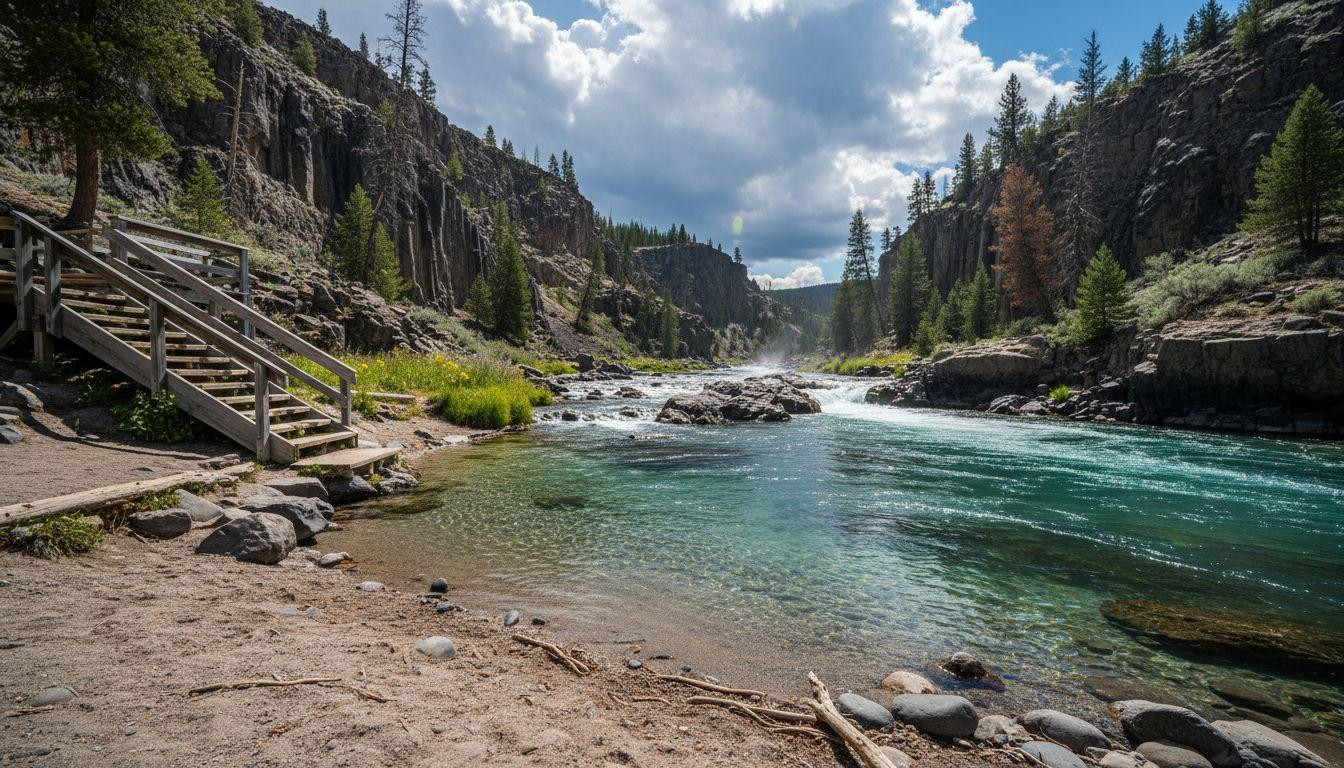
This roadside swim hole heats river water to 86°F where January keeps it frozen to visitors. Steam rises from geothermally warmed pools along Firehole Canyon Drive, creating an aching contradiction: nature’s perfect hot tub locked away by winter’s grip. The Firehole River Swimming Area sits closed for the 2025 season, transforming desire into anticipation for summer’s return.
Yellowstone’s thermal underground works differently here than at Grand Prismatic or Old Faithful. Rather than scalding tourists, the Firehole River receives gentle heating from upstream hot springs, cooling to swimmable temperatures by the time it reaches this roadside haven two miles south of Madison Junction.
The geothermal exception
Underground volcanic activity heats the Firehole River to pool temperature without creating the 180°F+ dangers found elsewhere in Yellowstone. Hot springs near Upper Geyser Basin feed thermal water into the river system, which then cools and mixes with cold tributaries during its journey downstream.
The swimming area occupies a unique position where this geothermal heating creates comfortable water temperatures. Unlike winter-accessible features that require snowshoes, Firehole Canyon demands patience for summer access.
How underground heat reaches the surface
Subsurface thermal activity from Yellowstone’s volcanic system feeds constant warmth into the river. The water temperature reaches 86°F at peak summer, warm enough for comfortable soaking but cool enough to avoid scalding. Eddy pools create natural hot tub areas where swimmers can rest against gentle currents.
The river’s natural cooling system
Distance from boiling sources allows thermal water to mix with cold mountain streams. Rocky pools and underwater ledges create varied depths and temperatures throughout the swimming area. Wooden stairs provide access to sandy-bottom sections ideal for wading.
When nature closes the door
The National Park Service officially closed the Firehole River Swimming Area for the 2025 season due to high water levels and dangerous currents from spring snowmelt. Strong currents pose safety risks during peak runoff periods, typically lasting from snowmelt through mid-July.
This closure pattern reflects Yellowstone’s elevation and harsh winters. Winter transforms the landscape, making roads impassable to regular vehicles from mid-December through mid-March.
The 2025 extended closure
High snowpack years can keep the swimming area closed for entire seasons. The park service notes that years with significant snowpack and runoff may prevent safe access until fall. Current conditions persist through January 2026 with no projected opening date available.
Understanding the summer window
Normal years see mid-July through early fall opening periods when snowmelt subsides and currents calm. Visitors must check real-time conditions via the NPS website or phone 307-344-7381 before planning trips. Weather delays and late storms can push opening dates further into summer.
What awaits when it opens
Firehole Canyon Drive provides the only vehicle access to this geothermal swimming spot. Limited roadside parking often fills to overflowing during peak season, with no overflow areas available. Early morning arrivals increase chances of securing parking spots.
The swimming experience varies dramatically based on location within the river. Geothermal soaking requires different preparation than traditional swimming.
The roadside accessibility
Vault toilets and changing facilities operate seasonally near Firehole Falls, a 40-foot waterfall visible from the drive. No cell phone service reaches most areas along Firehole Canyon Drive. Visitors typically change in vehicles due to limited facilities.
In the thermal waters
Water feels cold initially but becomes comfortable within minutes of immersion. Rocky bottoms require water shoes for safe movement between pools. Multiple eddy pools allow stationary soaking while stronger currents flow upstream. Life jackets are recommended for safety in deeper areas.
Planning your perfect timing
July through September represents the most reliable access window during normal snowpack years. Volcanic features require seasonal timing throughout the Western United States. Alternative winter activities include snowcoach tours, snowshoeing, and ice skating at Mammoth Hot Springs Hotel.
The $35 seven-day vehicle pass provides access to all Yellowstone attractions beyond park entry fees. No reservations are accepted for the swimming area, operating on first-come, first-served basis when open.
Your questions about Firehole Canyon answered
Can I visit the swimming area in winter?
No swimming access exists from approximately October through June due to road closures, dangerous conditions, and seasonal restrictions. Winter visitors can view the canyon area from Madison Junction vicinity. Plan summer returns for actual swimming opportunities.
What if the area is closed during my visit?
Check NPS current conditions the day of your visit for real-time status updates. Boiling River near the north entrance offers different winter soaking opportunities with higher temperatures. Backup plans should include alternative thermal features and scenic drives.
How does this compare to commercial hot springs?
Firehole Canyon costs only the park entrance fee versus $15-50+ at commercial facilities. The experience offers authentic wilderness soaking without developed pools or resort amenities. Water temperatures remain cooler than typical hot springs but provide unique river-based thermal bathing.
Steam rises from hidden pools beneath snow-covered canyon walls, marking spots where summer’s swimmers will return. The contrast between thermal warmth and winter silence creates longing that only July’s opening can satisfy.