Black Elk Peak draws 70 hikers to its 7,242-foot summit on clear January weekends. Parking lots at Sylvan Lake fill by 9am. Entry fees cost non-residents $30 for Custer State Park access.
Wind Cave’s Centennial Trail offers a different winter equation. Free access through 28,295 acres of remote canyon and prairie sections where snowshoes unlock solitude that crowds never find.
Better than Black Elk Peak where crowds gather at sunrise
Black Elk Peak’s 7-mile roundtrip attracts peak-baggers year-round. January temperatures average 26°F with 20 mph winds on exposed ridges. The technical 3,500-foot elevation gain filters families but not determined hikers.
Sylvan Lake’s parking capacity holds 50-100 vehicles before overflow. Winter weekends see steady traffic despite harsh conditions. The summit’s iconic status as South Dakota’s highest point drives consistent visitation.
Custer State Park’s vehicle pass requirement adds cost barriers. The steep alpine ascent offers panoramic views but limited ecosystem diversity. One dramatic push to a single destination defines the experience.
The Centennial Trail’s canyon to prairie advantage
Wind Cave’s southern Centennial sections span 111 miles total. Remote 5-10 mile segments near Hot Springs offer multi-mile commitment that filters casual visitors naturally.
Landscape diversity beats single summit views
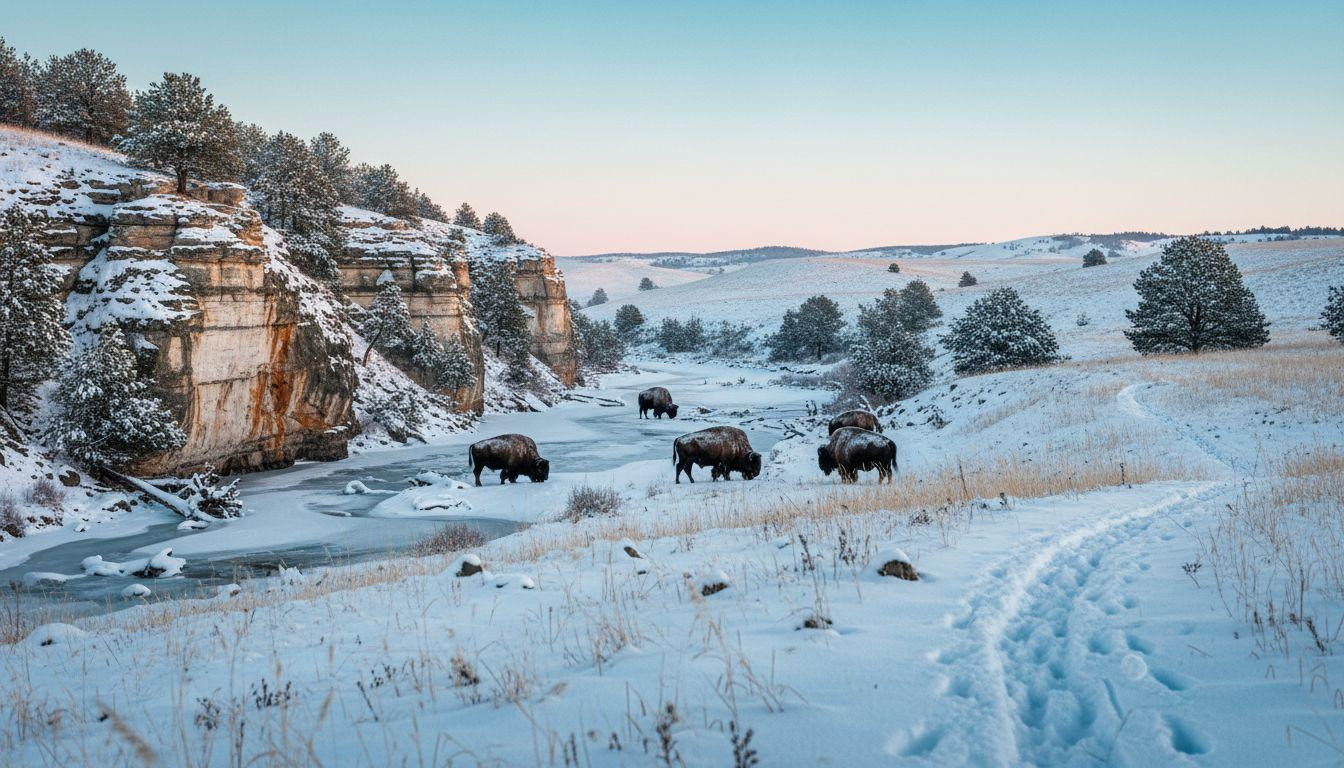
Canyon walls along Beaver Creek transition to golden prairie dotted with ponderosa pines. Rolling elevation changes of 200-500 feet create gentle terrain versus Black Elk’s steep alpine climb. Three distinct ecosystems unfold in 5 miles: canyon enclosure, forest shelter, and vast prairie openness.
Free access eliminates entry barriers
National Park Service sections require no vehicle passes. Snowshoe rentals in Hot Springs average $20 per day. Free loan programs operate through regional visitor centers during winter months.
The winter snowshoe experience
La Niña weather patterns bring 30-50 inches of seasonal snow to the Black Hills. Canyon sections offer natural windbreaks while prairie tops expose hikers to elements. Beaver Creek crossings freeze solid by mid-January, creating natural bridges through winter landscapes.
Wildlife encounters on snow-packed trails
Bison herds winter in southern Centennial segments near Wind Cave. The Black Hills ecosystem supports 6,000-8,000 elk based on GPS collar data from 2020-2024. Prairie dog towns hibernate in winter but bison tracks crisscross fresh powder daily.
Safe viewing distances require 25 yards from bison per National Park Service protocols. Early morning hours offer best wildlife photography opportunities around 7:15am golden hour timing.
Solitude through distance commitment
Multi-mile remote sections demand 3-4 hours for 5-mile routes. Full 10-mile days require 6-8 hours in snow conditions. Distance filters crowds more effectively than technical difficulty or weather.
Access and winter logistics from Hot Springs
Hot Springs sits 12 miles south of Wind Cave National Park via US Highway 385. Winter road conditions require checking before departure as heavy snow closes park roads periodically. Emergency response times from Hot Springs average 1-2 hours for remote trail sections.
Recommended gear includes trekking poles, layered clothing, and emergency beacons for backcountry sections. Groomed sections near the visitor center offer easier access while ungroomed remote areas provide deeper solitude.
Your questions about Centennial Trail winter snowshoeing answered
What gear do I need beyond snowshoes?
Trekking poles help with balance on uneven terrain. Layered clothing systems handle temperature swings from 15°F lows to 45°F highs. Emergency beacons provide safety backup in remote sections with limited cell coverage.
When do bison pose safety concerns?
Winter concentrates bison herds in lower elevation areas along southern trail sections. Morning and evening hours see increased activity. Maintain 25-yard distances and retreat slowly if encountered on narrow trail segments.
How does this compare to Colorado mountain snowshoeing?
Wind Cave offers prairie-canyon diversity versus Colorado’s alpine focus. Free access contrasts with resort fees. Lower elevation (4,040-4,301 feet) reduces altitude adjustment needs. Wildlife encounters exceed typical mountain experiences.
Dawn light touches snow-dusted ponderosa pines along Beaver Creek. Your tracks mark fresh powder where bison walked hours earlier. The quiet earns itself through distance, not destination.