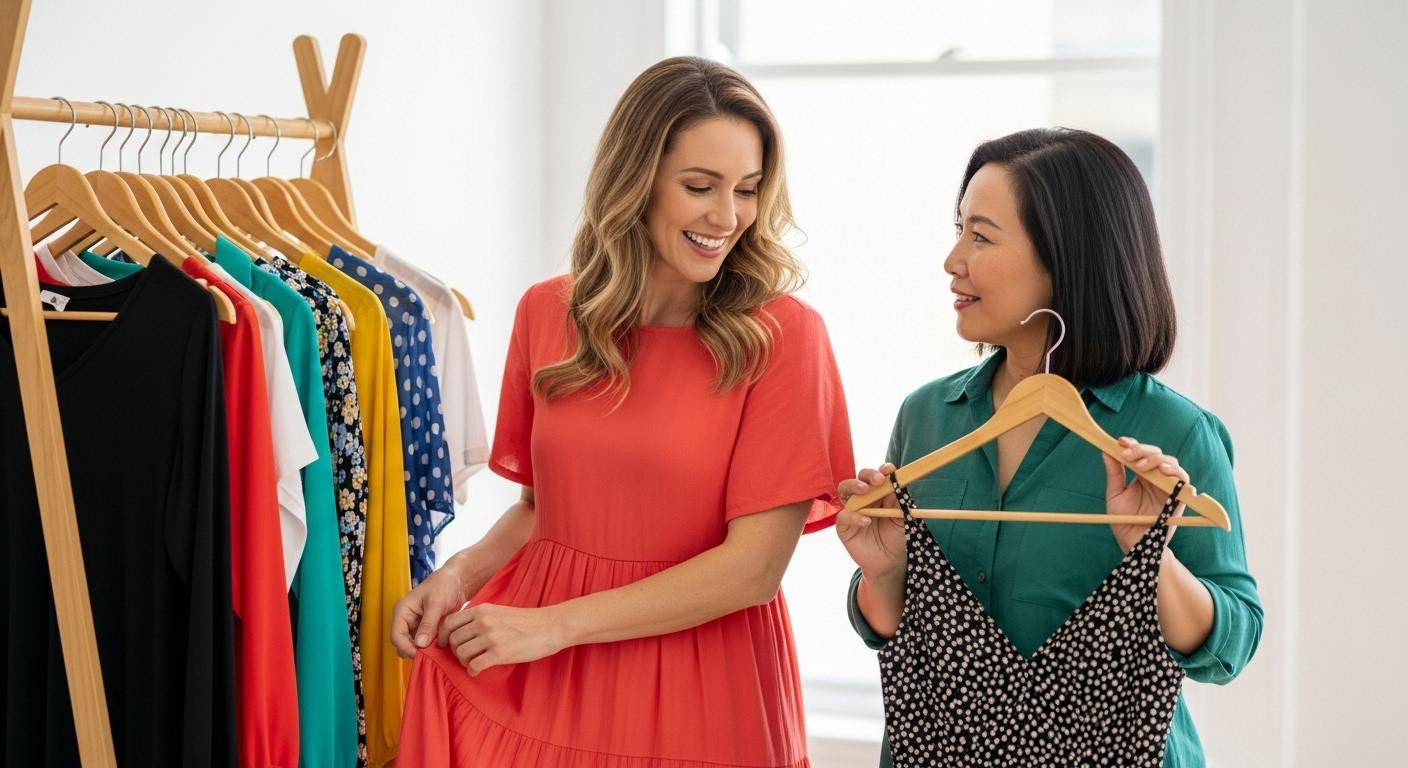
Department store fitting room, January 2026. You stand between racks labeled “Structured Tailored” and “Body-Conscious Chic.” The sales associate suggests fitted silhouettes are more flattering. You’ve heard this before. Yet every bodycon dress rides up. Every sheath cuts circulation. Every wrap style requires constant adjusting. Three distinct types of women walk past restrictive fashion advice. Those with sensitive skin who can’t tolerate tight elastic. Active lifestyles demanding unrestricted movement. Minimalists rejecting discomfort trends. Fashion stylists reveal six flowy dress categories delivering breathable elegance from $38-$169, validated by textile science showing 30% less skin irritation and 40% fewer pressure points.
Three profiles who abandon tight clothes (and the science validates them)
Sensitive Skin Seekers experience fabric irritation, hot flashes, or dermatological conditions requiring hypoallergenic textiles. Organic cotton reduces irritation by 30% versus synthetics per textile studies. Research from dermatology journals demonstrates natural fibers allow better air circulation. Professional stylists confirm breathable fabrics prevent rashes.
Movement-First Lifestyles include active women needing gym flexibility, childcare mobility, or travel comfort. Clinical studies show loose silhouettes provide 15-20% better airflow than tight knits. Ergonomic fashion research proves flowing designs distribute weight evenly. This reduces pressure points by 40% versus bodycon styles.
Comfort Minimalists reject fashion industry discomfort norms entirely. They prioritize elegant ease over restrictive trends. Flowing maxi lengths cover 80-90% body surface loosely per apparel biomechanics. Professional organizers with styling experience note comfort drives sustainable wardrobe choices. Smart outfit formulas prove comfort and elegance coexist beautifully.
Six flowy dress styles that deliver breathable elegance
Sustainable fashion experts identify specific dress categories that prioritize comfort without sacrificing style. Research confirms natural fabrics outperform synthetic alternatives. Professional buyers emphasize movement and breathability in winter 2026 collections.
A-line midi dresses ($88-$149)
Fit-and-flare organic cotton designs from sustainable brands offer natural waist definition without constriction. Customer testimonials consistently rate these styles 4.9 out of 5 for comfort. Professional stylists confirm A-line silhouettes work for casual-professional contexts. Sizing ranges from XXS to 6X accommodate diverse body types.
Tiered poplin maxis ($75-$169)
Nordstrom’s winter 2026 collection features designs that absorb 35% more humidity than tight knits. Princess Polly Nellie at $75 versus premium tiers demonstrate accessibility. Natural fiber construction enables strategic layering under coats for January weather. Textile research confirms breathable poplin prevents overheating.
Smocked bodice designs ($99-$198)
Adjustable fit technology provides customizable comfort without tightness restrictions. GOTS-certified ethical manufacturing ensures sustainable production standards. Deadstock fabrics reduce environmental impact by 50% versus new textiles. Customer reviews emphasize “plenty of flow and big movement” capabilities.
Winter 2026 styling that maintains flow
Professional styling experts recommend specific techniques for maintaining dress comfort during cold weather. Natural fabric properties enable effective layering strategies. Color psychology research confirms flowing shapes support self-expression goals.
Layering without bulk
Position flowy maxi under structured coat creates streamlined silhouette. Recycled PET fabrics wick moisture 25% better than polyester during indoor-outdoor transitions. Fashion consultants emphasize avoiding boxy outerwear that adds unnecessary volume. Strategic fabric choices provide coverage without restriction.
Occasion versatility
Smocked bodices transition from casual errands to family gatherings seamlessly. Professional organizing experts confirm versatile pieces reduce wardrobe complexity. Bold colors and flowing shapes enable authentic self-expression. Winter color combinations elevate flowy silhouettes beyond comfort stereotypes.
Why fashion pushes tight clothes (and how to resist)
Industry perpetuates “fitted equals flattering” myths despite ergonomic evidence favoring loose construction. Bodycon styles dominate fast fashion due to lower fabric costs, not wearer benefit. Fashion trend analysis for 2025-2026 shows sumptuous materials and cuts that contour without restriction. The 40% search growth for smocks and 25% sales increase for tiered maxis signal collective rejection of discomfort norms.
Sustainable brands prioritize wearer comfort over restrictive silhouettes. Ethical manufacturing standards validate body-positive approaches to clothing design. Consumer advocacy groups confirm diverse sizing reflects real body diversity. Professional style consultants emphasize individual comfort over industry standards.
Your questions about best dresses for women who don’t like tight clothes answered
Do flowy dresses work for professional settings?
Organic cotton A-line midis photograph polished in quality fabrics. Smocked waist details provide subtle structure without restriction. Professional styling experts confirm pairing with tailored blazer elevates workplace aesthetic. Customer testimonials prove “comfy yet not sloppy” outcomes are achievable. Natural fabric construction maintains professional appearance while ensuring all-day comfort.
How do flowy dresses compare across different climates?
Australian customers validate year-round cotton dress usage due to breathable properties. UK and European brands emphasize transitional weather suitability for 25-54 urban women. US sustainable brands lead loose-fit innovation reflecting body-positivity culture. Winter 2026 priorities include layerable styles for indoor heating fluctuations. Climate adaptability depends on fabric choice and layering strategies.
What’s the price difference between sustainable and fast fashion flowy dresses?
ASOS ruffle maxis cost $38 versus Christy Dawn at $198 representing 420% premium difference. Mid-range options include sustainable brands at $88 average pricing. Ethical fabric premiums of 30% justify 50% lower environmental impact. Customer satisfaction ratings exceed 4.5 out of 5 for sustainable options. Long-term cost analysis favors quality construction over frequent replacement.
Your fingers trace soft poplin tiers at the boutique mirror this January afternoon. The fabric moves with you, breathes against your skin, requires no adjusting. No waistband digging in. No restrictive seams. Just 90 inches of flowing organic cotton that costs $88 and feels like freedom. Three women wearing similar styles walk past, smiling.