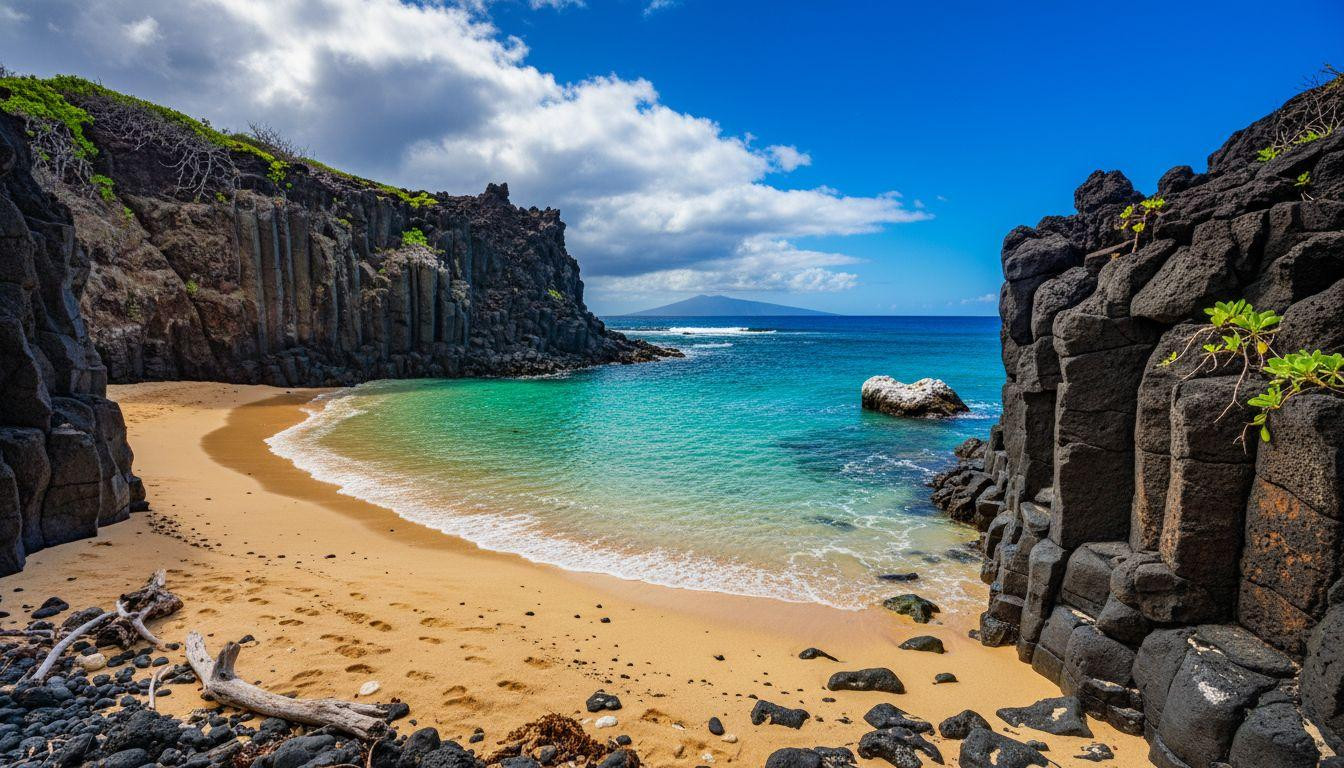
This Maui cove frames turquoise water with black lava rock walls that create a natural amphitheater for swimmers. Just 0.25 miles from Big Beach, Makena Cove sits hidden behind multimillion-dollar homes in South Maui. The volcanic enclosure transforms what could be another crowded Hawaiian beach into an intimate theater where golden sand meets protected turquoise shallows. Only 50-100 feet wide, this crescent-shaped refuge holds space for maybe 20-30 people before feeling crowded.
The lava frame setting
Volcanic outcroppings rise from Haleakala’s ancient lava flows, creating jagged walls that enclose the small beach. Black basaltic rock contrasts dramatically against the cove’s electric turquoise water and soft golden sand. The natural amphitheater reduces trade wind exposure while framing distant views of Molokini Crater and Kahoolawe island.
Morning light filters through this geological enclosure, casting shadows that shift throughout the day. The protected setting creates calmer conditions than the open coastline. Sunset transforms the lava frame into dramatic silhouettes, making this a popular spot for wedding ceremonies and romantic photography.
What makes this cove different
The natural theater
Lava rock walls form protective barriers that feel like entering a private outdoor room. The amphitheater design provides natural windbreaks and creates acoustics where wave sounds echo gently off volcanic stone. This geological architecture explains why couples choose Makena Cove for intimate ceremonies.
Heart-shaped offshore rocks add to the romantic framing. The protected enclosure offers viewing angles impossible at open beaches. Wedding photographers capture couples against this natural backdrop where black rock creates striking contrast with white sand and blue water.
The turquoise clarity
Crystal-clear visibility makes snorkeling exceptional within the protected cove waters. Hawaiian green sea turtles frequently appear in the calm turquoise shallows, drawn to the reduced current conditions. Swimming feels safer here than at exposed beaches where winter swells create dangerous conditions.
The small scale maintains water clarity that larger beaches can’t match. Gentle waves lap against the lava frame, creating soothing sounds. Winter months (December-March) bring the calmest conditions, perfect for underwater exploration and turtle watching.
Your visit experience
Getting there
Drive south on Makena Road past Big Beach and park roadside near 6925 Makena Road. Look for the graffiti-covered beach access sign marking the break in the lava rock wall. The step down requires some agility but no hiking experience.
Limited parking fills quickly, especially on weekends. Early morning visits (before 9am) offer the best chance for solitude and optimal lighting. The 10-minute drive from Wailea resorts makes this an easy addition to any South Maui itinerary.
What to expect
Pack everything you need since no facilities exist at the cove itself. The nearest bathrooms wait 0.25 miles away at Big Beach in Makena State Park. Respect the residential setting by keeping noise low and packing out all trash completely.
Snorkeling gear rentals cost around $25 per day from shops in nearby Kihei. Swimming conditions vary with tides and weather, so check conditions before entering the water. The intimate scale means even a few groups can make the space feel busy.
The intimate appeal
Small scale creates value that resort beaches can’t replicate. While Wailea Beach offers amenities and services, Makena Cove provides authentic Hawaiian seclusion. The lava frame architecture makes every visitor feel like they’ve discovered something special, even though Instagram hashtags have spread the word.
Wedding ceremonies happen regularly here, with setup costs ranging from $1,000-3,000 for small gatherings. The natural amphitheater eliminates the need for elaborate decorations. Photography sessions capture the dramatic contrast between volcanic rock and tropical water that defines Hawaii’s geological beauty.
Local tourism boards confirm this spot represents Hawaii’s authentic, undeveloped character. Unlike resort areas where development dominates the coastline, Makena Cove preserves the raw volcanic landscape that created these islands.
Your Questions About Makena Cove Answered
When should I visit for the best experience?
Early morning (7-9am) offers soft lighting and fewer crowds, while late afternoon (4-6pm) provides dramatic sunset colors against the lava frame. Winter months bring calmer seas and whale watching opportunities offshore. Avoid mid-afternoon when trade winds create choppier conditions in the small cove.
What makes it called “Secret Beach”?
The hidden access point behind residential properties and lack of signage keeps many tourists from finding this spot. Its small size means it doesn’t appear prominently on most beach maps. Local residents call it “Secret Cove” or “Wedding Beach” depending on context, though social media has reduced its true secrecy.
How does it compare to nearby Big Beach?
Makena Cove offers intimacy while Big Beach provides space for larger groups and activities. The cove’s lava framing creates protected swimming conditions versus Big Beach’s open-ocean exposure. Big Beach spans 0.67 miles with lifeguards and facilities, while the cove measures only 50-100 feet with no services but superior snorkeling clarity.
Turquoise water laps gently against black volcanic stone as afternoon light fades across the protected cove. The sound of waves echoing off lava walls creates a natural soundtrack for Hawaii’s most intimate beach theater.