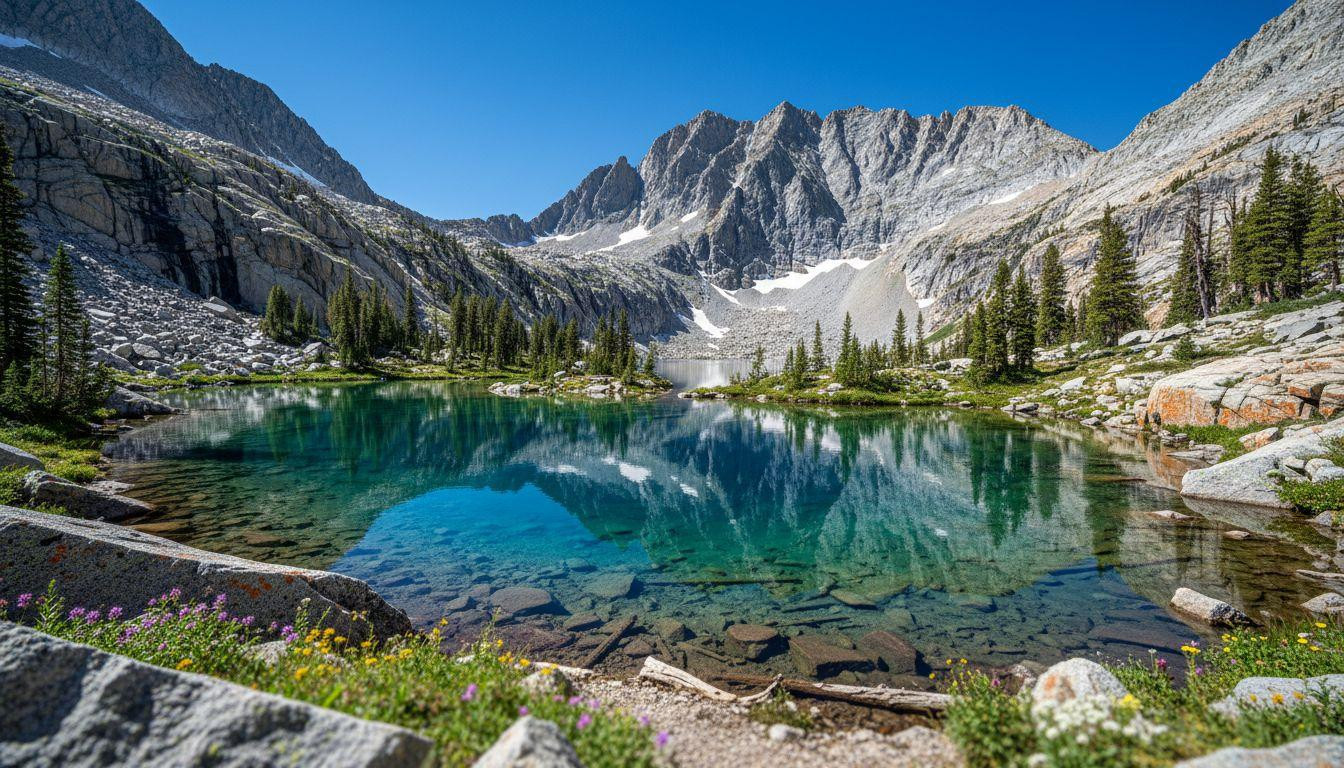
Red Pine Lake’s parking lot fills by 8am on summer weekends. Hikers cluster around the popular trail, cameras ready for Instagram shots. Just 1.2 miles further up the same White Pine trailhead, an unsigned bridge leads to Maybird Lakes. Here, glacial-clear ponds reflect towering granite walls in perfect silence.
Most visitors never find this bridge. They follow the crowds to Red Pine’s larger lake and meadow camping spots. Meanwhile, Maybird’s two small ponds wait in their cirque, undisturbed.
Why Red Pine Lake draws the crowds
Red Pine Lake sits 6.6 miles round-trip from the White Pine trailhead. The shorter distance attracts weekend warriors seeking alpine beauty without extreme effort. Clear trail markers guide hikers through evergreen forest to a sizeable lake surrounded by meadows.
Summer weekends see dozens of tents dotting the shoreline. Day hikers arrive early, claiming prime photography spots. The lake’s accessibility makes it a gateway drug for Wasatch backcountry adventures.
But popularity comes with a price. Parking lots overflow before sunrise. Trail congestion slows progress through narrow sections. The pristine alpine experience feels more like a crowded city park.
Meet Maybird Lakes
Travel research published this year shows Maybird Lakes receives a fraction of Red Pine’s visitor numbers. The unsigned Maybird bridge at mile 2.6 acts as a natural filter. Casual hikers miss the turnoff entirely, continuing toward their well-marked destination.
Glacial clarity and Pfeifferhorn reflections
The two ponds sit at 10,400 feet elevation in a granite cirque. Crystal-clear water reveals every boulder on the bottom. When morning light hits the surrounding talus slopes, the entire scene doubles in the mirror-still surface.
Pfeifferhorn peak looms 11,331 feet above the southern shore. Its jagged granite face creates dramatic reflections that shift throughout the day. Photographers find compositions here that rival anything in the Canadian Rockies.
The solitude advantage
Recent visitor surveys show hikers consistently report having Maybird Lakes to themselves. One traveler noted spending an entire afternoon hammocking between granite slabs without seeing another person. The extra 1.2 miles of hiking eliminates impulse visitors.
Tuesday through Thursday offer the best solitude. Even peak summer weekends rarely see more than a handful of visitors. This Colorado glacial tarn offers similar alpine serenity for those seeking western wilderness.
The Maybird experience
The trail starts at White Pine trailhead (GPS: 40.552°N, 111.662°W) at 7,600 feet elevation. A steady 2,000-foot climb through dense evergreens leads to the unsigned bridge. Boulder-hopping replaces maintained trail for the final approach.
Trail character and terrain
Granite slabs provide natural seating areas around both ponds. Root-textured dirt paths give way to talus fields near treeline. The cirque walls create a natural amphitheater that amplifies every whisper.
Experienced scramblers can continue toward Pfeifferhorn’s summit via cairn-marked routes. The additional 931 feet of elevation gain rewards climbers with panoramic views across the Wasatch Range.
Post-hike rewards
Local traditions include stopping at Wing Coop for honey habanero wings after the 2,000-foot descent. The spicy-sweet combination perfectly balances post-hike salt cravings. Meals cost $15-25, far less than Snowbird Resort’s $30-50 restaurant prices 10 miles south.
Winter solitude seekers will appreciate similar uncrowded terrain across the western states.
Beyond the ordinary alpine experience
Maybird Lakes deliver authentic wilderness without the circus atmosphere plaguing popular destinations. No permit systems or timed entry requirements complicate planning. No crowds diminish the spiritual connection mountain lakes provide.
The Lone Peak Wilderness designation protects this 98,000-acre ecosystem from development. Established in 1978, the wilderness area maintains its primitive character through careful stewardship. Alpine lake enthusiasts find similar protected waters throughout the western wilderness system.
While Snowbird Resort charges $200+ for daily lift tickets, Maybird offers free access to equally stunning mountain scenery. The trade-off requires personal effort instead of mechanical assistance.
Your questions about Maybird Lakes answered
What’s the best time to visit Maybird Lakes?
July through September offers optimal conditions with snow-free trails and comfortable temperatures. Summer highs reach 60-80°F at the lakes. Snow lingers until mid-June at this elevation. Fall brings golden aspen colors and crisp morning air.
How does the difficulty compare to other Wasatch hikes?
The 7.8-mile round-trip with 2,000 feet of elevation gain ranks as moderate difficulty. Most hikers complete the journey in 3-6 hours. The consistent uphill climb challenges beginners but rewards persistence with spectacular payoffs.
Can I camp at Maybird Lakes?
Wilderness camping is permitted with Leave No Trace principles. Backcountry camping regulations apply throughout the Lone Peak Wilderness. Campsites must be 200 feet from water sources. Pack out all waste including human waste.
Dawn light transforms the cirque into a cathedral of granite and sky. Steam rises from warming ponds as Pfeifferhorn’s shadow retreats up opposite walls. This is why some places remain secret despite GPS coordinates and trail descriptions.