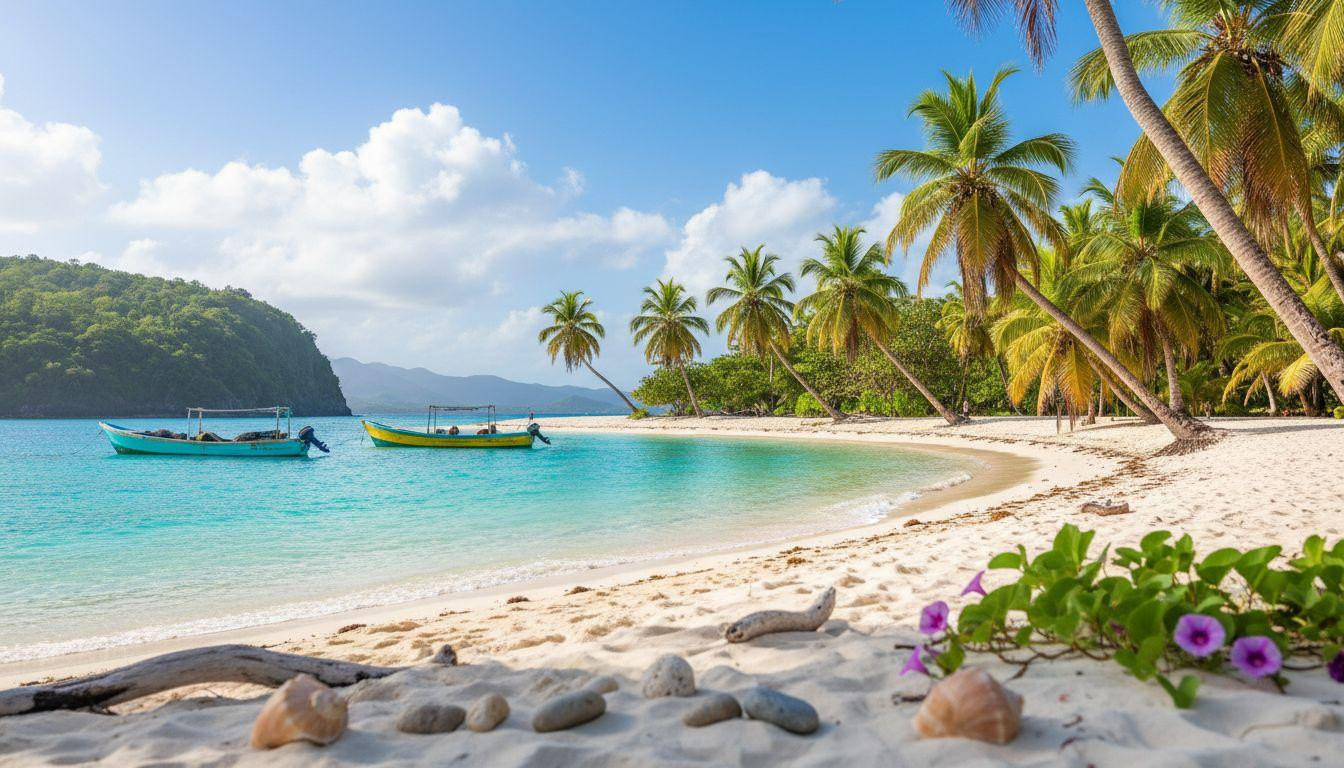
The speedboat cuts through turquoise channels toward a palm-fringed arc of white sand. This is Playa Rincón, where the Dominican Republic kept its Maldives moment secret on the Samaná Peninsula. Crystal-clear water shows sand ripples 20 feet down while coconut palms create natural shade across 2.5 miles of undeveloped coast.
January brings 84°F days and empty morning beaches. Humpback whales breach offshore during migration season. The bay stays protected by coral reefs and jungle-covered promontories, creating shallow lagoons that mirror expensive Indian Ocean resorts for a fraction of the cost.
Where the Dominican Republic stayed wild
Samaná Peninsula extends northeast into the Atlantic, its mountainous spine protecting hidden bays from resort development. Las Galeras fishing village anchors the tip with 3,000 residents who’ve watched whale migrations longer than tourist arrivals. The drive from Samaná (AZS) airport winds 45-60 minutes through curved mountain roads with jungle canopies.
Boat departures from Las Galeras offer the scenic approach. Speedboats navigate mangrove channels before opening onto the protected bay. Coral reefs create the shallow lagoon effect that keeps water temperatures at 81°F while providing snorkeling clarity that extends 60 feet on calm days.
Humpback whale sanctuary status prevented large-scale development here. Where Punta Cana hosts millions of visitors annually, Playa Rincón receives tour boats that distribute across its 2.5-mile length. Cayo Arena’s sandbar lagoons offer similar turquoise beauty nearby.
The 2.5-mile stretch
Uninterrupted white sand stretches between jungle promontories that form hidden cays visible only by boat. Coconut palms grow dense enough to provide natural shade throughout the day. The bay curves gently, creating protected swimming areas where families can wade 50+ feet in knee-deep clarity.
Sand texture feels powdery underfoot while warm stones mark the edges where Caño Frio river meets the sea. This freshwater confluence creates a natural aquarium where tropical fish gather in the mixing currents, visible to swimmers and snorkelers exploring the river mouth.
What under-tourism looks like
Morning arrivals find empty beach conditions. Tour boats typically arrive after 10am, bringing day visitors who spread across the expansive coastline. Even during peak season (February-March), the beach absorbs crowds without feeling overcrowded. Fishing boats outnumber tourist vessels in nearby Las Galeras harbor.
No high-rise development interrupts the jungle-to-ocean transition. Beach shacks serve fresh grilled fish while maintaining the authentic Caribbean atmosphere that attracts travelers seeking genuine island experiences rather than resort amenities.
The January advantage
Dry season delivers optimal conditions with 8 hours of daily sunshine and minimal rainfall. Daytime temperatures reach 84°F while nights cool to 66°F. Ocean temperature holds steady at 81°F, perfect for extended swimming sessions. Light trade winds provide natural cooling without creating choppy water conditions.
January coincides with humpback whale migration season. These 40-foot marine mammals breed in Samaná Bay waters from January through March. Caribbean sandbars nearby offer additional shallow-water experiences during whale watching season.
Water conditions
Shallow warm lagoon extends far from shore, allowing visitors to wade chest-deep 100+ feet from the beach. Coral reef protection eliminates dangerous currents while maintaining crystal clarity that reveals sand patterns below the surface. Snorkeling at the river mouth provides tropical fish viewing without boat excursions.
Wave action stays gentle due to reef barriers and bay protection. Swimming remains comfortable throughout the day as water temperature varies minimally. Visibility consistently exceeds 50 feet, rivaling expensive dive destinations.
The cost reality
Half-day boat tours from Las Galeras cost $30-60 per person, including stops at Playa Frontón and Playa Madama. Beach lunches feature fresh seafood for approximately $15. Local accommodation ranges from $50-80 for beach bungalows to $100-200 for ecolodges, significantly less than Punta Cana resort day passes that exceed $100.
Flight costs from major U.S. cities average $300-500 round-trip to Samaná (AZS) airport. Car rentals or transfers cost $50-100 one-way. Total daily expenses remain 10-20% below Punta Cana averages while delivering comparable beach quality in a more authentic setting.
What the experience delivers
Morning boat arrivals reveal the bay gradually, from turquoise channels to the full palm-fringed panorama. Salt air mixes with jungle freshness while gentle waves create a rhythmic soundtrack. Powdery sand invites barefoot exploration along the entire 2.5-mile coastline where natural shade provides respite from tropical sun.
Typical day structure begins with 9am departure from Las Galeras for optimal empty beach conditions. Midday swimming in protected shallows leads to lunch at family-operated beach shacks. Afternoon exploration includes river mouth snorkeling and cliff viewpoint hiking before late afternoon return.
The activities
Snorkeling coral reefs reveals tropical fish populations while the river-meets-ocean confluence provides unique viewing opportunities. Swimming extends comfortably into deeper bay areas protected by outer reefs. Beachcombing along 2.5 miles yields interesting shells and sea glass. Big Corn Island’s empty beaches offer similar exploration potential.
Photography opportunities include palm silhouettes at sunrise, turquoise water contrasts, and mountain backdrop panoramas. Early morning or late afternoon light creates ideal conditions for capturing the bay’s natural beauty without tourist crowds.
Local character
Authentic Dominican culture remains visible through fishing heritage and traditional food preparation. Beach restaurants serve mangu (mashed plantains), fresh seafood, and chicken prepared with local rum. The relaxed Caribbean pace encourages unhurried enjoyment rather than activity scheduling.
Local fishing practices continue alongside tourism, maintaining cultural authenticity. Whale watching heritage connects to nearby museums in Samaná town. Isla Mujeres experiences provide comparable cultural immersion opportunities.
Planning the visit
Fly into Samaná (AZS) airport from Miami, New York, or other major U.S. cities with 3-4 hour flight times. Rent a car for the scenic 45-60 minute drive to Las Galeras through mountain curves and countryside views. Book boat tours through Las Galeras operators for $30-60 per person, typically departing between 9-10am.
Pack cash for small vendors, reef-safe sunscreen, and waterproof phone protection. Road conditions include some rough sections requiring careful driving. Early January timing provides optimal weather and minimal crowds before peak season arrivals in February-March.
Your questions about Playa Rincón answered
How does this compare to Punta Cana beaches?
Playa Rincón costs 10-20% less than Punta Cana with significantly lower crowd density. The 2.5-mile undeveloped beach contrasts with Punta Cana’s 30-mile commercial coastline. Water clarity matches resort areas while maintaining authentic fishing village character. Tour-based access creates temporary visitors rather than permanent resort presence.
Is boat access the only way to reach the beach?
Four-wheel-drive vehicles can navigate the 30-minute dirt road from Las Galeras, though most visitors prefer boat access for the scenic approach and multi-beach tour value. Boat tours include Playa Frontón and Playa Madama stops, maximizing the peninsula experience. Road access requires local knowledge and careful navigation.
What makes Samaná different from typical Dominican Republic tourism?
Humpback whale migration heritage prevented large-scale development, preserving natural character. Peninsula geography creates isolation from major tourist corridors. Authentic fishing culture survives alongside tourism. Prices reflect lower tourism pressure compared to established resort zones. Bohemian character attracts travelers seeking genuine Caribbean experiences.
Sunrise light touches empty sand while palm fronds rustle in trade winds. Turquoise shallows stretch toward jungle-covered peaks. This is the Caribbean that exists before the crowds arrive each morning.