Natchez draws 300,000 annual visitors to its antebellum mansions, creating parking nightmares and $250-per-night hotel rates during peak season. Meanwhile, 90 minutes south in Louisiana, St. Francisville preserves equally stunning plantation architecture with genuine small-town quiet and $85 lodging rates.
This narrow ridge town of 1,470 residents sits just 30 minutes north of Baton Rouge. Local tourism boards confirm it’s America’s only municipality described as “two miles long and two yards wide.”
Why Natchez overwhelms plantation tourism
Natchez processes crowds that exceed its 15,000 population by 20-fold annually. Gift shops dominate mansion exits. Tour buses clog historic district streets.
Hotel rates spike during spring pilgrimage season. The nearest airport sits 90 minutes away in Jackson, Mississippi. Parking fees range $10-15 daily downtown.
Commercial tour operators emphasize architectural grandeur over historical complexity. Many visitors leave with romanticized plantation narratives rather than scholarly understanding of antebellum realities.
Meet St. Francisville’s scholar-town alternative
St. Francisville sits on Mississippi River bluffs where English settlers established a frontier monastery in the early 1800s. The town literally surrounds this original graveyard, creating an unusual urban layout.
Rosedown Plantation State Historic Site spans 374 acres with an 1830s main house. State management ensures “more museum than theme park” interpretation, according to heritage tourism research published in 2025.
The price reality
The restored 3V Tourist Courts charges $85 per night for National Register accommodations. Rosedown admission costs $12 versus Natchez’s $20-35 range.
Magnolia Café serves Louisiana’s finest po’boys for $12-15. Restaurant 1796 at The Myrtles Plantation offers upscale dining without resort upcharges. Grand Isle’s fishing piers provide another Louisiana coastal alternative 90 miles southeast.
The Audubon connection
Oakley House preserves where naturalist John James Audubon compiled his masterwork “Birds of America” in 1821. This working artist residency differs from wealthy plantation estates.
The $10 admission includes original artwork displays and historically accurate interpretation of 19th-century creative work conditions.
The Rosedown difference – history without whitewashing
State-run plantation sites prioritize scholarship over entertainment value. Guided tours address slavery directly rather than focusing solely on architecture and gardens.
Visitor surveys consistently praise tour guides who tackle difficult historical questions. Small group sizes (typically 6-12 people) enable detailed discussions impossible in Natchez’s larger commercial operations.
What makes it different
Formal gardens maintain original 1830s layout with heritage roses and magnolia trees. The property escaped commercial development that altered other plantation sites.
No gift shop dominates the exit experience. Visitors leave through the same entrance, maintaining the site’s contemplative atmosphere. The Natchez Trace Parkway begins 40 miles north, connecting regional heritage sites.
The atmospheric reality
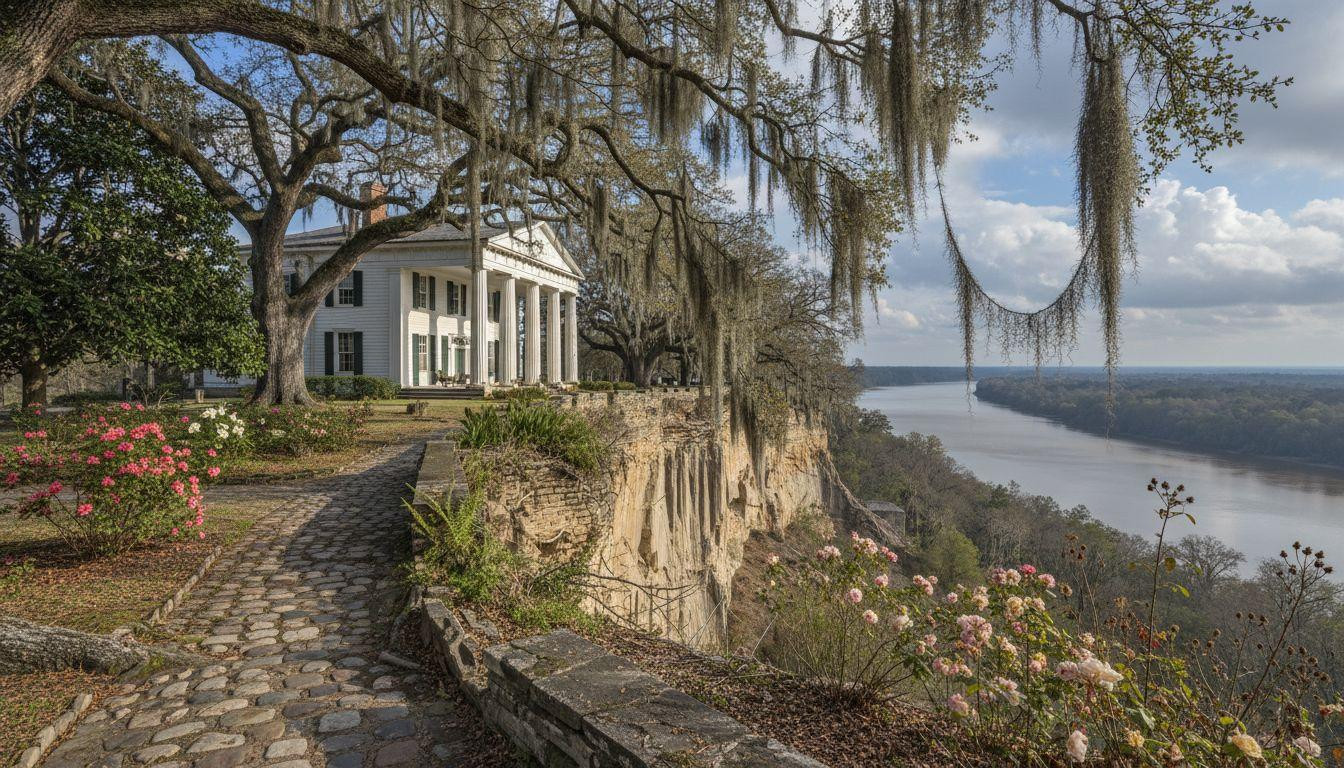
Spanish moss drapes live oak trees throughout the town’s walkable historic district. Cobblestone paths require comfortable shoes but provide authentic textures missing from modern streetscapes.
Morning light filters through canopy trees, creating golden illumination across white-columned facades. River bluff viewpoints offer sunset vistas without commercial development.
The experience – small-town quiet meets deep history
Plantation tours typically run hourly from 9am-4pm. The West Feliciana Historical Society Museum provides free context for multiple sites.
The Myrtles Plantation adds paranormal tourism elements for visitors seeking ghost stories alongside historical interpretation. Evening tours cost $20-25.
What you’ll actually do
Walking the historic district takes 2-3 hours at comfortable pace. Camden’s harbor architecture offers similar 19th-century preservation 1,100 miles northeast.
Multiple plantation sites allow comparison of different historical approaches. Visitor feedback consistently recommends visiting at least two properties for complete perspective.
Local food and atmosphere
Po’boy sandwiches represent Louisiana’s signature cuisine. Local restaurants cluster around the compact downtown area without chain establishments dominating.
The town’s Main Street program maintains authentic business mix. European villages with pre-1776 bridges share similar preservation philosophies.
Practical details for your visit
Baton Rouge airport sits exactly 30 minutes south via US-61. Rental cars provide essential transportation since public transit remains limited.
Spring through fall offers optimal weather for garden viewing and outdoor walking. Temperatures range 60-85°F during these months with manageable humidity levels.
Senior and student discounts apply at major plantation sites. Package deals combining multiple properties reduce individual admission costs by 15-20 percent.
Your questions about St. Francisville answered
How does St. Francisville compare to other plantation destinations?
St. Francisville maintains scholarly interpretation standards while keeping visitor numbers low. Charleston and Savannah process 10-15 times more annual tourists with correspondingly higher costs and commercial atmosphere.
What’s the best time to visit for gardens and weather?
March through May provides peak blooming periods for formal gardens. Fall months (September-November) offer comfortable temperatures with lower humidity levels than summer visits.
Are the historical interpretations accurate about slavery?
State-managed sites like Rosedown emphasize documented historical records over romanticized narratives. Tour guides receive training in current historical scholarship regarding plantation labor systems and enslaved peoples’ experiences.
Soft evening light touches the Mississippi River from St. Francisville’s bluffs. Spanish moss sways in quiet breezes while history whispers through preserved streets where scholarship replaces spectacle.