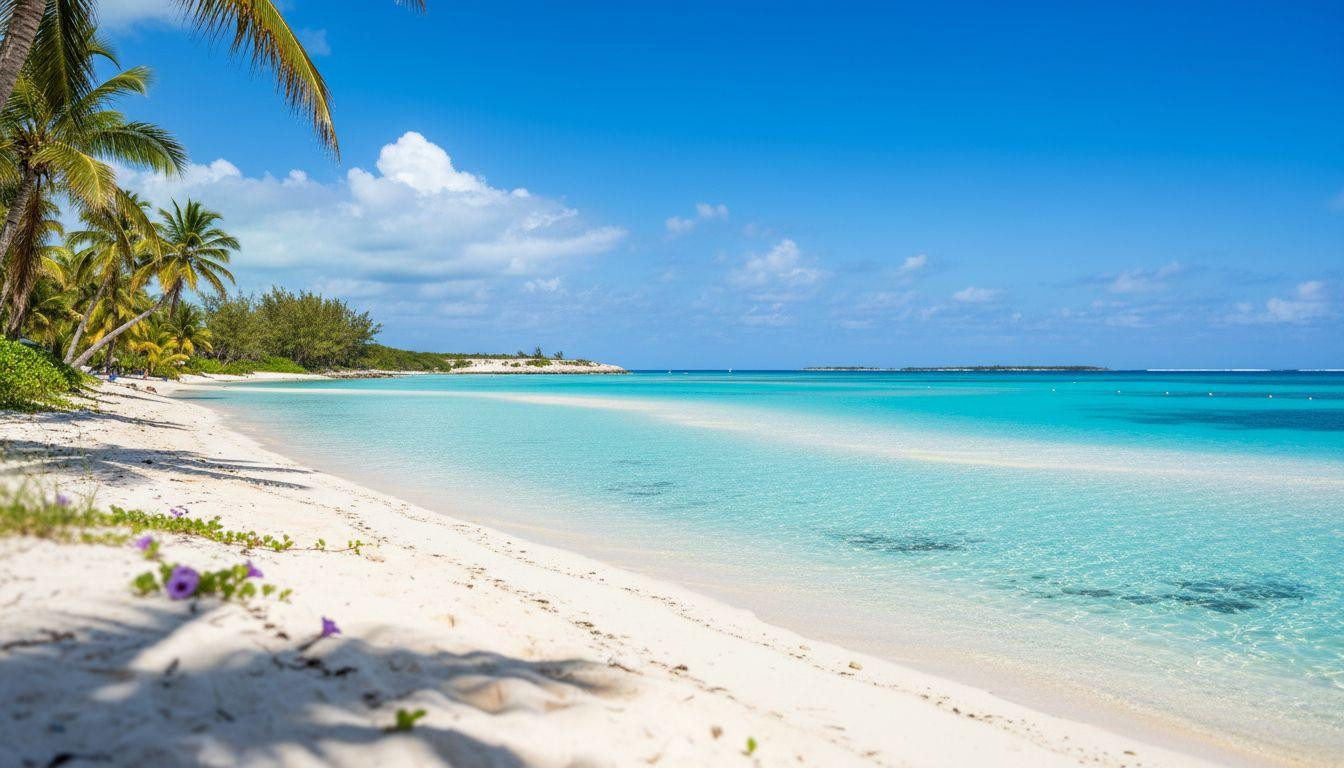
Grace Bay’s morning light reveals something impossible: white sand paths stretching 300 feet offshore, visible beneath electric-blue water barely knee-deep. These endless sandbars create geometric patterns across shallow lagoons where you can walk on submerged ribbons of powder-soft sand. The sensation defies logic. You’re technically offshore, yet standing on solid ground in crystal-clear water that glows turquoise from reflected white coral fragments.
Most Caribbean beaches end where water begins. Here, the beach extends invisibly into the sea.
Where sand becomes horizon
Providenciales sits atop the massive Caicos Banks plateau, where water depths rarely exceed 50 feet for miles offshore. This shallow foundation, combined with the world’s third-largest barrier reef system, creates protected lagoons that trap fine coral sand particles. The result: endless sandbars that extend far beyond normal beach boundaries.
Grace Bay Beach stretches 3 miles along Providenciales’ north shore, connecting seamlessly to Leeward Beach eastward and Bight Beach westward. The sand grains here measure 431 micrometers in diameter, finer than most Caribbean beaches. Shell and coral fragments create this powder-soft texture that feels like walking on silk.
The barrier reef acts as a natural breakwater, keeping these lagoons calm while filtering sediment. Unlike Maldives atolls 24 hours away, these sandbars sit just 90 minutes from Miami by direct flight.
The visual illusion
From shore, white sand paths appear to float in electric-blue water. The limestone foundation reflects light upward through shallow water, creating brilliant turquoise hues. At low tide, these submerged highways become clearly visible 6 feet underwater, extending hundreds of feet into the lagoon.
The walking experience
Wading onto these sandbars feels surreal. Water stays consistently 2-3 feet deep while firm sand supports each step. You can walk straight offshore for 300 feet or more, technically in open water yet standing on solid ground. The psychological effect is powerful: you’re exploring the ocean while remaining completely safe.
Grace Bay’s infinite sandbar
The most accessible sandbars begin at Bight Beach, Grace Bay’s western extension. Here, resort development thins out and natural shoreline dominates. Early morning low tides expose the most dramatic sandbar formations, when water levels drop enough to reveal these underwater highways clearly.
Local tourism boards report that visitor satisfaction peaks during these low-tide windows, when guests can experience walking on water without boat transportation. The phenomenon occurs daily, but timing varies with lunar cycles. January typically offers 7 hours of sunshine daily with minimal rainfall.
Similar Caribbean destinations require boat access to reach comparable sandbars, making Grace Bay uniquely accessible for shore-based exploration.
The color science
Electric-blue water results from specific conditions: white sand reflection, shallow depth, and reef protection creating optical clarity. The limestone plateau beneath Grace Bay contains minimal dark sediment or vegetation that might muddy the water. This creates the brilliant azure and turquoise hues that make sandbars visible from significant distances.
Comparing to other Caribbean destinations
The Bahamas offer extensive shallow waters but lack the protected lagoon system that keeps TCI’s sandbars consistently calm. Cayman Islands feature excellent reef access but deeper coastal waters that obscure bottom features. Grace Bay’s unique combination of shallow plateaus and barrier reef protection creates sandbar visibility unmatched elsewhere in the Caribbean.
Beyond the famous bay
Chalk Sound National Park, 5 miles southwest of Grace Bay, contains miniature versions of these infinite sandbars. This protected lagoon features tiny islets and shallow sandbars in brilliant turquoise water created by white limestone silt. The area remains largely undeveloped, offering quieter sandbar exploration opportunities.
Northwest Point Beach features wilder sandbars with coarser sand grains measuring 541-600 micrometers. These formations sit near the barrier reef edge, creating more dramatic underwater topography. Remote Caribbean beaches often require significant travel investment, but Northwest Point remains accessible by rental car.
Middle Caicos offers the most dramatic setting where sandbars meet limestone cliffs at Mudjin Harbor. Pine Cay and Half Moon Bay feature broad stretches of shallow azure waters ideal for families with children.
Chalk Sound National Park
This 5-kilometer protected bay contains dozens of tiny sandbars and rocky islets scattered across shallow turquoise water. Kayaking here reveals intricate sandbar patterns invisible from shore. The protected status keeps development minimal and water quality pristine.
Middle Caicos Mudjin Harbor
Limestone cliffs rise 150 feet above sandbars that extend into protected coves. This dramatic combination of vertical geology and horizontal sand formations creates the archipelago’s most photogenic sandbar scenery. Access requires a 30-minute drive from the ferry dock, keeping crowds minimal.
The feeling of walking water
Standing 300 feet offshore while remaining in shallow water creates profound psychological impact. The brain struggles to reconcile being surrounded by open ocean while feet rest on solid sand. This safe adventure offers exploration thrills without technical skill requirements or safety risks.
Recent visitor surveys conducted in 2025 consistently rate sandbar walking as the most memorable Grace Bay experience. Unlike crowded beach destinations where activities require expensive equipment or guides, these sandbars offer immediate access to extraordinary experiences.
The quiet thrill comes from accessing seemingly impossible geography through simple wading. No boats, guides, or special equipment needed. Just morning low tide and willingness to walk into electric-blue water that stays consistently shallow.
Your questions about Turks and Caicos sandbars answered
When can you walk the sandbars safely?
Low tide windows provide optimal sandbar access, typically occurring twice daily with timing shifting based on lunar cycles. January 2026 offers particularly calm conditions with minimal storm activity. Morning hours between 7-10am generally provide the clearest water visibility and calmest conditions for sandbar exploration.
How deep is the water over the sandbars?
Water depths over Grace Bay’s sandbars typically range 18-36 inches during normal conditions. At extreme low tide, some sections may expose briefly above surface level. The Caicos Banks plateau ensures depths rarely exceed 4 feet even several hundred feet offshore. Chalk Sound’s miniature sandbars average 12-24 inches deep.
How does this compare to Maldives sandbars?
Maldives atolls offer similar visual clarity but require 20+ hour flights from the US and accommodation costs starting around $1,500 nightly. Grace Bay provides comparable sandbar experiences with $400-800 resort options and 90-minute flights from Miami. TCI’s protected lagoon system offers more consistent calm conditions than some Maldives locations exposed to Indian Ocean swells.
Dawn breaks over Grace Bay’s endless sandbars, painting white sand paths gold beneath electric-blue water. The impossible becomes routine: walking on ocean floors while breathing salt air, exploring infinite shallows that stretch toward the horizon like submerged highways to nowhere.