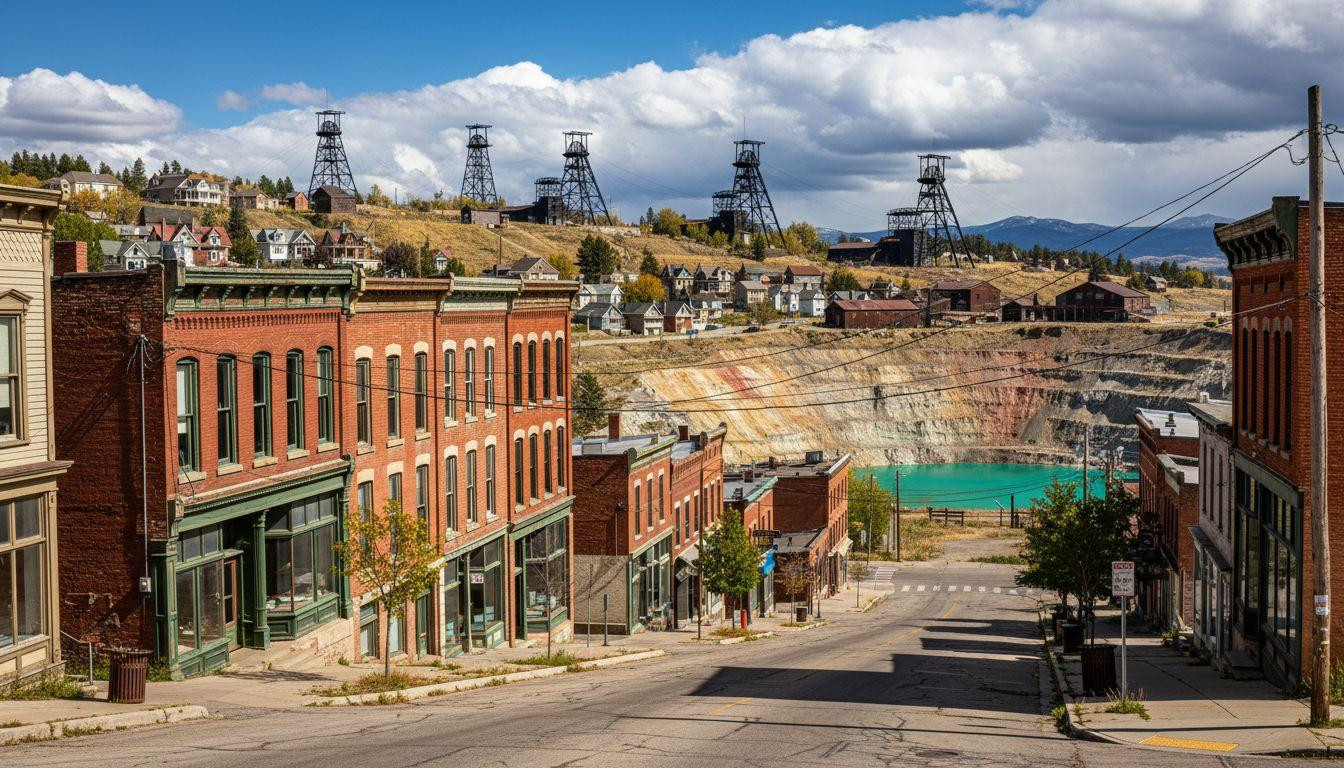
Forget Deadwood where casino crowds overwhelm 1,300 residents and Butte keeps America’s largest Victorian mining district authentic for $12. While Deadwood drowns its gold rush heritage in slot machine noise and $25 parking fees, this Continental Divide copper city preserves 6,000 historic structures without sanitizing working-class reality. Red brick storefronts rise against skeletal steel headframes in a landscape that refuses to perform tourism.
Why Deadwood fails authentic heritage seekers
Deadwood draws 2.5 million visitors annually to a town of 1,300 permanent residents. Main Street casinos erase genuine frontier character with reconstructed facades housing gaming floors. Parking costs $25-50 during peak season while guided tours charge $32 per person for sanitized Wild West storytelling.
The authentic working-class mining experience vanished beneath family entertainment. Casino hotels dominate accommodation from $180-260 per night on summer weekends. Original 1870s buildings burned in fires, leaving Hollywood-style reconstructions that prioritize gaming revenue over historical integrity.
Meet Butte’s unpolished industrial honesty
The Victorian district nobody gentrified
Butte’s 34,000 residents inhabit the largest intact Victorian mining landscape in America. The Butte-Anaconda Historic District preserves over 6,000 structures with National Historic Landmark designation. Uptown streets climb Continental Divide slopes lined with red brick commercial buildings, cast-iron storefronts, and mansard roofs built between 1870-1920.
Granite, Quartz, and Park Streets rise steeply from Montana Street toward mining headframes dotting eastern ridges. This Montana mill town frames Flathead Lake’s turquoise water with 1890s wooden storefronts but Butte’s brick architecture reflects copper wealth that built America’s electrical grid.
Real costs versus tourist traps
The World Museum of Mining charges $12-15 admission including underground Orphan Girl Mine descent 100 feet below ground. Berkeley Pit observation costs $3-4 to witness the toxic turquoise lake filling a 1,780-foot-deep former copper mine. Butte trolley tours run $15-20 for two-hour historical journeys through authentic neighborhoods.
Budget motels start at $60-90 nightly while mid-range hotels cost $100-150. Compare this to Markleeville’s Sierra snow alternatives proving authentic Western experiences don’t require resort pricing.
The multicultural experience Deadwood erased
Underground mining reality
Visitors descend into the actual Orphan Girl Mine shaft wearing hard hats and cap lamps. The 22-acre museum complex features 50+ authentic structures relocated from regional mining camps. Mining headframes throughout the urban landscape create an industrial monument skyline visible from Interstate 90.
Berkeley Pit’s acidic waters (pH 2-3) create stunning turquoise colors from copper sulfate concentrations. This toxic beauty paradox represents honest environmental consequence rather than Instagram-optimized scenery. Industrial heritage sites elsewhere lack Butte’s unflinching presentation of mining’s true costs.
Ethnic neighborhoods Deadwood gentrified away
Pekin Noodle Parlor operates as America’s oldest continuously running Chinese restaurant since 1909. The Mai Wah Museum preserves Chinese immigrant heritage with exhibits on laundries, merchants, and exclusion-era struggles. Irish, Italian, Polish, and Eastern European neighborhoods maintain authentic ethnic businesses, restaurants, and social halls.
St. Patrick’s Day brings Montana’s largest Irish celebration with traditional foods and festive parades. Montana Folk Festival in July celebrates multicultural heritage with live performances, ethnic foods, and art markets. Authentic heritage preservation requires commitment to working-class stories over profitable myths.
Access and seasonal advantages
Butte sits 600 miles from San Francisco, 750 from Denver, and 380 from Billings Logan Airport via Interstate 90. Late May through September offers optimal weather for outdoor attractions and trolley tours. Winter provides authentic small-town solitude with reduced crowds and genuine community atmosphere.
No casino buses clog streets. No resort development obscures mining infrastructure. Continental Divide geography creates unique watersheds where city water flows to both Pacific and Atlantic oceans. Our Lady of the Rockies (90-foot statue) crowns the eastern ridge, visible throughout town as a community-built monument to working families.
Your questions about Butte’s Victorian copper heritage answered
How much does a typical Butte heritage weekend cost?
A couple can enjoy two days of accommodation, meals, and major attractions for $300-500 total. This includes World Museum underground tours, Berkeley Pit visits, trolley rides, ethnic restaurant dining, and budget-to-mid-range lodging. Costs run 40-60% below comparable heritage destinations in Colorado or California.
What makes Butte’s multicultural heritage authentic?
Unlike reconstructed heritage towns, Butte preserves functioning ethnic institutions including America’s oldest Chinese restaurant, active Irish and Italian social clubs, and working-class neighborhoods. The city never became a tourist resort, maintaining genuine community character where 34,000 residents live year-round rather than performing history for visitors.
How does Butte compare to other Western mining towns?
Butte retained larger population and industrial base, preventing complete gentrification. Aspen transformed into luxury skiing ($300-600 nightly lodging), Bisbee became artsy boutique destination, while Virginia City operates as seasonal tourist village. Only Butte preserves working-class mining culture with honest environmental legacy presentation.
Morning light illuminates red brick facades as mining headframes cast steel shadows across Continental Divide slopes. The trolley bell clangs through Uptown streets where pasty shops serve Cornish meat pies to residents heading to work, not tourists seeking photo opportunities.