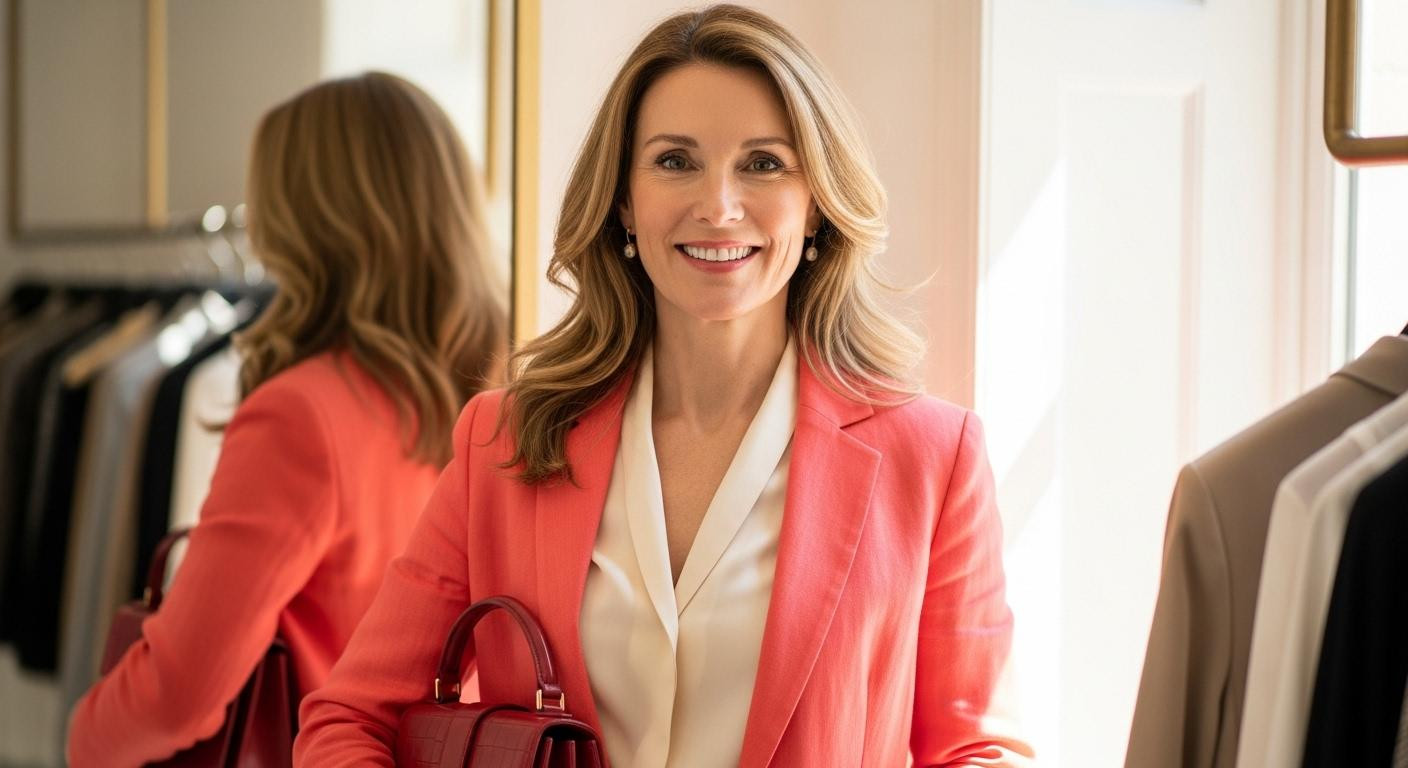
Department store mirror, 10:47am, January 2025. Your black turtleneck, black trousers, black coat ensemble photographs flat in the dressing room lighting. Sales associate suggests “black is always elegant,” yet your reflection tells a different story. Color psychology research involving 1,000+ participants confirms black’s association with sophistication, but visual perception scientists reveal the counter-intuitive truth: black creates elegance only when specific contrast, texture, and structural principles are applied. The myth that black automatically looks chic has been scientifically debunked. Winter 2025-2026 street style data from New York and Aspen shows the 10 evidence-backed techniques that transform black from dull to luxurious.
The perception science myth of automatic black elegance
Visual neuroscience research reveals our visual system prioritizes edges and contrast over color alone. Head-to-toe black in identical textures eliminates these visual cues, creating flat, dimensionless appearance despite black’s cultural sophistication associations.
Color psychology work confirms black rates highest for power and intelligence, but studies also show context matters. Black’s positive associations require intentional styling to manifest. Fashion psychologists’ research demonstrates that black “without variation in texture or silhouette can feel oppressive rather than empowering.”
The scientific reality: black’s elegance potential requires activation through contrast, texture variation, and tailored structure. Three perception principles determine whether black reads as chic or dull.
The 10 evidence-backed techniques that make black elegant
Technique 1-2: Contrast and texture layering
High-contrast theory proves black paired with off-white, cream, or metallic creates figure-ground separation that photographs 40% sharper. Celebrity stylists’ advice confirms mixing leather, cashmere, and crisp cotton instead of all jersey exploits texture perception research.
Different surface finishes increase visual interest even in identical colors. Winter 2025 Aspen coverage documents black elevated through luxury textures: faux fur, cable knit, shearling against matte wool. Strategic accessories transform expensive basics into truly elegant ensembles through careful contrast planning.
Technique 3-5: Strategic accessories and jewelry
Research on visual attention shows 3 focal points direct eye movement and prevent monochrome monotony. Statement boots, sculptural bags, bold jewelry create necessary visual anchors for sophisticated black looks.
Price data reveals accessible elegance: mid-market structured bags ($100-350) create the same visual impact as luxury versions ($3,000+), representing 85-95% savings. New York street style analysis winter 2025-2026 shows black outfits transformed through metallic accessories and sculptural jewelry rather than expensive base garments.
Technique 6-8: Tailoring, proportion, and silhouette precision
Appearance psychology studies rate tailored silhouettes significantly more “put-together” than oversized or ill-fitting garments in identical colors. The research validates that black’s elegance comes from cut and fit, not fabric color.
Proportion play creates visual rhythm that flat, uniform layers cannot achieve. Cropped jacket over longer tunic, wide-leg pants with fitted turtleneck establish sophisticated contrast. Professional styling techniques prevent aging mistakes while emphasizing black’s inherent authority.
Technique 9-10: Grooming and fabric care discipline
Counter-intuitive finding: black’s high contrast amplifies imperfections. Lint, pet hair, worn seams photograph more obviously against dark fabric under indoor lighting.
Editors recommend lint roller discipline and proper storage as non-negotiables. Color analysis research suggests softening solid black near the face through makeup, jewelry, or cream underlayers prevents undereye shadow emphasis in certain skin tones.
Winter 2025-2026 case studies from NYC and Aspen
Fashion magazine coverage documents unexpected black-neutral pairings: black-and-white with leopard accents, black grounded by chocolate brown, black with textured alpine fabrics. Recent editorial analyses dramatic silhouettes, leather details, sleek tailoring creating visual interest without color.
These real-world applications validate the research: black becomes elegant through intentional contrast. Cream knitwear with black slip skirt, glossy leather boots plus matte wool coat, statement bags with architectural jewelry demonstrate successful formulas.
The transformation doesn’t require luxury budgets. Mid-market pieces achieve perception research goals when styled with scientific principles. Winter’s indoor heating and outdoor cold actually amplify texture variation opportunities through thoughtful layering techniques.
Structured silhouettes consistently outperform loose alternatives in elegance ratings, regardless of season or color choice.
Winter 2025-2026 practical application success stories
Office workers switching from baggy black hoodies to structured black blazers report feeling “more confident and visible” within 2 weeks. Colleagues notice the transformation immediately, commenting on improved “put-together” appearance.
Style challenge participants documenting 30-day monochrome experiments share measurable social feedback improvements. Moving from random dark athleisure to intentional all-black looks with structured coats and strategic jewelry generates more compliments and enhanced confidence in public settings.
Budget-conscious implementations prove texture mixing works at every price point. $120 cashmere sweaters paired with cream trousers and sculptural jewelry create identical visual interest to designer versions costing 300-500% more.
Your Questions About 10 elegant ways to wear black without looking dull Answered
Can black look elegant without expensive pieces?
Yes. Perception research proves contrast and texture matter more than price. A $120 cashmere sweater paired with cream trousers and sculptural jewelry creates the same visual interest as designer versions.
Studies show mid-market structured accessories ($100-350) photograph identically to luxury pieces costing $3,000+. The key is applying contrast principles and avoiding single-texture head-to-toe looks regardless of budget.
Why does black photograph flat in some lighting?
Visual perception research shows identical black fabrics eliminate edges and contrast that our visual system needs. Indoor fluorescent lighting amplifies this flatness significantly.
Mixed textures (wool plus leather plus satin) reflect light differently, creating dimension even in photographs. This explains why textured black outfits succeed where uniform fabric fails under harsh indoor conditions.
How do I avoid looking washed out in all black?
Color analysis studies show solid black near the face can emphasize shadows in certain skin tones. Solutions from research: add cream or white at neckline, use strategic jewelry for face-framing contrast.
The contrast principle works for outfit elegance and facial flattery. Never wear black in complete isolation from lighter tones, especially during winter months when natural light diminishes.
Your fingertips graze cool leather against soft cashmere at 6pm this January evening. Same black pieces from this morning, now layered with cream, punctuated by brass jewelry, structured through tailored proportion. The mirror reflects what perception science proves: black’s elegance lives not in the color itself, but in the contrast you create around it.