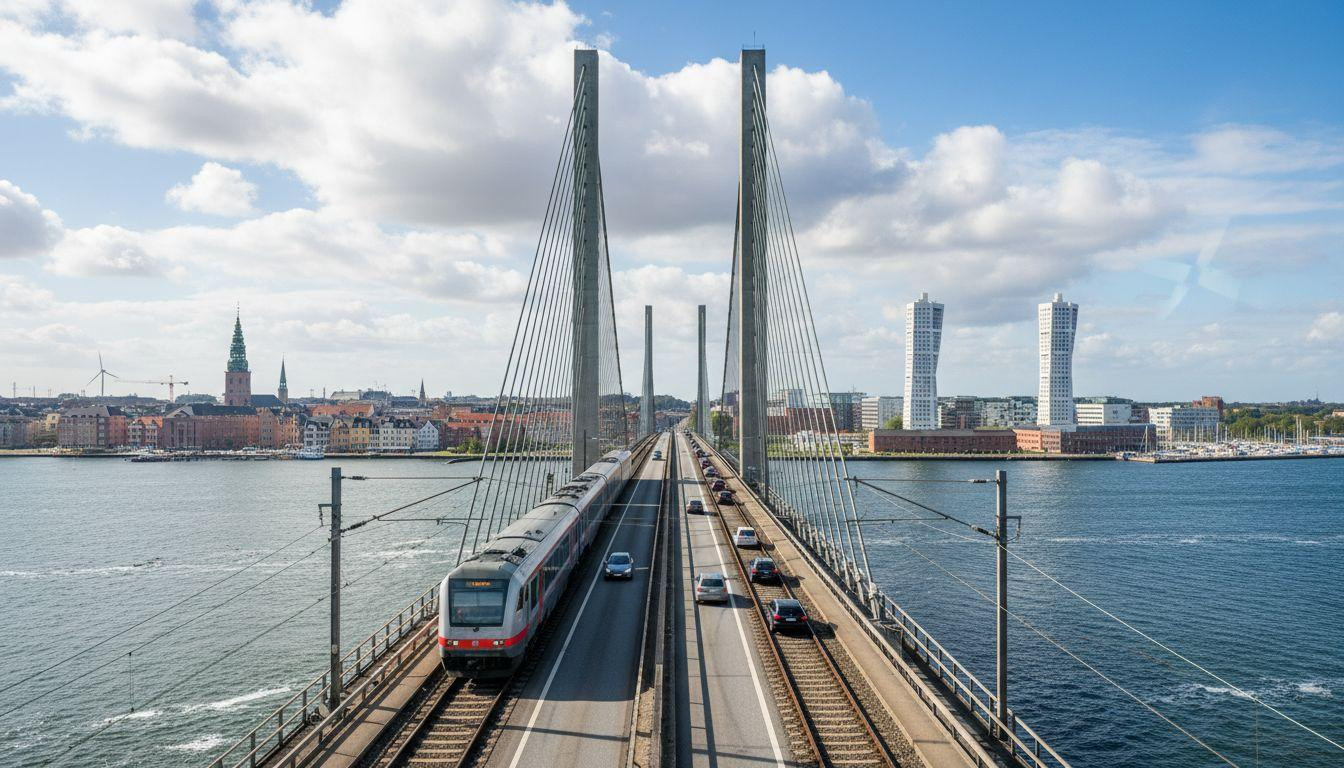
This 35-minute train ride connects two countries across steel-blue water. The Øresund Bridge stretches between Copenhagen’s copper spires and Malmö’s twisting Turning Torso tower. In 2025, this engineering marvel celebrates 25 years of linking Denmark and Sweden in a single journey that costs $12.
Budget-minded travelers discover twin-city living here. Stay in quieter Malmö for $120 nightly. Cross to expensive Copenhagen for museums and dining. Return by evening train with money saved and two countries explored.
The bridge that changed Scandinavia
The Øresund Link opened July 1, 2000 after 9 years of construction. This 10-mile engineering marvel combines tunnel, artificial island, and cable-stayed bridge. The structure descends 13 feet underwater on the Danish side. It emerges on Peberholm island before soaring 187 feet above the strait to Sweden.
Anniversary celebrations mark 25 years of operation in July 2025. Special events highlight “Denmark and Sweden connected” across both cities. The bridge transformed regional commuting patterns completely. Today, 20,000 people cross daily for work, study, and exploration.
Trains depart every 20 minutes from Copenhagen Central Station. The 35-40 minute journey costs around $12 one-way. Late services run until midnight in both directions. This Scottish beach holds Caribbean turquoise water offers similar cross-border accessibility from England.
Copenhagen’s design capital energy
Nyhavn’s colorful harbor culture
Copenhagen’s 17th-century merchant houses line Nyhavn canal in ochre, rust red, and pale blue. Bicycles outnumber cars on cobblestone streets. Harbor baths welcome swimmers year-round in 50°F winter water. Copper-green church spires punctuate the low skyline.
The Danish Architecture Center showcases Nordic design principles. Organic cafes serve New Nordic cuisine emphasizing seasonal ingredients. Coffee culture thrives in waterfront districts where harbor sounds mix with bicycle bells.
The cost reality
Mid-range Copenhagen hotels average $240 nightly during May-September. Casual dinners cost $35 including drinks. Café lunches reach $17 for smørrebrød and coffee. Summer cruise ships bring 2 million visitors to the greater metro region.
Museum entries cost $12-22 each. Local transit day passes run $10. The capital’s reputation for expense proves accurate across accommodation and dining. Better than Amsterdam where hotels cost $275 shows similar Nordic cost patterns.
Malmö’s quieter Swedish side
Gamla Staden to Turning Torso
Malmö’s Old Town centers on cobbled Lilla Torg and Stortorget squares. Gabled merchant houses frame outdoor café seating. The 16th-century Malmö Castle overlooks its original moat. Residential streets echo only with distant bicycle wheels.
Modern Västra Hamnen waterfront showcases Santiago Calatrava’s twisting Turning Torso tower. The 623-foot structure spirals 90 degrees from base to top. Waterfront promenades stretch along the Baltic with views toward Copenhagen’s skyline.
The savings advantage
Comparable Malmö hotels cost $120-155 nightly (15-20% cheaper than Copenhagen). Swedish fika culture offers coffee and pastry for $8. Dinner mains average $22 in uncrowded restaurants. Tourist numbers remain notably lower even during peak summer months.
Multicultural influences from Middle Eastern and Balkan communities enrich the food scene. Local cafes serve authentic Swedish cardamom buns. Better than Florence where ZTL fines cost $110 demonstrates similar cost-conscious travel strategies.
Living the twin-city life
Morning begins with Swedish fika in Malmö’s quiet squares. Afternoon museum visits happen in Copenhagen’s design districts. Evening returns to Malmö for affordable dinner and harbor walks. This pattern defines modern Øresund living.
Commuters call it “Sweden-based Copenhagen working.” Danish residents choose Malmö apartments over expensive Copenhagen housing. The bridge enables seamless country-hopping within a single metropolitan region. Winter light reflects differently off both waterfronts throughout short Nordic days.
Late trains accommodate evening cultural events. The journey becomes routine rather than tourist novelty. This Brittany island grows 2,500 exotic palms shows similar accessible island connections.
Your questions about Copenhagen and Malmö answered
Which side should I base in?
Choose Malmö for budget savings and residential atmosphere. Copenhagen works better for nightlife access and museum proximity. Both cities connect seamlessly with 20-minute train frequency. Many travelers split time between both locations.
When are the 25-year celebrations?
July 2025 marks the official bridge anniversary with special events planned. Exhibitions likely appear in both Copenhagen and Malmö celebrating Nordic integration. Bridge Run 2025 highlights “25 years connecting Denmark and Sweden” through commemorative programming.
How does this compare to other Scandinavian capitals?
This twin-city setup offers unique affordability compared to Stockholm or Oslo. No other Nordic region provides such seamless international access. The bridge connection creates opportunities unavailable in single-country capital visits.
Evening light touches the Øresund Bridge as trains carry travelers between two nations. Steel cables stretch across darkening water. Countries connect through simple 35-minute journeys that began 25 years ago.