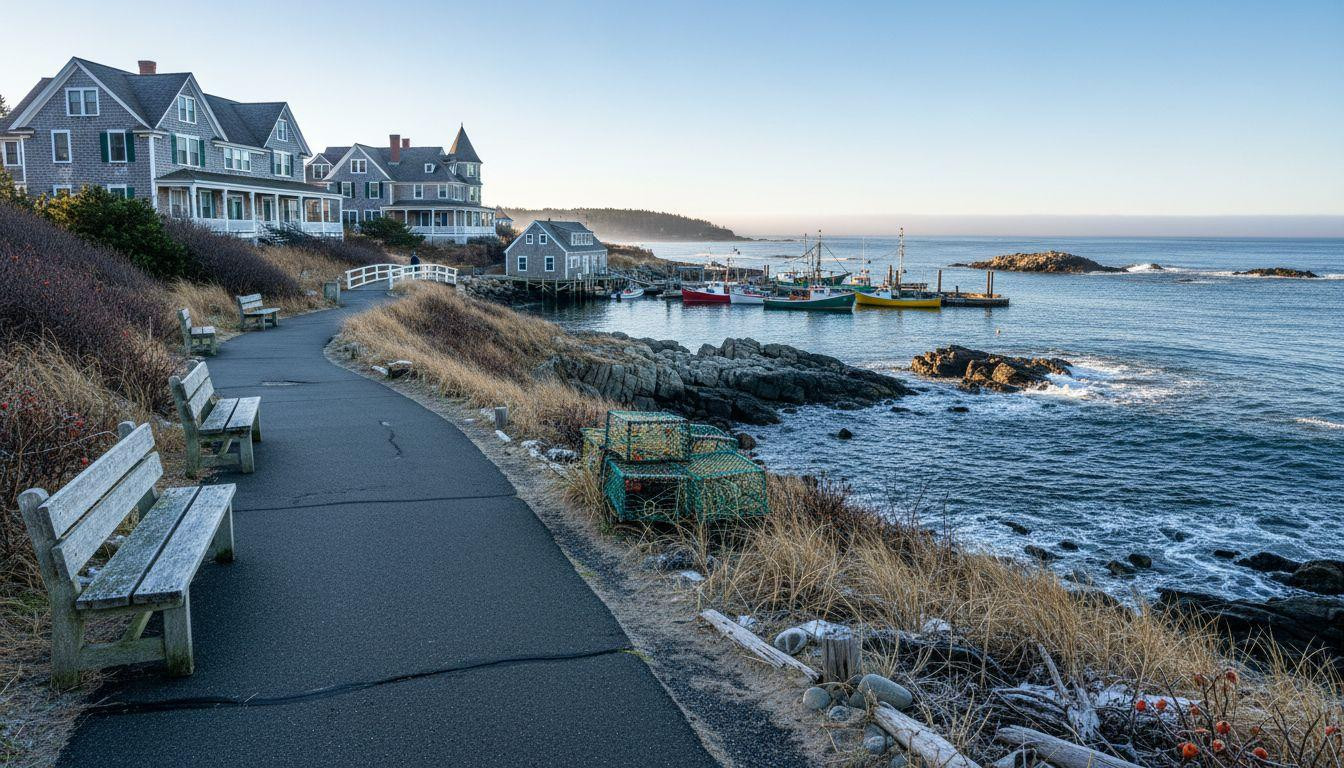
Morning fog lifts from Perkins Cove as Atlantic waves pound empty cliffs. Victorian inns glow warm against slate-blue water. This is Ogunquit in January, when summer crowds fade and Maine’s most quietly beautiful coastal village returns to its fishing roots.
Just 70 miles from Boston, this compact seaside town transforms completely after Labor Day. The 1.25-mile Marginal Way cliff walk stays open year-round. Lobster boats rest in harbor silence. Snow dusts weathered shingles and dune grass.
6 winter zones where Atlantic solitude meets Victorian charm
Ogunquit means “beautiful place by the sea” in Abenaki. Winter proves the translation accurate. Six distinct zones create a walkable coastal village where fishing heritage meets resort architecture.
Each zone offers different winter experiences. Storm-watching benches face open ocean. Protected harbor coves frame quiet boats. Wide beaches reveal structures invisible under summer crowds.
Marginal Way: cliff walk where benches face winter storms
This paved coastal path hugs Atlantic cliffs from Shore Road to Perkins Cove. Benches every 100 yards provide storm-watching seats. Waves crash 20-30 feet below on black rocks.
Winter walking conditions
The path stays open in light snow but requires micro-spikes during ice storms. Local outfitters rent winter gear for $10-15 daily. Dawn walks offer best light on offshore islands.
Morning fog often lifts by 9am, revealing dramatic coastline views. Afternoon brings biggest waves during January storms. Evening light creates golden hour photography opportunities.
Storm watching culture
Locals embrace winter weather rather than hiding indoors. Rockport’s granite quarries offer similar coastal drama 90 minutes south. Ogunquit provides easier access with better parking.
Temperature typically ranges 26-34°F in January-February. Windproof layers essential for comfortable cliff walks. Free parking available at both path endpoints during winter months.
Perkins Cove: fishing harbor where lobster boats rest quietly
This working cove features a historic drawbridge and weathered fishing shacks. About 20 lobster boats moor here during winter maintenance season. Handful of year-round restaurants serve fresh seafood.
Harbor photography
Best shots occur at sunrise when fog wraps moored boats. The drawbridge opens occasionally for winter boat movements. Shingled cottages date to early 1900s fishing village era.
TripAdvisor consistently ranks this as southern Maine’s most picturesque fishing cove. Winter isolation reveals authentic working harbor character hidden under summer tourist activity.
Dining and local culture
Oarweed Cove and Barnacle Billy’s maintain weekend winter hours. Lobster rolls cost $18-25, significantly less than summer pricing. Chowder and craft beer warm visitors after cliff walks.
Local fishermen prepare gear for spring season. Their daily routines continue despite cold temperatures. Narragansett’s fishing harbor offers similar authenticity but lacks Ogunquit’s cliff walk access.
Ogunquit Beach: three miles of winter solitude
This broad Atlantic beach extends from Moody Point to Wells border. Extreme tides create 200-yard-wide flats at low water. Winter reveals beach structure invisible under summer crowds.
Tidal exploration
Low tide exposes tide pools, sea glass deposits, and storm-carved sand formations. Seals occasionally surface offshore during calm winter days. Beachcombing produces shells and driftwood after northeast storms.
Dogs welcome off-season without leash restrictions. Beach access via Beach Street or Footbridge Beach parking areas. Both lots offer free winter parking compared to $10-15 summer fees.
Winter beach walks
Solo footprints often remain visible for hours on empty sand. Wind protection essential as Atlantic gusts cut sharply at freezing temperatures. Sunrise and sunset provide best photography light.
Beach extends nearly to Wells town border, offering 3-mile round-trip walks. Dunes and nature preserve back the sand. Victorian seaport architecture creates similar coastal heritage atmosphere on the Pacific Northwest coast.
Victorian downtown: 1890s architecture glowing with winter warmth
Shore Road and Main Street showcase shingle-style inns and Victorian storefronts from Ogunquit’s resort golden age. Beachmere Inn and Colonial Hotel represent classic New England seaside architecture.
Christmas by the Sea festival (December 12-14, 2025) illuminates historic buildings with holiday lights. Tree lightings, concerts, and craft shows celebrate winter season. Santa arrives by lobster boat in harbor ceremony.
Winter lodging rates drop 40-60% from summer peaks. Victorian inns typically charge $150-250 per night compared to $400+ during July-August high season. Advanced booking recommended for festival weekend.
Beach Plum Farm preserve: saltwater farming history trail
This half-mile loop traverses Ogunquit’s last saltwater farm through wetlands to ocean views. Great Works Regional Land Trust manages the preserve. Interpretive signs explain historic tidal farming methods.
Frost highlights salt marsh grasses during January mornings. Winter waterfowl frequent tidal areas. Trail remains accessible in light snow but requires waterproof boots near river sections.
Free parking available off Route 1. Alpine lake snowshoe trails offer mountain alternative 2 hours inland. Farm preserve provides easier coastal access for all fitness levels.
Fire culture: outdoor warmth meets Atlantic storms
Local establishments maintain outdoor fires throughout winter months. Beachfire restaurant keeps bonfire burning even during snowstorms. Cliff House Maine hosts Ice Bar events at Nubb’s Lobster Shack with ocean views.
Stargazing opportunities improve dramatically with reduced light pollution. Clear winter nights occasionally offer northern lights viewing from beach locations. Aurora alert apps help predict optimal viewing times.
Funky Bow Beer Company provides craft beer selection 15 minutes inland. Local culture embraces outdoor winter activities rather than hibernation. Mainers traditionally don’t stay inside when temperatures drop.
Your questions about Ogunquit’s winter Atlantic village answered
What’s the best time for winter visits?
January-February offer emptiest conditions and lowest hotel rates. Christmas by the Sea festival (December 12-14, 2025) provides holiday atmosphere but increases crowds and pricing. March brings warmer temperatures while maintaining off-season quiet.
How does Ogunquit compare to nearby coastal towns?
Kennebunkport attracts more winter visitors and higher prices. Portland offers urban amenities but lacks intimate village character. Ogunquit provides middle ground with walkable scale, Victorian architecture, and continuous cliff-to-beach access.
What winter activities suit different fitness levels?
Marginal Way accommodates all abilities with paved surface and frequent benches. Beach Plum Farm offers easy half-mile nature walks. Ogunquit Beach provides flat sand walking for any distance. Mount Agamenticus hiking requires 20-minute drive for more challenging terrain.
Snow settles on empty benches facing winter Atlantic swells. Victorian inn windows glow amber against twilight sky. Perkins Cove boats creak gently in harbor silence. This is Ogunquit’s true character: a fishing village that never forgot the sea.