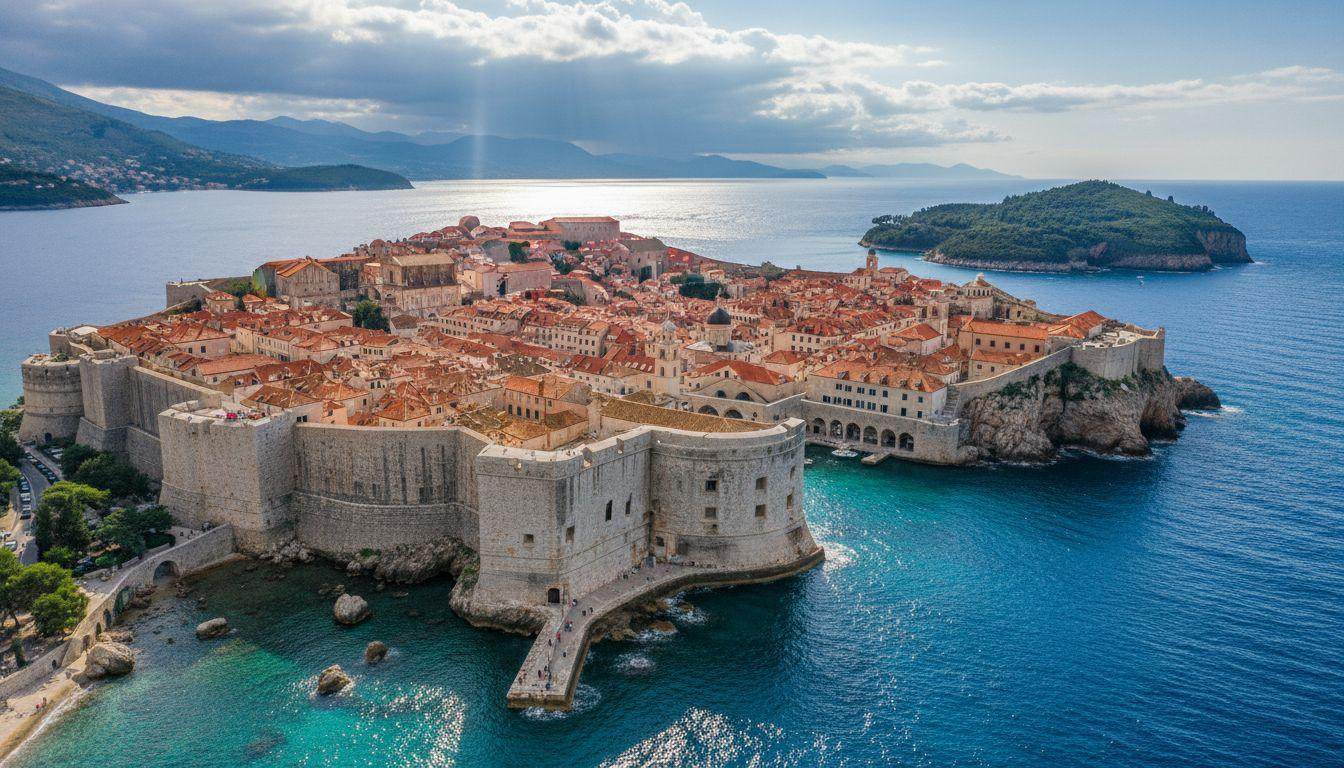
At 7 a.m., golden limestone walls catch the first Adriatic light while church bells echo across empty terraces. This is Dubrovnik Old Town in its last year before mandatory wall reservations begin in 2026. The medieval fortress that served as King’s Landing now implements Europe’s most ambitious overtourism solution.
The city limits cruise ships to two per day, caps Old Town visitors at 4,000, and actively buys back properties for young families. What emerges is a living laboratory testing whether UNESCO heritage sites can control crowds without losing their soul.
The stone city between two eras
Dubrovnik’s 1,940-meter walls encircle red terracotta roofs and polished limestone streets in a perfect medieval circle. The Old Town covers just 0.4 square kilometers but generates headlines worldwide for its overtourism struggles.
Current rules limit arrivals to 4,000 visitors simultaneously through camera monitoring at gates. Cruise ships dock for minimum eight-hour stays, spreading passenger flows across daylight hours. From 2026, wall access requires advance reservations through the $44 Dubrovnik Pass system.
The transformation targets what tourism boards call the “27 tourists per resident ratio” that made Dubrovnik the world’s most overcrowded destination at peak summer. Similar crowd management works in Scotland’s remote beaches, proving small destinations can reclaim balance through strict capacity limits.
Walking King’s Landing before the crowds
The empty Stradun at dawn
Before 9 a.m., the polished limestone main street reflects morning light like a mirror. Local families walk children to the converted palace school where historic Rector’s Palace now houses classrooms. Sea gulls call over Pile Gate while fishing boats return to the small harbor.
The mayor’s buyback program purchases Old Town properties and rents them to young families at symbolic monthly rates. Converted apartments become permanent homes again. Laundry lines hang from Gothic windows, cats sleep on Renaissance doorsteps.
Walls without the wait
In 2025, visitors still buy same-day tickets at any wall entrance for $35-44. Queue times range from zero in November to 90 minutes on summer cruise days. The reservation system launching next year caps simultaneous wall visitors at undisclosed numbers.
Current wall walks take 90-120 minutes around the complete circuit. Minčeta Tower offers panoramic views over red roofs to Lokrum Island. Atlantic islands like Brittany’s palm sanctuaries share similar protected status through visitor controls.
When the city returns to residents
The palace school and buyback program
Local authorities audit every apartment, restaurant, and souvenir shop inside the walls to determine sustainable numbers. Some tourist accommodations convert back to family homes. The historic palace school symbolizes this resident restoration effort.
Tourism officials confirm 80 percent of Dubrovnik citizens earn their living from tourism. The challenge balances economic needs with community survival. Property purchases proceed through public tenders, ensuring transparent allocation to young families.
Two cruise ships, eight hours each
The current cruise limit allows approximately 8,000 daily passengers from two ships requiring minimum eight-hour stays. Average visits now last 11 hours, encouraging shore excursions beyond the Old Town walls.
Bus drop-offs coordinate with port schedules to stagger arrival times at Pile Gate. Cities like Rotterdam demonstrate how architectural heritage survives through controlled tourism flows rather than unrestricted access.
The quiet season they’re protecting
November through March brings 52-55°F temperatures and frequent rain, but also peaceful streets where locals outnumber tourists. Sea temperatures drop to 55°F, discouraging swimming but perfect for contemplative wall walks.
Off-season reveals what preservation efforts aim to restore year-round. Konoba restaurants serve pašticada to neighbors, not just visitors. The Stradun becomes a neighborhood street where children play after school. Church services fill with residents attending weekly mass.
Medieval fortress towns in Spain maintain similar rhythms when tourist seasons end, proving heritage sites can balance preservation with authentic community life.
Your questions about Dubrovnik Old Town answered
Do I need to book wall tickets now?
Through 2025, walk-up tickets remain available at any entrance or online. The $44 Dubrovnik Pass includes walls plus museums and galleries. From 2026, advance reservations become mandatory with time slots and visitor caps.
Is Dubrovnik really the most overcrowded city?
Sustainable travel research ranked Dubrovnik as the world’s most overcrowded destination with 27 tourists per resident at peak times. This ratio drove the current policy response including cruise limits and the upcoming reservation system.
How does it compare to Venice or Santorini?
Dubrovnik covers much smaller area than Venice’s historic center but faces similar crowd pressures. Unlike other destinations with vague sustainability goals, Dubrovnik implements concrete caps and resident restoration programs showing measurable progress.
Salt air carries woodsmoke from restored homes where families cook dinner behind medieval walls. The city balances between its cinematic fame and genuine community life, one careful policy at a time. Morning light still finds golden stone, whether tourists fill the streets or residents reclaim them.