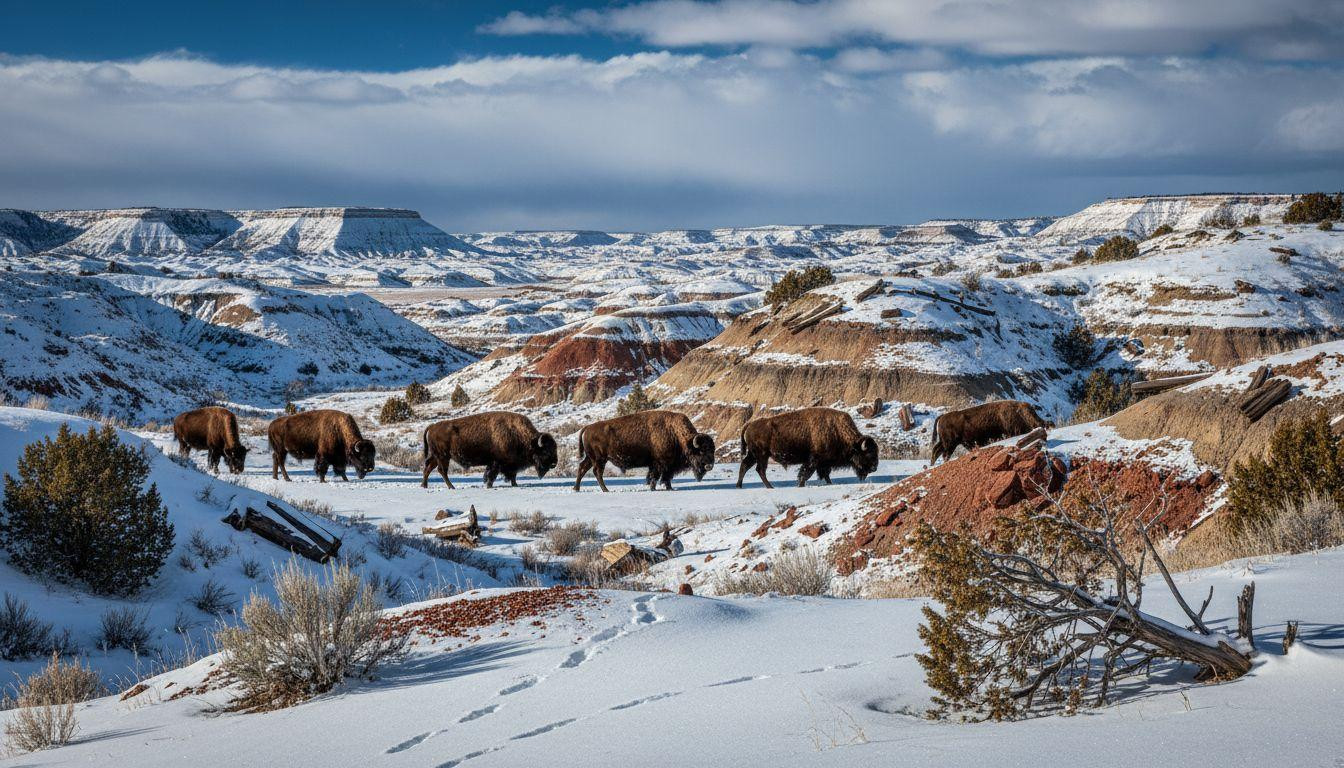
Theodore Roosevelt National Park transforms into North Dakota’s most overlooked winter sanctuary. While summer crowds of 750,000 visitors pack the badlands, winter drops visitation by 90%. Snow blankets striped canyon walls where bison move through white silence.
The South Unit near Medora offers 12 distinct winter hiking zones. Each trail reveals different facets of badlands geology frozen in time.
Where badlands meet winter solitude
Medora sits at 2,389 feet elevation, gateway to 46,000 acres of protected wilderness. The town’s 112 year-round residents welcome winter visitors to a landscape most Americans never see. Snow accumulates from October through April, averaging 30 inches annually.
Winter temperatures range from -10°F to 35°F. The park receives no trail maintenance during snow season. Visitors navigate unmarked paths through terrain that shaped a future president’s conservation philosophy.
12 winter trails that redefine badlands beauty
Coal Vein Trail spans 0.8 miles through red-baked cliff walls. An underground coal seam burned for decades, heating rock to 2,000°F and creating brick-colored formations. Snowshoes reveal animal tracks crossing between color bands.
Wind Canyon Trail offers the park’s most accessible winter overlook at 0.4 miles. The paved path leads to frozen Little Missouri River curves 200 feet below. Nearby South Dakota parks lack this dramatic river-canyon combination.
Hidden gems require snowshoes
Buck Hill Summit climbs 0.1 miles to 2,855 feet, the park’s highest accessible point. Wind chills reach -40°F at the exposed summit. The 360-degree view encompasses 40 miles of frozen badlands stretching to Montana.
Lone Tree Loop extends 9.6 miles through backcountry where Theodore Roosevelt hunted in 1883. Snow depths of 6-12 inches make snowshoes mandatory. The trail passes through three distinct geological formations dating 65 million years.
Where petrified wood meets winter silence
Petrified Forest Loop stretches 10.3 miles through the park’s most remote terrain. Ancient fossilized trees lie scattered across wind-carved ridges. Snow highlights the contrast between dark petrified wood and tan sandstone formations.
The trail requires advanced winter hiking skills. Temperatures drop 15°F below valley floors due to elevation and exposure. Alpine destinations offer similar solitude but lack this unique fossil landscape.
Winter wildlife encounters
Bison herds concentrate in sheltered coulees during winter months. The park’s 400 bison move in groups of 50-100 animals. Visitors must maintain 25 yards distance from these 2,000-pound giants navigating icy terrain.
Prairie dog towns go dormant beneath snow cover. Elk emerge from hidden valleys at dawn and dusk. Bighorn sheep appear on cliff faces where wind keeps rock surfaces ice-free.
Best viewing zones
Painted Canyon Overlook provides roadside wildlife viewing without park entry fees. The 1-mile rim trail stays partially snow-free due to southern exposure. Morning light illuminates bison herds crossing the valley floor 300 feet below.
Maah Daah Hey Trail’s 7.1-mile park section offers multi-day winter camping opportunities. The 96-mile trail system connects three units across western North Dakota. Black Hills alternatives charge $120 nightly while backcountry camping here costs $15.
Planning winter adventures
Ridgeline Nature Trail (0.6 miles) remains closed due to road collapse damage. Jones Creek Trail (3.7 miles) requires early starts due to limited daylight hours. Caprock Coulee Trail (4.3 miles) stays 10°F warmer in protected drainage areas.
The park recommends microspikes for trails under 4 inches of snow. Deeper accumulations require snowshoes. Western winter destinations cost $300 nightly while Medora offers rooms from $65.
Winter transforms the American frontier
Snow muffles the modern world, revealing landscapes Theodore Roosevelt described as “perfect freedom.” Frozen waterfalls cling to canyon walls. Coyote tracks crisscross between sage and juniper stands.
The South Unit scenic drive stays partially plowed, allowing vehicle access to major trailheads. January and February offer peak snow conditions with average depths of 8-15 inches. March brings wildlife activity as animals prepare for calving season.
Your questions about Theodore Roosevelt National Park winter hiking answered
Do I need special permits for winter camping?
Backcountry camping requires permits available at the South Unit Visitor Center. Winter permits cost $15 for up to 14 days. Camping is prohibited within 0.5 miles of roads or designated trails. Water sources freeze, requiring visitors to carry all needed water.
How does winter wildlife viewing compare to summer?
Winter concentrates animals in sheltered areas, making wildlife easier to locate. Bison gather in groups rather than dispersing across open prairie. Elk become more visible as vegetation dies back. However, prairie dogs hibernate and many bird species migrate south.
What makes this different from other winter national parks?
Theodore Roosevelt offers unique badlands geology unavailable in mountain parks. The relatively low elevation (2,000-3,000 feet) creates milder conditions than Rocky Mountain destinations. Entrance fees of $30 per vehicle provide access to 70,000 acres, compared to $35 at overcrowded parks like Yellowstone.
Morning light strikes red canyon walls dusted with fresh snow. Bison breath creates white clouds in subzero air. This is winter as Theodore Roosevelt knew it: raw, beautiful, and utterly American.