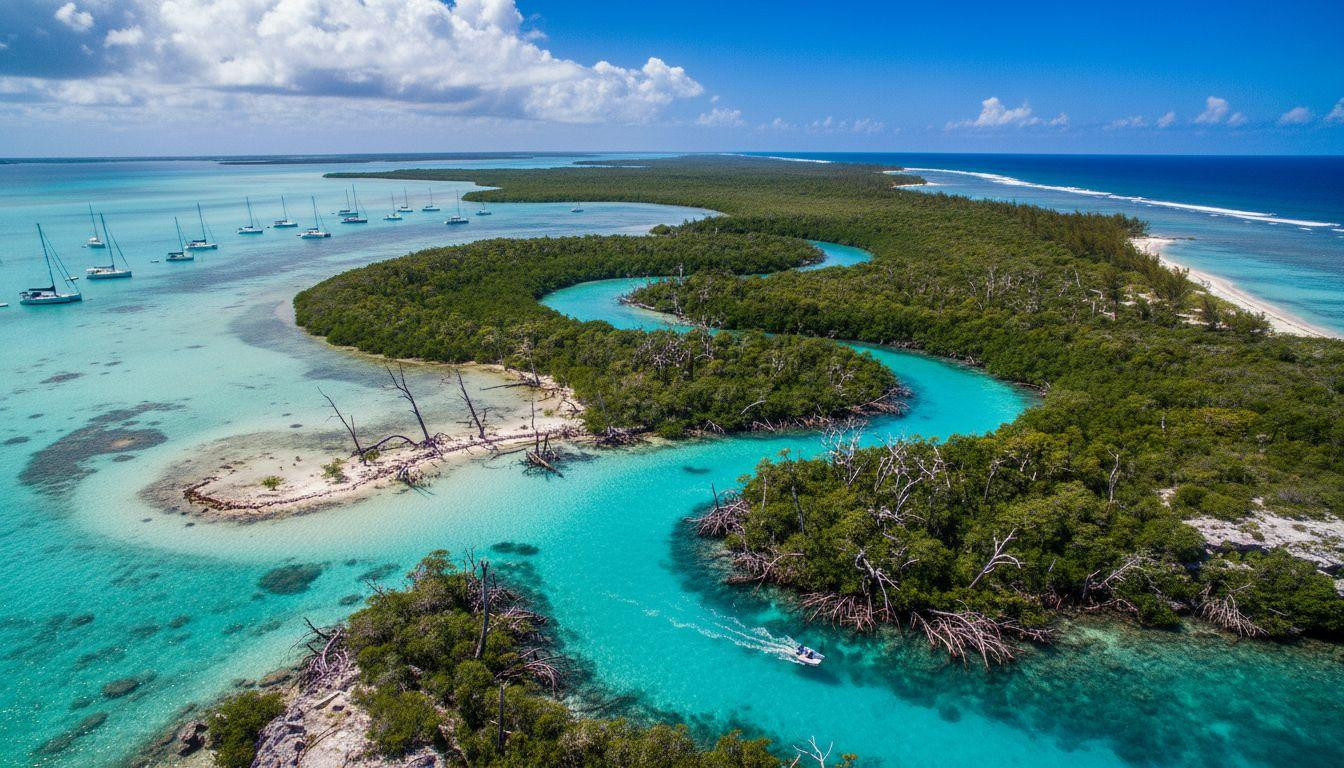
The dinghy slips into electric blue water as mangrove roots disappear below. Here, 40 miles from Nassau, Shroud Cay creates something no Caribbean destination can match: tidal rivers that reverse direction twice daily, flowing through tunnels of green toward hidden beaches. This is the Bahamas’ first marine reserve, where yacht-only access keeps crowds to 5-15 boats even in peak January.
Where the Caribbean meets the Everglades
Shroud Cay anchors the northern boundary of Exuma Cays Land and Sea Park, established in 1958 as the Caribbean’s first no-take zone. The uninhabited cay sits where Exuma Bank’s shallow turquoise meets the deeper blue of Exuma Sound. Free anchorage on the west side welcomes boats up to 60 feet, with prevailing northeast winds offering natural protection.
The park covers 112,640 acres of pristine waters and 20 deserted islands. No hotels, no restaurants, no roads exist here. Visitors arrive by private yacht or charter, with weekly rates from Nassau ranging $8,000-15,000 for 6-8 people. The shallow-water phenomenon extends throughout the Exumas, creating unique conditions found nowhere else in the Caribbean.
Electric blue rivers through green tunnels
The science of glowing water
Limestone bedrock filters Exuma Bank water to crystal clarity before it meets deeper ocean blues. In Shroud Cay’s narrow mangrove creeks (2-6 feet deep), sunlight scatters through this ultra-clear water, creating an electric blue effect that intensifies at midday. Visibility exceeds 100 feet in calm conditions, with water temperatures holding steady at 76-78°F through January.
Nature’s reversible highways
Tidal range averages 3-4.5 feet, creating navigable conditions for 6 hours per cycle. The main creek allows motorized dinghies, with a 20-minute transit from west anchorage to Sound-side beach. At forks, go left heading east, right heading west. Red mangrove roots create natural archways, their salt-encrusted bark visible through gin-clear water.
Navigating paradise with precision
Timing the tidal window
Enter creeks on rising tide, about 1 hour before slack water for optimal flow. Minimum depth of 2-3 feet requires high tide passage to avoid stranding dinghies on sandbars until the next flood cycle. The northern creek amplifies currents, earning the nickname “Washing Machine” among experienced cruisers. Dawn brings pastel blues through the canopy, while midday intensifies the electric hues.
Anchorage life in isolation
Free anchoring eliminates mooring fees that reach $40 nightly elsewhere in the park. January typically sees 5-15 boats, expanding to 20+ during peak periods but never feeling crowded. VHF Channel 16 handles emergency calls, with cruiser nets sharing creek conditions and tide timing. The yacht-based lifestyle opens access to pristine diving zones throughout the Exuma chain.
What Norman’s Cay cannot offer
Norman’s Cay, just 5 nautical miles south, draws 10-30 boats daily to its airplane wreck and beach club dining. But Norman’s lacks Shroud’s tidal river system and protected status. Shroud’s no-take zone has rebuilt conch and lobster populations since 1985, with marine life “spillover” benefiting surrounding waters. The contrast speaks volumes: Norman’s offers historical intrigue from its drug smuggling past, while Shroud provides pure wilderness encounter.
Less than 5% of Exuma visitors reach Shroud Cay, filtered by yacht-only access and tidal navigation requirements. This natural selection process preserves the authenticity that day-trip destinations inevitably lose. Provisioning must happen in Nassau or George Town – the nearest services lie 40 miles away.
Your questions about Shroud Cay mangroves answered
When should I visit for best conditions?
December through April offers calm seas, 75-82°F temperatures, and minimal humidity. January through March provides peak conditions with stable weather patterns and fewer boats. Summer brings 85-90°F heat, higher humidity, and hurricane risk from August through October. Winter timing proves essential for comfortable creek exploration.
How does yacht charter access actually work?
Nassau to George Town bareboat charters (40-50 foot catamarans) run $8,000-15,000 weekly, with captained service adding $2,500-4,000. Day trips prove impossible due to 40+ nautical mile distances and tide-dependent navigation. Fuel costs reach $1,000-2,000 for the round trip from Nassau, making week-long charters the only practical approach.
Why choose Shroud over more accessible Caribbean destinations?
Shroud offers the only reversible tidal river system in the Caribbean, combined with protection status that maintains pristine conditions. The uninhabited protection model creates encounters impossible at developed destinations. Wildlife includes nurse sharks, southern stingrays, ospreys, and sea turtles in their natural habitat.
Dawn brings herons calling across mirror-still anchorage waters. The morning light touches mangrove tips as electric blue creeks begin their twice-daily flow reversal, carrying the day’s first dinghies toward beaches that remain footprint-free.