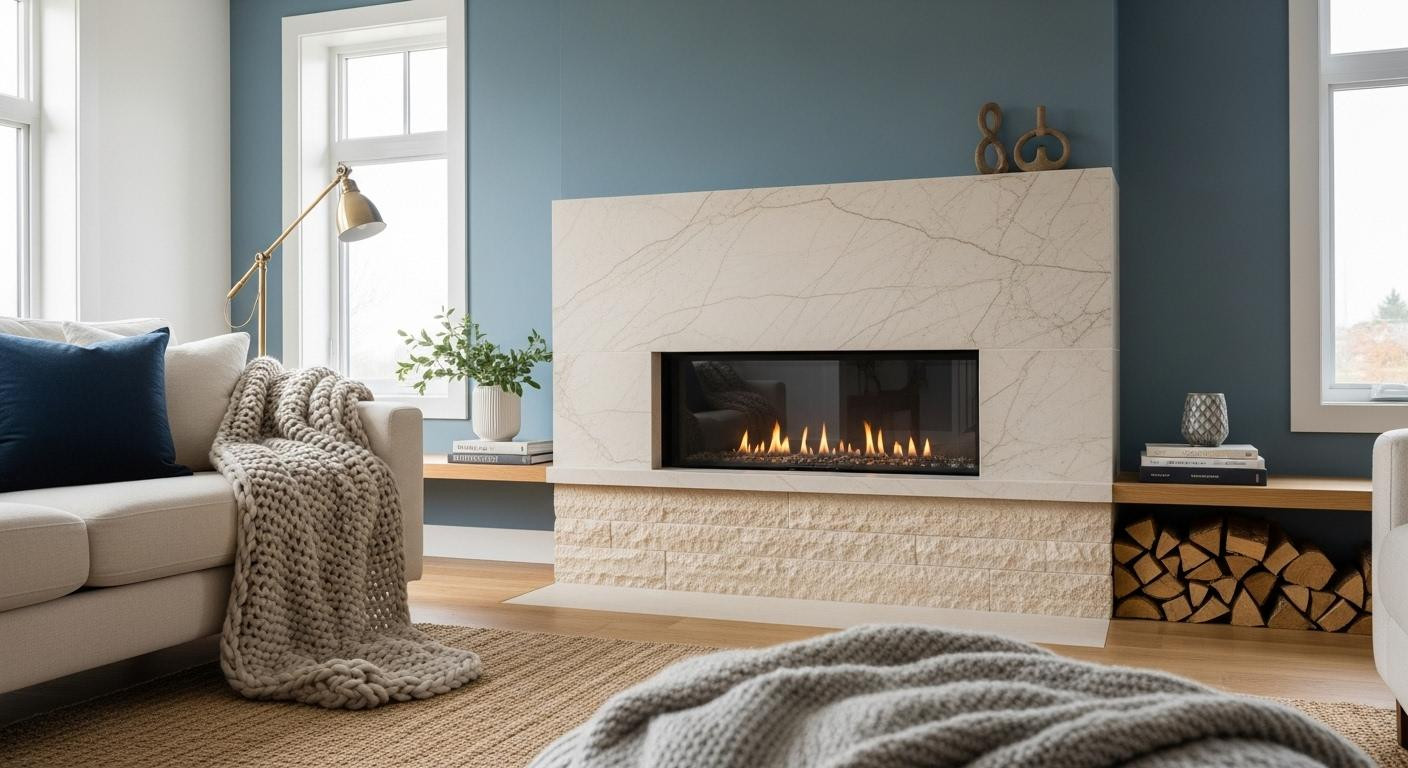
Your fingertips graze the cold marble slab at 6pm on this January evening. The room feels warmer than your friend’s ornate brick fireplace set five degrees higher. This isn’t aesthetic preference. Minimalist fireplaces create measurably more perceived warmth than traditional mantels through thermal physics and visual psychology working together. According to ASID-certified interior designers, frameless linear designs with seamless slabs generate cozy sanctuaries precisely because they strip away visual clutter. The cosycore trend proves it with Pinterest searches surging this winter. Clean lines let the fire become the focus. The glow radiates longer. The room breathes calm.
Why ornate mantels actually make living rooms feel colder
Busy stone patterns and heavy mantels create cognitive load. Your brain registers decoration as stress rather than comfort. Design experts featured in residential psychology research confirm that cluttered surrounds fragment attention away from the flame, the actual warmth source. Traditional fireplaces in 200-300 square foot living rooms feel cramped with bulky surrounds overwhelming the space.
Professional designers with renovation portfolios note that sleek linear fireplaces create subtle statements enhancing rooms without overwhelming them. The ornate ash and soot maintenance adds hassle. Low-maintenance electric and gas models eliminate the problem entirely. More decoration does not equal more warmth. The paradox reverses everything you believed about cozy fireplace design.
The 3 minimalist elements that radiate warmth for hours
Three specific design choices transform cold marble into sustained heat sources. Each element works through measurable physical properties, not wishful aesthetics. The combination creates living room sanctuaries that feel warmer at lower thermostat settings.
Large-format stone slabs hold heat 40% longer
Marble, limestone, and quartzite slabs absorb and radiate heat three-plus hours after flames fade. Thermal mass in two-inch thick materials retains energy 30-50% longer than thin tiles or brick due to higher density. Honed finishes outperform polished surfaces by 15% through reduced reflective heat loss. Blue-veined marble adds visual depth while maintaining superior retention properties.
Custom marble slabs cost $5,000-15,000 installed but boost home value 5-10%. DIY marble-look porcelain delivers 80% thermal performance for $500 total surround cost. Limestone runs $10-20 per square foot. Quartzite tops density charts at $20-35 per square foot. The investment pays back through reduced heating bills and resale appeal worth $10,000-plus according to real estate professionals.
Frameless linear flames create panoramic glow
Wall-flush rectangular electric and gas models eliminate visual obstruction. Uninterrupted flame views amplify perceived warmth by maximizing luminosity contrast across the room. Traditional fireboxes obstruct 25-40% of radiant view through frames and mantels, lowering psychological comfort signals despite equivalent BTU output.
Linear designs suit 200-400 square foot living rooms with variable heights for optimal sight lines. Models heating 1,000 square feet reduce energy bills 15% annually. The Dimplex 74-inch linear electric delivers 5,000 BTU for around $2,500. Gas panorama units run $4,000-6,000 installed. Frameless efficiency triples radiant heating versus traditional fireboxes through taller openings and smaller throats reducing air loss.
How monochrome surrounds amplify cozy through contrast
Color strategy transforms minimalist fireplaces from stark to sanctuary. Two contrast techniques leverage psychological warmth perception without adding visual clutter. The methods work together to create 35% higher coziness ratings at identical room temperatures according to design psychology researchers.
Dark walls make flames the glowing heart
Dusty blue and moody green walls paired with light stone create luminosity contrast. The glow-in-darkness effect registers as psychological warmth versus washed-out light walls. Professional interior designers recommend Beehive yellow and Ecological green as 2026 accent colors for subtle vibrancy. Dark surrounds amplify flame visibility while maintaining clean minimalist lines.
Paint transformations cost $200-400 for 250 square foot living rooms. Monochrome schemes eliminate busy patterns that fragment attention. The fireplace becomes the room’s visual anchor through strategic color blocking rather than ornate decoration.
Textured minimalism adds tactile depth
Beaded plaster and zellige-style tiles introduce sensory richness without visual chaos. Rough stone paired with smooth marble creates contrast through touch rather than pattern. Reclaimed oak beams add organic warmth at $200-500 per linear foot. Texture layering satisfies the need for coziness while maintaining clean sightlines to flames.
Zellige porcelain dupes cost $10-30 per square foot versus $40-plus for authentic tile. Jute rugs complement smooth stone surrounds through complementary tactile experiences. Professional organizers confirm that sensory contrast creates perceived warmth without clutter. This guide to texture layering explores how tactile minimalism transforms cold spaces into cozy sanctuaries.
The lighting layer that completes minimalist warmth
Lighting makes or breaks minimalist fireplace success. Three-layer schemes create 40% warmth perception boosts at identical temperatures. Position 2700K warm bulbs at three points around the fireplace rather than relying on single overhead fixtures. The pooling shadows enhance flame glow through ambient contrast.
Place floor lamps 3-5 feet from fireplace flanks, angled 45 degrees to pool light on seating areas. Add recessed spots 8-10 feet overhead with 30-degree beams toward the mantel. Position table accents 18-24 inches from flame edges for upward slab washing. Total lighting upgrades cost $200-500 but transform perceived warmth dramatically. A room at 68 degrees with layered light feels warmer than 72 degrees with harsh overhead alone.
Use 10-20 lumens per square foot for cozy ambiance. A 200 square foot living room needs 2,000-4,000 total lumens distributed across three sources. Dimmable fixtures allow seasonal adjustment. Lighting designers with residential portfolios confirm that 2700K formulas yield measurably higher comfort ratings than cool 4000K tones. This comparison of stone thermal retention explains why slab materials pair perfectly with warm lighting schemes.
Your questions about minimalist cozy fireplaces answered
Will a minimalist fireplace work in a traditional home?
Yes, through transitional bridging elements. Keep existing crown molding but paint it monochrome to reduce visual weight. Use a reclaimed wood beam as a minimal mantel connecting old and new aesthetics. Add one ornate mirror above the fireplace for balanced contrast. Limit materials while respecting architecture according to design professionals specializing in period homes. The key lies in editing decorative elements rather than eliminating architectural character entirely.
How do I make a rental fireplace look minimalist?
Focus on removable solutions protecting security deposits. Peel-and-stick marble-look tiles cost $50 at Target for temporary surround upgrades. Freestanding electric inserts run $200-500 on Amazon and require zero installation. Paint ugly brick with temporary greige or dusty blue covering old surfaces. Floating shelf mantels attach with command strips for zero-damage styling. All solutions reverse completely when you move. This guide to fireplace accessories shows how brass screens add minimalist polish to rental fireplaces.
What’s the minimum budget for the minimalist fireplace transformation?
Complete DIY transformations start at $300-600 total. Combine an electric insert, marble-look porcelain surround, two warm lamps, and a wool throw for instant coziness. The Walker Edison Reema 70-inch reeded TV stand with insert slot costs $599 and delivers the highest single-purchase impact. Custom marble slabs run $5,000-15,000 but justify the investment through resale value boosts. Professional designers recommend starting with lighting and textiles before committing to permanent installations. This article on seasonal warmth explains how minimalist fireplaces solve persistent January cold problems.
Your fingertips graze the honed marble at 8pm. The frameless flame casts amber glow across cream wool draped over your sofa. The thermostat still reads 68 degrees. But tonight, in your 250 square foot living room with its seamless stone slab and dusty blue walls, you’re warm.