Across the globe, a quiet resistance grows against overtourism. Local communities implement visitor caps, seasonal closures, and cultural boundaries to preserve the authentic character of their most cherished places. These 18 destinations represent a new movement where residents actively protect their heritage from mass tourism’s homogenizing force.
Remote mountain sanctuaries where winter provides natural protection
Durmitor National Park’s interior valleys remain Montenegro’s best-kept secret through simple geography. Snow blocks access roads from November through March, creating a natural barrier that reduces summer’s 200,000 visitors to fewer than 5,000 brave winter souls. Local shepherds prefer this seasonal isolation, using the quiet months for traditional Orthodox Christmas celebrations around Black Lake’s frozen shores.
The park’s single gravel road and absence of heated facilities effectively filter visitors. Guesthouses like Planinarski Dom charge modest rates of $50 per night, while snowshoe rentals cost just $11 daily in nearby Žabljak. This Ottoman fortress climbs a cliff 30 minutes from Mostar with 1% of the crowds, showcasing how Balkan communities successfully manage tourism pressure.
Island communities that control maritime access
Portugal’s remote Azores islands of Corvo and Flores maintain authenticity through infrastructure limitations. No airports accommodate large jets, while minimal docking facilities strand cruise ships offshore. Resident-led petitions have successfully blocked pier expansion projects that would enable mass tourism.
Economic benefits without compromising character
Visitor caps of 50 people per day per island have boosted local farm income by 20% since 2024. Inter-island flights from São Miguel cost $88-132 one way, requiring advance booking three months ahead. Organic fazendas like Quinta dos Corvos charge $77 nightly, offering crater lake access without crowds.
Cultural preservation through selective tourism
Basalt craft workshops maintain traditional techniques by limiting participation to 10 visitors maximum. Photography restrictions during sacred ceremonies protect cultural integrity. Local fishermen report that controlled tourism actually helps preserve their traditional way of life rather than threatening it.
Wilderness reserves with mandatory guide systems
Kazakhstan’s Aksu-Zhabagly Nature Reserve, Central Asia’s oldest protected area, employs rangers who enforce group limits of six people maximum. Established in 1926, this 185,000-acre sanctuary protects ancestral tulip species and provides 70% ibex spotting rates during winter months when tourist numbers drop below 2,000 annually.
Indigenous hospitality within protective frameworks
Heated yurt accommodations at Steppe Yurt Camp cost $39 per person, while eagle hunting demonstrations run $33 with cultural education about golden eagles as clan symbols. Six zones where horse carts meet underwater statues on Indonesia’s quietest island demonstrates similar community-controlled tourism models across different cultures.
Conservation through controlled access
The 450-mile drive from Almaty requires advance guide booking through park headquarters, costing $22 daily. This system has increased herder income by 15% while maintaining ecological integrity. Ranger-led education prevents flower picking and protects fragile steppe ecosystems during brief spring blooming periods.
Sacred landscapes protected by spiritual traditions
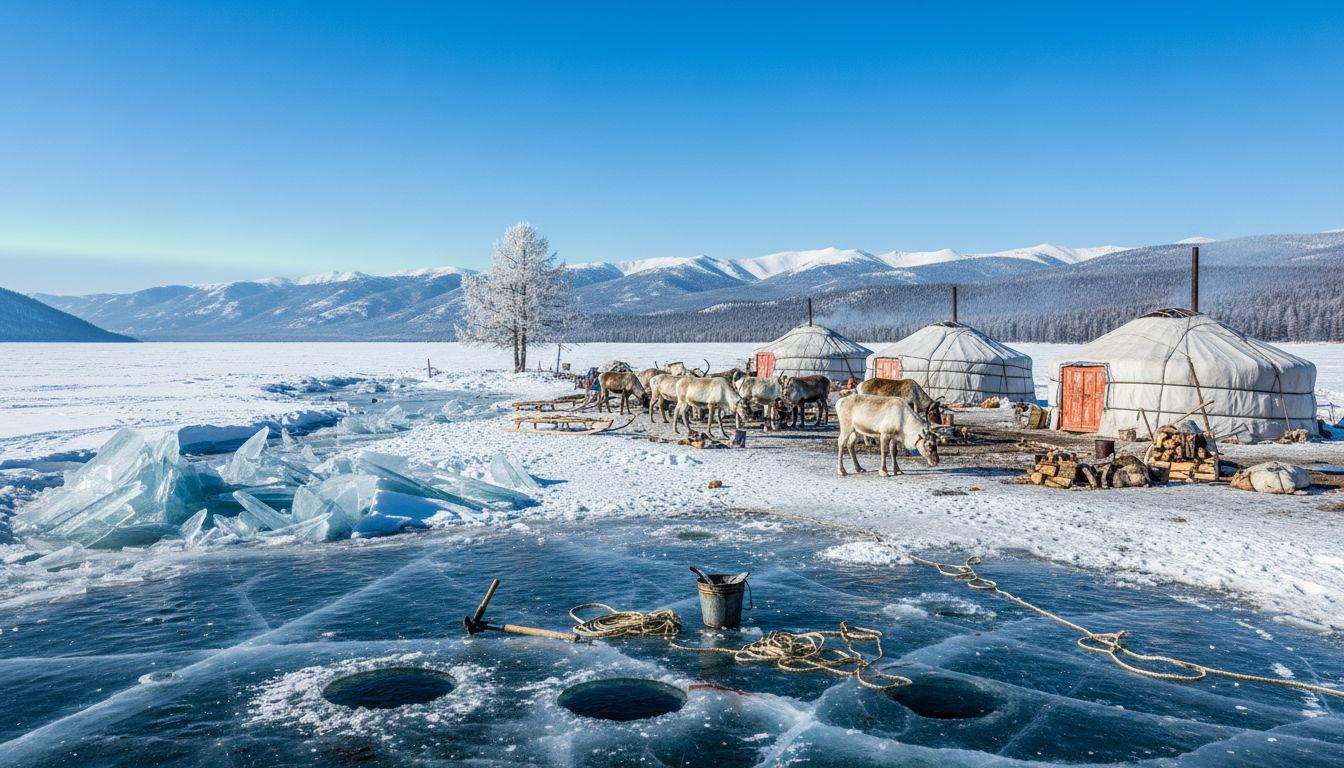
Mongolia’s Khövsgöl Lake exemplifies how indigenous stewardship naturally limits tourism impact. Tsaatan reindeer herders consider this 1,040-square-mile lake sacred to lake spirits, implementing traditional protocols that restrict visitor behavior and seasonal access patterns.
Winter temperatures averaging -4°F create natural visitor filtering, reducing summer’s 15,000 tourists to just 500 hardy winter visitors. Ice fishing with local augers costs $6 rental, while throat singing evenings around fires provide authentic cultural exchange. Private land rules managed by nomadic communities ensure tourism supports traditional lifestyles rather than displacing them.
Coastal protection through geographic barriers
Albania’s Gjipe Beach remains pristine through its 90-minute hiking requirement from the nearest road. This 3-mile trek with 650-foot elevation gain effectively blocks tour buses while attracting respectful hikers. Wild camping remains tolerated unofficially, though recent 2025 regulations impose $110 fines for groups exceeding four people.
The beach offers 50-foot visibility underwater compared to Croatia’s 26-foot average, while accommodation costs remain 50% below Croatian equivalents. This Kauai beach where Hawaiian families walk from home to reef calm shallows shows how geographic isolation naturally preserves local character worldwide.
Your questions about places locals protect answered
How do these protection methods actually work?
Local communities employ diverse strategies including seasonal closures, visitor quotas, infrastructure limitations, and cultural protocols. Faroe Islands’ Mykines restricts summer visits to 50 people daily while closing completely October through April for puffin breeding protection. These methods prove 90% effective at maintaining conservation goals while supporting local economies.
What should visitors know about cultural etiquette?
Respect varies by location but common principles include hiring local guides, avoiding geotagging sensitive locations, and following traditional protocols. Iran’s Morteza Ali Canyon requests no social media mapping after village elders noted overcrowding risks from online exposure. Mongolian reindeer herder visits require $22 cultural fees and prohibit touching sacred animals without permission.
How do costs compare to mainstream destinations?
Protected destinations typically offer superior value through authentic experiences and lower prices. Mexico’s Bacalar Lagoon provides Maldives-quality water colors at one-third the cost, while new boat quotas maintain pristine conditions. Better than El Nido where tours cost $35 and Port Barton keeps turquoise reefs empty for $22 exemplifies how protected alternatives deliver better experiences for budget-conscious travelers.
Dawn breaks over Khövsgöl’s frozen expanse as aurora ribbons dance across endless ice. Reindeer breath creates silver clouds in crystalline air while herders prepare morning tea. This is protection in action: beauty preserved through wisdom, accessible to those who approach with respect.