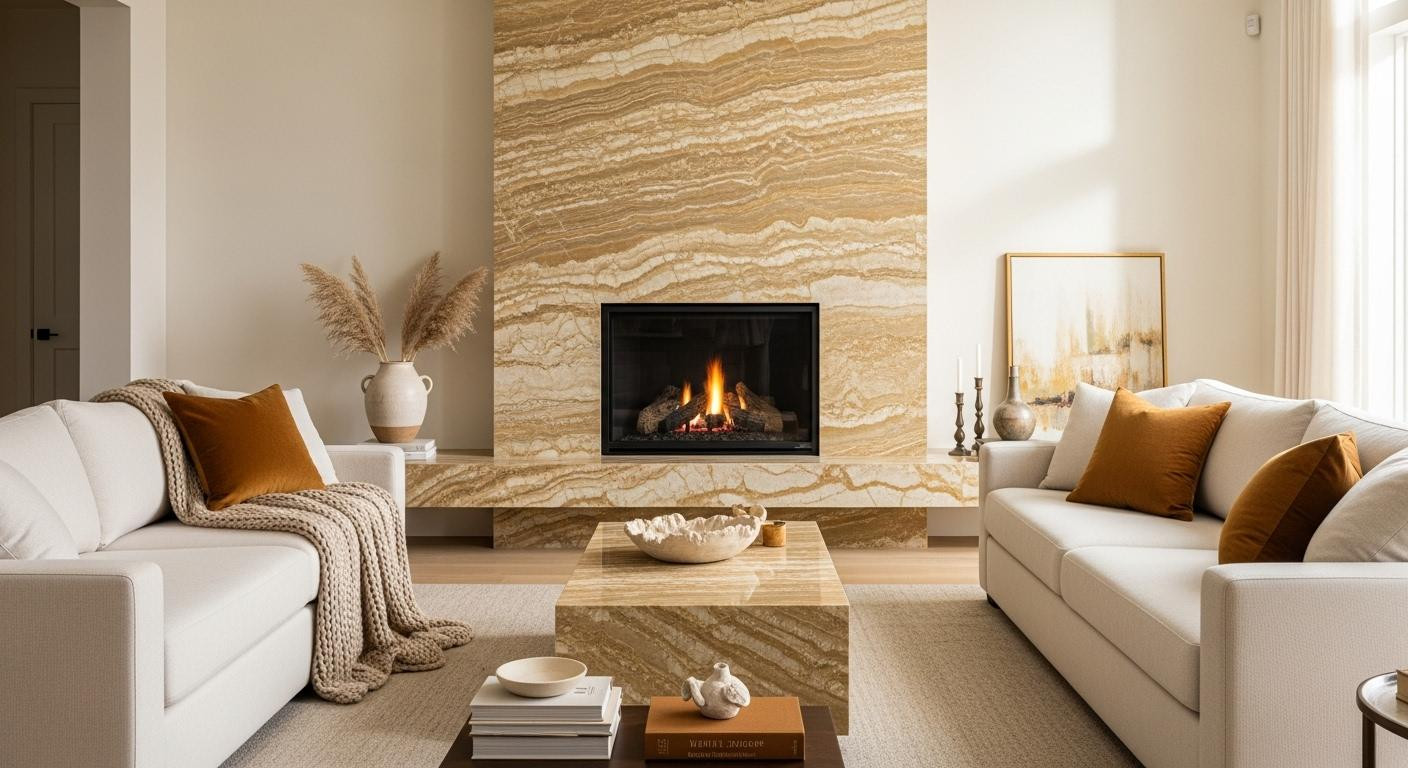
Your fingertips graze cold stone at 6pm in January. The thermostat reads 72 degrees, yet your living room feels warmer than your friend’s brick fireplace set to 75 degrees. This isn’t perception. It’s physics. Stone fireplaces retain heat longer than any other material, radiating warmth for hours after flames extinguish. According to ASID-certified interior designers, stone’s density stores more BTUs per cubic inch than brick or tile. By this article’s end, you’ll understand why designers choose stone despite its cool-to-touch reputation.
Why stone feels cold but keeps rooms warmer than brick or tile
Stone’s density measures 2.5 to 3.0 grams per cubic centimeter. Brick measures only 1.9 grams per cubic centimeter. This difference stores significantly more heat energy. Design experts featured in Architectural Digest confirm that hollow brick materials allow heat escape through air pockets within 30 to 45 minutes post-fire.
The thermal mass paradox experts confirm
Natural stone radiates absorbed warmth for 2 to 4 hours after flames extinguish. Building physics specialists note that stone requires more energy to change temperature. This leads to slower reactions and more stable indoor temperatures. Professional fireplace contractors confirm stone retains heat well, providing longer-lasting warmth even after fire dies down.
What this means for your January living room
Stone fireplaces maintain ambient room temperature 3 to 5 degrees higher between firings. This reduces heating cycles throughout evening hours. The emotional payoff arrives as consistent cozy baseline versus temperature spikes and drops. Interior designers specializing in thermal efficiency observe that homeowners experience noticeable energy bill reductions with stone surrounds. For more on creating warm focal points, brass fireplace screens complement stone beautifully.
The 2026 stone fireplace styles dominating winter living rooms
Quartzite slabs dominate Pinterest feeds this winter. Design professionals note quartzite gives stunning marble looks with increased durability. Earthy gold-veined Emperador Golden quartzite trends for cozy modern aesthetics. Full-height surrounds create statement walls at luxury retailers like Restoration Hardware.
Quartzite slabs: marble beauty with heat-resistant durability
West Elm and CB2 offer accessible quartzite entry points at 100 dollars plus per square foot. Stone specialists confirm quartzite withstands high temperatures without deteriorating. This makes it a smart long-term investment. The material lasts 50 to 100 plus years with minimal maintenance.
Stacked stone veneer: the 3,000 to 10,000 dollar sweet spot
Coronado and Model Stone lead industry installations at 10 to 20 dollars per square foot installed. Textured rustic appeal merges with 2026’s rustic luxe trend. Design experts recommend blending veneer styles to avoid dated looks. Pinterest engagement shows StoneFireplaceMakeover hashtag up 40 percent year over year. Professional installers note complete transformations take 3 to 7 days. For comprehensive winter warmth strategies, explore seasonal cooling patterns to address.
Budget-friendly dupes that still deliver thermal benefits
IKEA Lovbacken faux stacked panels cost 199 dollars for renters. Target Threshold limestone-look tiles run 49 dollars. Amazon peel-and-stick kits at 150 dollars offer removable options but sacrifice heat retention. Wayfair porcelain slabs at 300 dollars mimic natural stone texture at fraction of custom costs.
How to choose your stone fireplace transformation
Investment tiers range from 500 to 50,000 dollars. Each tier delivers different thermal and aesthetic benefits. Budget decorators featured on design platforms confirm strategic spending maximizes warmth returns.
The investment hierarchy: 500 dollar rental fix to 50,000 dollar custom
Tier one for renters uses peel-and-stick veneer at 500 to 2,000 dollars. This provides aesthetic only with minimal thermal boost. Tier two for homeowners involves professional veneer install at 3,000 to 10,000 dollars. This delivers genuine heat retention plus resale value increases of 5 to 10 percent. Tier three luxury features full natural stone custom at 15,000 to 50,000 dollars. Stone fabricators note 50 to 100 plus year lifespan justifies premium pricing. DIY veneer takes 1 to 2 weekends. Professional install requires 3 to 7 days.
Material selection based on your living room size
Spaces of 200 to 300 square feet benefit from slate. Dark modern slate provides heat efficiency in compact rooms. Spaces of 300 to 400 square feet work well with limestone. Neutral limestone reflects light for balanced warmth. Open layouts of 400 plus square feet need quartzite full-height installations. Design professionals confirm maximum thermal mass impact in larger conversation zones. For furniture scale around fireplaces, see proportion strategies that work.
The before-after no one tells you about stone fireplaces
Winter 2024 at 6:30pm with thermostat at 72 degrees. Fire out for one hour means reaching for throw blanket. Room feels hollow-cold despite recent heating cycle. Winter 2026 with same thermostat setting and timeline post-fire shows different results. Stone surround still radiates gentle warmth you feel from sofa 8 feet away.
Natural stone suppliers confirm stone retains radiant heat, creating cozy consistent temperatures. This isn’t about visible flames anymore. It’s about the invisible heat bank stone creates in thermal ecosystem. Professional fabricators call this smart long-term investment because warmth compounds over room’s lifetime. Property value experts observe stone upgrades boost resale by measurable percentages. Combine with layering techniques for complete transformation.
Your questions about stone fireplaces in winter living rooms answered
Do stone fireplaces work in small 200 square foot living rooms without overheating?
Yes, thermal mass self-regulates by absorbing excess heat during active fires. It releases gradually without overwhelming compact spaces. Slate and limestone prove particularly effective in small rooms for balanced warmth distribution. Lighting designers with residential portfolios recommend avoiding full-height surrounds in very small rooms. Opt for surround-only versus floor-to-ceiling installations in spaces under 250 square feet.
Can I get thermal benefits with budget-friendly faux stone?
Partial benefits only exist with porcelain and ceramic dupes. These provide some heat retention, better than hollow brick options. Peel-and-stick remains purely aesthetic with zero thermal mass advantage. Veneer with mortar backing at 3,000 to 10,000 dollars delivers 80 percent of natural stone’s heat retention. This costs only 40 percent of full slab pricing.
Which trending 2026 stone style holds heat longest?
Dense quartzite and granite hold heat 15 to 20 percent longer than marble or limestone. Lower porosity creates superior BTU storage capacity. Emperador Golden quartzite combines trending aesthetics with maximum thermal performance. Stacked stone veneer proves effective if backing material uses proper mortar. Home improvement contractors warn against hollow adhesive mount installations that sacrifice retention.
January evening at 8pm arrives with fire dead one hour. Your fingertips hover six inches from stone surround. Warmth radiates like sleeping ember glowing invisibly. The living room holds 74 degrees while neighbor’s brick fireplace room reads 68 degrees. Stone doesn’t just anchor your space visually. It remembers your fires long after flames forget.