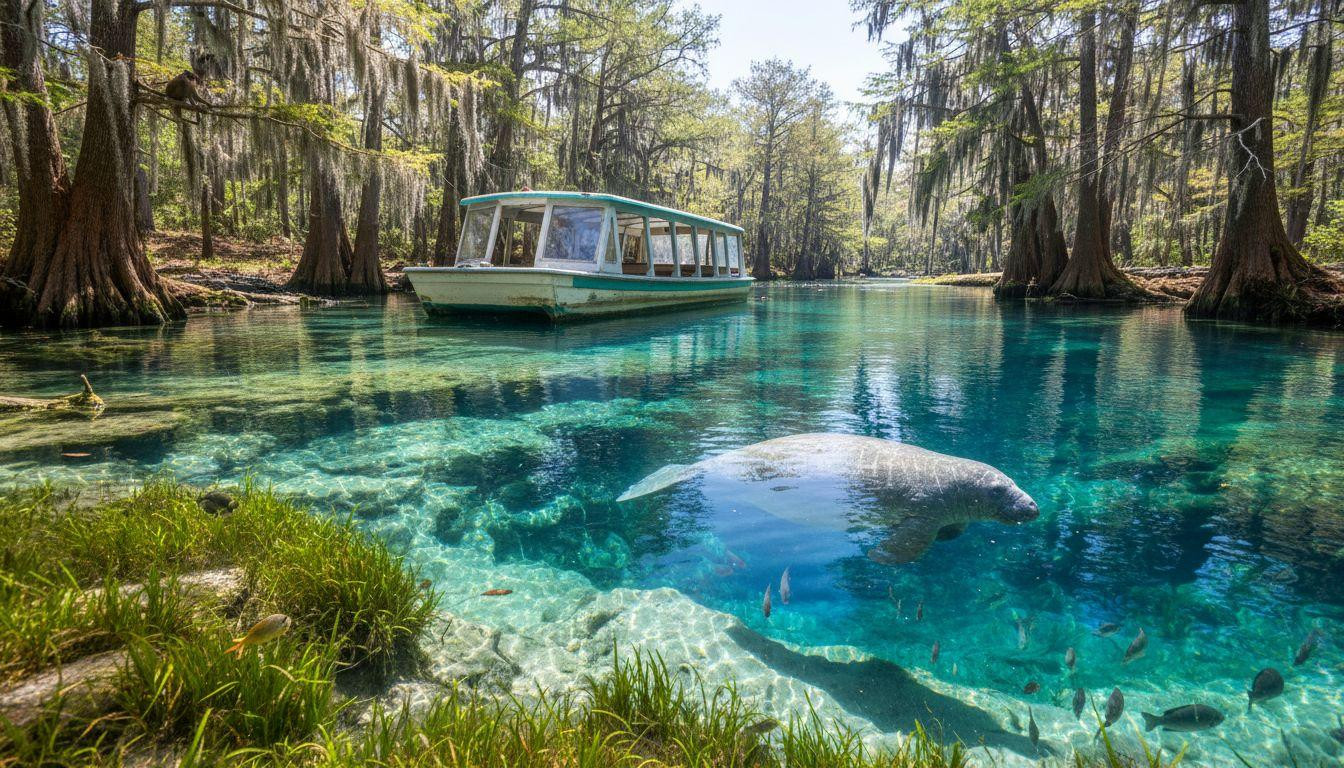
Florida hides 10 artesian spring systems where glass-bottom boats reveal underwater worlds you can explore for $50. While tourists crowd theme parks and beaches, these crystal-clear springs deliver 74°F swimming year-round with manatee encounters that rival any Caribbean resort. The largest artesian spring group on Earth flows at Silver Springs, where 73.5 million gallons surge daily through limestone caverns unchanged since the 1860s.
Silver Springs: Where glass-bottom boats invented Florida tourism
Glass-bottom boat tours began here in 1878, making this Florida’s oldest tourist attraction. The massive headspring boils up from depths exceeding 100 feet, creating turquoise pools visible from 20 feet above. Wild rhesus macaque monkeys (descendants of 1930s Tarzan film props) roam Ross Allen Island while manatees glide beneath your kayak.
Entry costs just $2 per vehicle with glass-bottom boat tours at $30-50. Kayak rentals run $40-60 for two hours, revealing underwater eelgrass meadows and ancient cypress logs. The Silver River winds 5 miles through primeval forest where Johnny Weissmuller filmed Tarzan scenes in the 1940s.
Rainbow Springs: Where waterfalls cascade through botanical gardens
Rainbow Springs pumps 400 million gallons daily, ranking as Florida’s fourth-largest spring. Azalea gardens surround natural waterfalls where families swim in crystal pools. Tubing culture thrives here with $8 rentals floating past limestone bluffs draped in Spanish moss.
Historic gardens meet spring-fed swimming
Botanical gardens planted in the 1930s frame spring-fed waterfalls cascading over limestone terraces. Swimming areas stay 72°F year-round while peacocks roam manicured lawns. The headspring’s visibility exceeds 100 feet on clear days.
Dunnellon’s tubing headquarters
The charming town of Dunnellon (population 1,800) serves as base camp for Rainbow Springs adventures. Local outfitters provide tube shuttles and waterproof gear for families seeking gentle rapids. Historic downtown offers antique shops and riverside cafes.
Ichetucknee Springs: Where 8 springs create tubing paradise
Eight named springs (Blue Hole, Cedar Head, Mission) feed the Ichetucknee River’s 6-mile float. Summer crowds reach capacity limits of 750 tubers daily, but winter offers solitary kayaking through cathedral-like cypress canopies. Water stays crystalline with 50-100 foot visibility.
Blue Hole’s underwater cathedral
Blue Hole Spring drops 25 feet into limestone caverns where ancient cypress stumps create underwater forests. Snorkeling reveals freshwater fish schools and turtle nesting sites. The spring’s boil creates gentle currents perfect for beginning divers.
Winter solitude vs summer crowds
January through March offers empty trails and quiet river sections. Air temperatures in the 50s-60°F feel comfortable with 72°F spring water. Manatee sightings increase during cold snaps when mammals seek thermal refuge in spring-fed pools.
Beyond the big three: Seven more spring systems await
Ginnie Springs offers world-class cave diving in Devil’s Eye and Devil’s Ear caverns. Private ownership means higher entry fees ($30) but pristine conditions. Blue Spring State Park protects 500 wintering manatees with viewing boardwalks (no swimming November 15-March 15).
Wakulla Springs reaches 287 feet deep with historic lodge accommodations since 1937. Devil’s Den features underground snorkeling in a prehistoric sinkhole with visible fossils. Alexander Springs provides 7-mile wilderness paddles through Ocala National Forest to Lake George.
Planning your springs adventure: Winter timing and logistics
Winter months (December-March) offer the best conditions with mild air temperatures, minimal crowds, and peak manatee activity. Most springs cluster within 90 minutes of Orlando International Airport. Silver Springs and Blue Spring make excellent day trips, while northern springs (Ginnie, Ichetucknee) work for overnight adventures.
Budget $25-50 per spring including entry and activities. Bring waterproof cameras, reef-safe sunscreen, and dry bags. Manatee viewing requires 50-foot distances with $500 fines for violations. Dawn hours (7:20 AM January sunrise) provide golden light and active wildlife.
Your questions about Florida’s springs answered
What makes these springs so clear compared to regular lakes?
Artesian pressure forces groundwater through limestone filters spanning millions of years. The Floridan Aquifer sits 100-500 feet underground, creating natural filtration that produces visibility exceeding 100 feet. Constant 72-74°F temperatures prevent algae growth that clouds surface water.
Why do manatees gather at springs during winter?
Manatees cannot survive water below 68°F for extended periods. Spring water maintains constant 72-74°F while surrounding rivers drop to 50s-60°F in winter. Blue Spring typically hosts 150-300 manatees January through March, with dawn hours offering best viewing opportunities.
How do Florida springs compare to Caribbean snorkeling?
Springs offer superior water clarity (50-100+ feet vs 30-50 feet typical Caribbean) with no saltwater, waves, or crowds. Costs run $25-50 vs $100+ Caribbean excursions. Wildlife includes manatees, turtles, and endemic fish species rivaling tropical reefs.
Silver Springs’ glass-bottom boats glide over limestone caverns where filtered sunlight creates underwater cathedrals. Wild monkeys watch from cypress branches as manatees surface for breath in the morning mist.