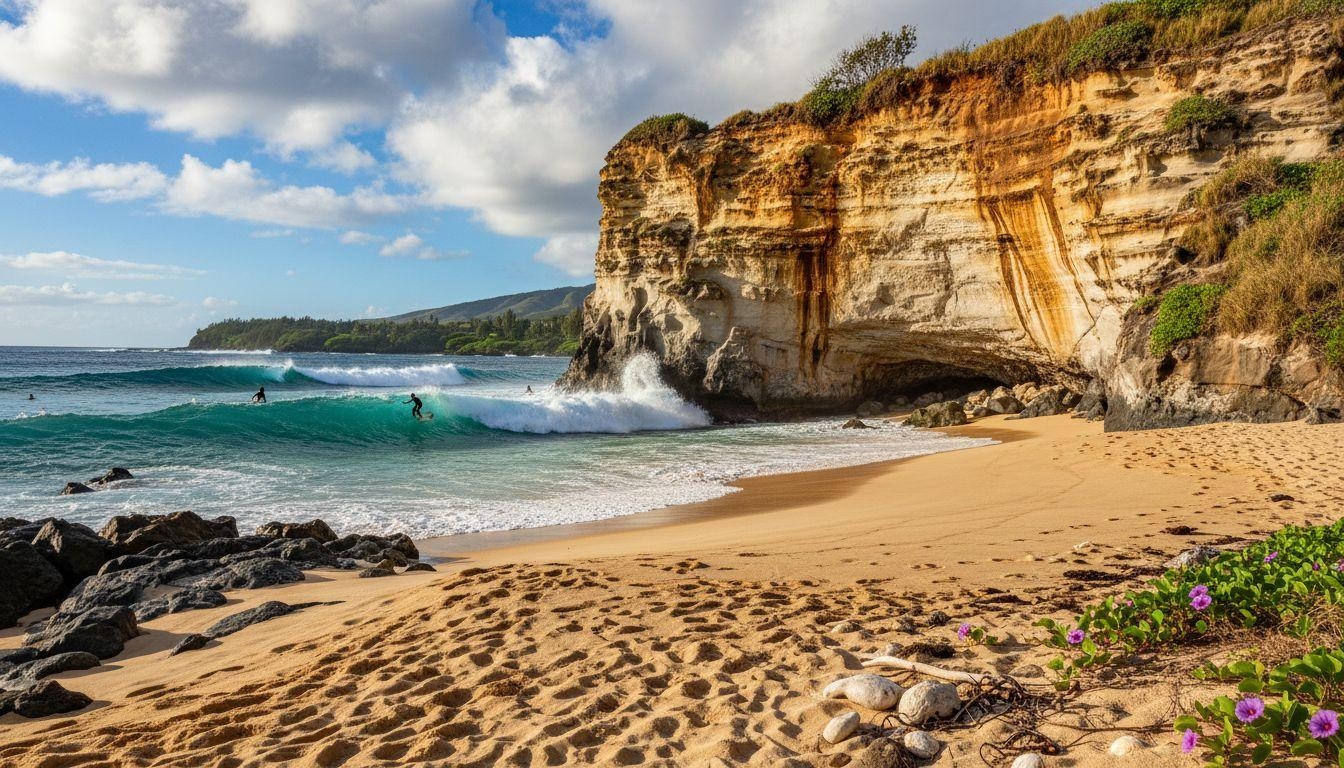
This 40-foot limestone cliff rises from Kauai’s south shore like a golden amphitheater. Below its weathered face, surfers ride 8-10 foot winter swells while photographers frame each break against warm amber stone. Shipwreck Beach (Keoneloa Bay) delivers raw surf drama within walking distance of Poipu’s resorts, yet maintains the unhurried character that locals fiercely protect.
The limestone stage that frames Kauai’s wildest surf
The cliff stands alone among Hawaiian beaches. Most island shores blend palm trees with volcanic rock, but this limestone formation creates something entirely different. Weathered golden stone towers 40 feet above the Pacific, carved by millennia of salt spray and trade winds.
The rock face glows amber in afternoon light, transforming from morning gray to sunset copper. Erosion has undercut the cliff’s base, creating natural seating for spectators. From this vantage point, the entire bay spreads below like an outdoor arena.
The beach curves in a half-mile crescent of golden sand. Volcanic boulders punctuate the western sections, remnants of ancient lava flows. This rocky foundation explains the beach’s shipwreck history: vessels naturally foundered on these offshore reefs centuries before modern navigation.
Where winter swells meet fearless riders
January brings the year’s most powerful surf to Kauai’s south shore. North Pacific swells wrap around the island, creating consistent 8-10 foot waves that crash beneath the limestone wall. The sound reverberates off stone, amplifying each break into thunder.
The surf breaks that draw experienced riders
Local surfers arrive before dawn, checking conditions from the cliff’s edge. Winter delivers the season’s best swells, though summer offers more forgiving waves for beginners. The breaks here demand respect: no lifeguards patrol this stretch, and rip currents run strong year-round.
According to local tourism officials, roughly half the daily visitors come specifically to watch the surf action. The cliff provides front-row seating for wave watching, especially during winter when experienced bodyboarders and surfers tackle the most challenging conditions.
The dangerous allure of cliff jumping
Warning signs posted at the cliff’s edge tell a sobering story. Numerous injuries occur each year: dislocated shoulders, broken ribs, spinal trauma requiring long-term physical therapy. At least one documented case resulted in permanent wheelchair dependency, yet the practice continues.
The cliff’s undercut structure creates additional hazards. Big Island’s Pohoiki Beach offers safer surf drama with its black sand and volcanic setting. Despite the risks here, locals describe this as one of Kauai’s few realistic cliff-jumping locations due to sufficient water depth.
Resort proximity without resort atmosphere
The Grand Hyatt Kauai sits directly behind the beach, yet Shipwreck maintains its local character. Free county parking preserves public access, while the resort provides restrooms, showers, and dining for day users. This unusual arrangement creates accessibility without commercialization.
The 25-minute drive from Lihue Airport
Visitors reach the beach via Ainako Street, between the Grand Hyatt and Poipu Bay Golf Course. The small parking lot fills early during peak season, but overflow spaces line the street. From parking to sand requires just a short, easy walk with no hiking involved.
Poipu Beach Park sits 30 minutes away on foot, offering calmer family swimming for those seeking gentler conditions. Salt Pond Beach provides another local alternative 8 miles west, where Hawaiian families enjoy protected reef waters.
Heritage trail access to ancient Hawaii
The Māhāʻulepū Heritage Trail begins at Shipwreck’s eastern end, following the coast for 2 miles to Makauwahi Cave Reserve. This coastal path reveals petrified sand dunes, fossilized coral, and evidence of Hawaiian settlement patterns predating Western contact.
The trail remains generally well-maintained, though rocky sections require sturdy shoes. Recent visitor surveys indicate most hikers complete the cave portion in 90 minutes round-trip. Pula’s Roman amphitheater demonstrates how ancient stone architecture creates natural gathering spaces, much like this limestone cliff frames ocean drama.
When light transforms stone to gold
Late afternoon brings Shipwreck’s most magical hour. The sun angles low over the Pacific, turning limestone walls into glowing amber. Photographers return repeatedly for this golden hour display, when cliff texture emerges in sharp relief against deep blue water.
Trade winds typically calm in late afternoon, creating better conditions for photography and wave watching. The beach attracts half the crowds of Hanalei Bay, maintaining an unhurried atmosphere even during winter’s peak surf season. Wild chickens roam freely, adding unexpected local character that visitors from the mainland find charming.
Your questions about Shipwreck Beach answered
Is swimming safe at Shipwreck Beach?
Swimming is only recommended for experienced ocean swimmers during calm conditions. The beach experiences strong rip currents year-round, steep shore breaks, and rocky bottom areas. Official safety recommendations estimate fewer than 20% of annual days offer safe swimming conditions.
What makes the limestone cliff geologically significant?
This 40-foot formation represents one of Kauai’s rare coastal limestone exposures, connected to the island’s largest limestone cave system. Most Hawaiian beaches feature volcanic rock backdrops, making this golden stone wall genuinely distinctive. The cliff provides both natural seating and a unique visual frame for surf photography.
How does Shipwreck compare to other Kauai beaches?
Shipwreck attracts roughly half the tourist volume of Hanalei Bay, maintaining stronger local character and more challenging surf conditions. Anini Beach offers calmer, reef-protected waters 25 miles northeast. Shipwreck’s combination of dramatic scenery, powerful surf, and resort accessibility creates an experience difficult to replicate elsewhere in Hawaii.
Morning light catches limestone walls as another set rolls in. Surfers paddle out while photographers adjust their angles. The ancient cliff watches over another day of Pacific drama, unchanged by resort development or tourist seasons.