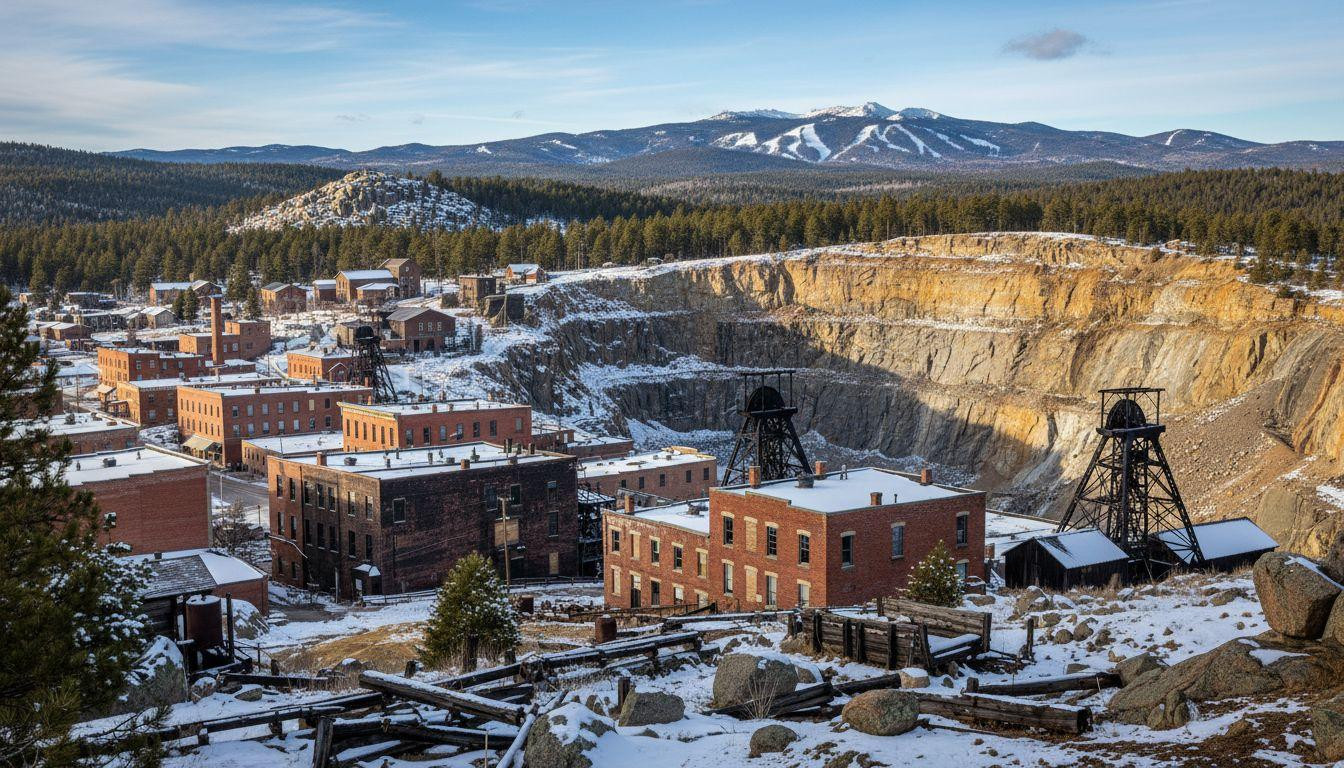
Five miles from Deadwood’s casino chaos, Lead sits quietly in the Black Hills like a secret the mining industry kept to itself. While tourists crowd slot machines and staged shootouts, this authentic mining town preserves the real story. The world’s deepest gold mine waits here, alongside powder skiing that costs half of Colorado’s prices.
Lead emerged from the 1876 Black Hills Gold Rush as something rare: a mining town that never forgot its purpose. The Homestake Mine produced 40 million ounces of gold across 126 years, creating the deepest mining operation in North America.
Why Deadwood disappoints serious mining history seekers
Deadwood draws 2.5 million visitors annually to a town of 1,200 residents. Casino floors dominate downtown square footage where mining exhibits should stand. Hotel rates reach $120-250 nightly during peak season.
The noise never stops. Slot machines ring constantly, crowds fill Main Street even in winter, and parking costs mount quickly. Historic saloons serve overpriced tourist fare while authentic mining stories disappear beneath commercial glitter.
Surface-level mining exhibits compete with flashy gambling entertainment for attention. Genuine mountain heritage gets lost in manufactured Wild West performances that prioritize profit over preservation.
Meet Lead, where gold rush history goes 8,000 feet deep
Lead’s population of 2,600 moves at mining town pace. Victorian red-brick buildings line steep streets without casino neon. The Historic Homestake Opera House anchors downtown with 1914 dignity.
The Homestake Mine legacy transforms science
The massive open pit stretches 1,600 feet deep and 1.5 miles wide, visible from downtown viewing areas. Underground shafts plunge 8,000 feet beneath the surface, creating spaces that once held Nobel Prize-winning neutrino research.
The Sanford Underground Research Facility now occupies these depths, studying dark matter and quantum physics. Scientists work where miners once extracted fortune from solid rock. Surface tours cost significantly less than Deadwood’s commercial mining attractions.
Victorian mining architecture without casino noise
Lead preserves authentic mining infrastructure alongside residential charm. Terraced mine structures create dramatic silhouettes against golden granite cliffs. Snow-dusted pine forests frame the entire scene.
The 109-mile Mickelson Trail passes directly through town, offering winter snowshoeing and cross-country skiing. South Dakota’s natural beauty extends beyond the Black Hills into year-round outdoor recreation.
Powder skiing plus mining heritage creates Lead’s winter advantage
Terry Peak Ski Area sits just 10 miles from Lead’s downtown core. Lift tickets cost $50-70 daily, comparable to regional resorts but far below Colorado’s $150-200 rates. The mountain receives 100+ inches of annual snowfall.
Terry Peak skiing without Colorado crowds
The resort features 30 trails across terrain suitable for families and beginners. January through March brings the Terry Peak Music Series, extending lift operations for après-ski entertainment with live music and regional craft beer.
Morning powder often remains untouched until noon on weekdays. Parking stays free, equipment rentals cost $35-45 daily, and slope-side dining serves hearty meals under $18. Great Plains mountain towns rarely combine skiing access with authentic heritage this seamlessly.
Winterfest 2026 celebrates community, not commerce
February 20-22, 2026 brings Lead’s annual Winterfest with snow sculpture contests, fat-tire bike races, and community soup suppers. Drekker Brewing provides craft beer tastings while local families organize bonfire gatherings.
Events cost between free and $20, focusing on participation rather than profit. The atmosphere emphasizes neighborly celebration over tourist entertainment. Authentic mining town culture emerges naturally during winter months.
Practical comparison reveals Lead’s clear advantages
Lead accommodations range $80-120 nightly for historic guesthouses and downtown Airbnbs. Deadwood casino hotels charge $120-250 for comparable winter stays. Lead’s dining averages $12-18 per meal for hearty bison burgers and mining-era comfort food.
Both towns sit 45 miles from Rapid City Regional Airport, requiring identical travel logistics. Lead’s quiet streets contrast sharply with Deadwood’s year-round casino traffic. Winter brings empty sidewalks and unhurried conversations with longtime residents.
Terry Peak snowmobile rentals cost $150 per half-day, while historic small towns throughout the region offer similar outdoor access. Lead combines authentic heritage with legitimate winter sports infrastructure.
Your questions about Lead, South Dakota answered
How do winter driving conditions affect access to Lead?
Highway 85 from Rapid City requires 4WD vehicles or tire chains during heavy snowfall periods. January temperatures average 20-30°F with frequent snow. Local hotels provide winter driving updates and equipment rental referrals.
What makes Lead’s mining history more authentic than Deadwood’s?
Lead operated as a working mining town until 2002, while Deadwood transformed into entertainment commerce decades earlier. The Homestake Mine represents genuine industrial heritage rather than recreated tourist attractions. Scientific research continues in the original mine shafts.
How does Terry Peak compare to major Colorado ski resorts?
Terry Peak offers 30 trails versus Aspen’s 300+, but with proportionally smaller crowds and 60% lower daily costs. The vertical drop reaches 1,200 feet, suitable for intermediate skiers. Family-friendly terrain and shorter lift lines create relaxed skiing experiences.
Dawn light touches Homestake’s golden pit walls as snow begins falling softly. The quiet crunch of boots on powder mingles with distant sounds of ski lifts starting another peaceful day.