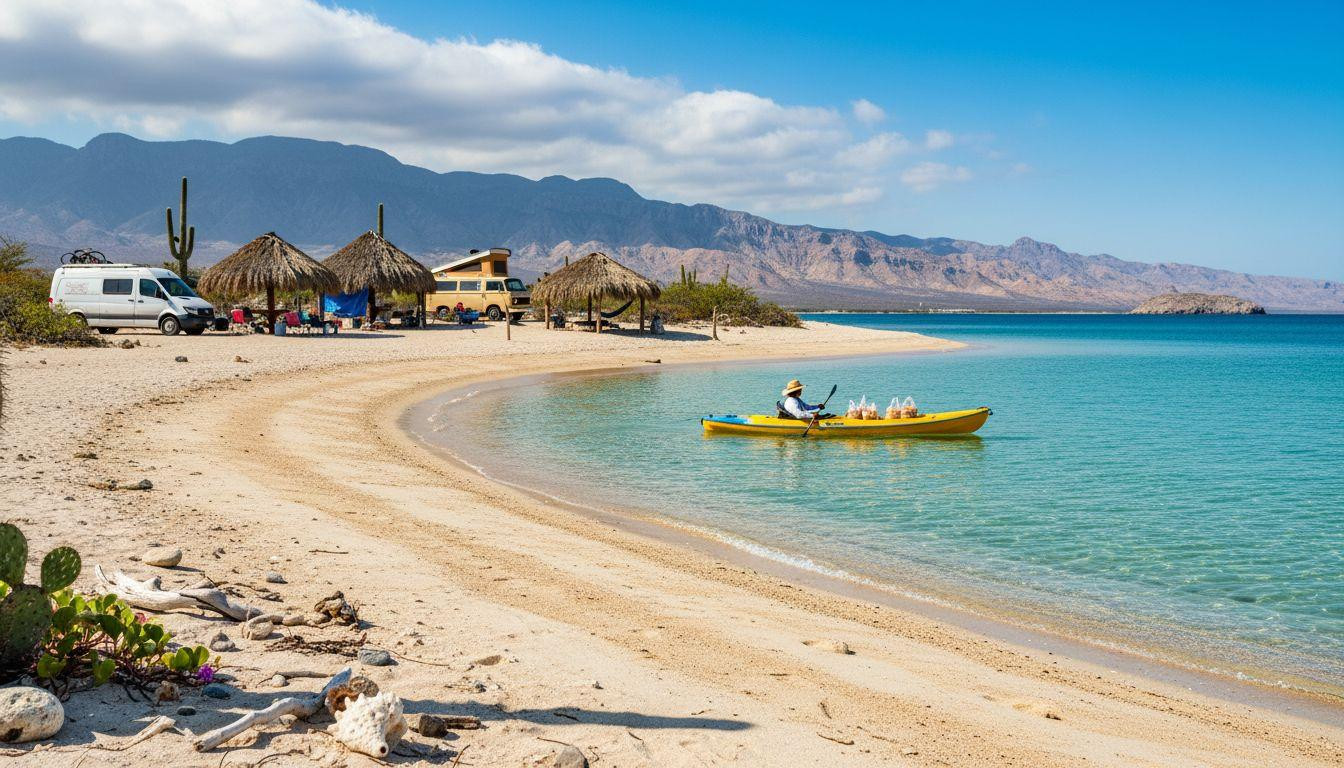
The van door slides open to reveal golden sand stretching toward impossible turquoise water. Behind you, the Sierra de la Giganta mountains rise like ancient guardians above this remote bay. This is Playa El Coyote, where desert meets Caribbean-blue sea in ways that defy geography.
At 8 AM, a kayak appears on the horizon. The vendor paddles directly to your campsite, fresh pastries balanced in waterproof bags. Welcome to Mexico’s most beautifully unexpected beach economy.
Where the desert drinks turquoise
Playa El Coyote sits on Bahía Concepción’s eastern shore, 37 miles south of Mulegé in Baja California Sur. The bay’s shallow depth and mineral-rich sediments scatter sunlight into shades of blue that belong in the Caribbean, not this arid peninsula.
Getting here requires commitment. From La Paz, drive 37 miles north on MX-1 to the km 110 marker. A 2.5-mile dirt road leads to the beach, manageable for high-clearance vehicles. Parking costs $2.50 per day, collected by locals who’ve watched over this 0.9-mile stretch of sand for decades.
January 2026 delivers perfect timing. Daytime temperatures reach 72°F while nights cool to 56°F. Water temperature holds steady at 68-72°F. Morning calms give way to gentle afternoon breezes that never exceed 20 mph.
The beach nobody planned
Zero infrastructure by design
Playa El Coyote remains beautifully unplanned. No hotels, restaurants, or gift shops interrupt the coastline. Organized camping areas charge $10-20 per night for palapa shade and basic pit toilets. Wild camping dominates the beach’s remote ends, where solar panels and composting toilets define the vanlife aesthetic.
Water arrives by vendor kayak at $1.50-2.50 per gallon. Bring your own supplies or embrace the minimalist reality. This isn’t abandonment but intentional preservation by a community that values solitude over convenience.
Pastry vendors paddle paradise
The kayaking vendors represent pure Mexican ingenuity. Every 2-3 days during winter peak season, they paddle from village to village selling fresh pan dulce. Conchas cost $1, empanadas $2.50. They arrive between 8-10 AM, still warm from village ovens.
Other vendors follow with fish tacos ($2.50), cold drinks, and shrimp cocktails. This floating economy emerged during the 2010s vanlife boom, adapting traditional commerce to roadless beaches. Remote beaches across Mexico now copy this kayak vendor model.
Spearing fish and chasing views
Clear water adventures
The bay’s 30-50 foot visibility makes snorkeling effortless. Parrotfish and rays drift over sandy bottoms that drop gradually from knee-deep to 10 feet offshore. Rocky points near Isla Coyote (1.25 miles offshore) offer spearfishing for huachinango snapper and cabrilla grouper.
Beginners catch 1-3 fish per hour with basic gear. No permits required for recreational fishing. Kayak rentals cost $15 per day at nearby Santispac beach, though most vanlifers bring their own. The 45-60 minute paddle to Isla Coyote rewards with pristine snorkeling and panoramic bay views.
Mountain trails behind beach
Easy 1.5-2.5 mile trails zigzag up Sierra de la Giganta foothills. These unmarked paths reward early morning hikers with sunrise views over the entire bay. Afternoon heat makes hiking uncomfortable, but golden hour light transforms desert cacti into sculptural silhouettes.
Stargazing reaches Bortle 2 quality. Desert destinations throughout the American Southwest rarely offer such darkness combined with ocean access.
The vanlife math that works
Daily costs break down simply. Free wild camping or $10-20 for organized palapas. Parking $2.50. Vendor meals $5-10. Total daily budget for couples: $20-40 including food and activities.
Compare this to Tulum’s $150-250 nightly hotel rates and $100+ daily expenses. Playa El Coyote delivers 75% savings while offering something Tulum cannot: authentic emptiness. Weekdays see 10-20 vehicles. Even busy weekends rarely exceed 50.
January ranks as the third-quietest month after September-October. The 60% American, 30% Canadian, 10% Mexican/European vanlife community maintains loose social connections around evening campfires. Average stays run 3-7 days, long enough to decompress but short enough to avoid overcrowding.
Recent travel surveys show Caribbean alternatives attracting budget-conscious travelers seeking authentic experiences over resort amenities.
Your questions about Playa El Coyote answered
How remote is too remote for safety?
Playa El Coyote sits 1.5 hours from La Paz, not deep wilderness. Telcel provides strongest cell service. Mulegé Centro Salud offers basic medical care 22 miles north. Emergency response takes 1-2 hours. Crime remains minimal, with occasional break-in reports but strong community watch culture among campers.
What makes January the sweet spot for visiting?
January delivers ideal weather without peak crowds. Post-holiday emptiness means 50% fewer vehicles than February-March rush. Water temperature stays comfortable at 68-72°F. Nearby Loreto offers whale watching tours. UV index reaches 9, demanding SPF 50+ protection despite comfortable air temperatures.
How does this compare to famous Tulum beaches?
Tulum offers luxury infrastructure and Instagram-worthy ruins but suffers from overtourism and high costs. Playa El Coyote provides what Tulum cannot: space to breathe. Different categories entirely. Tulum serves developed beach tourism while El Coyote delivers wilderness authenticity. Choose based on whether you prefer amenities or solitude.
Dawn breaks over Isla Coyote in soft pastels reflected in mirror-still water. Pelicans dive for breakfast while the pastry vendor’s kayak appears on the horizon. This is Mexico’s most beautifully balanced contradiction: remote enough to feel wild, connected enough to feel human.