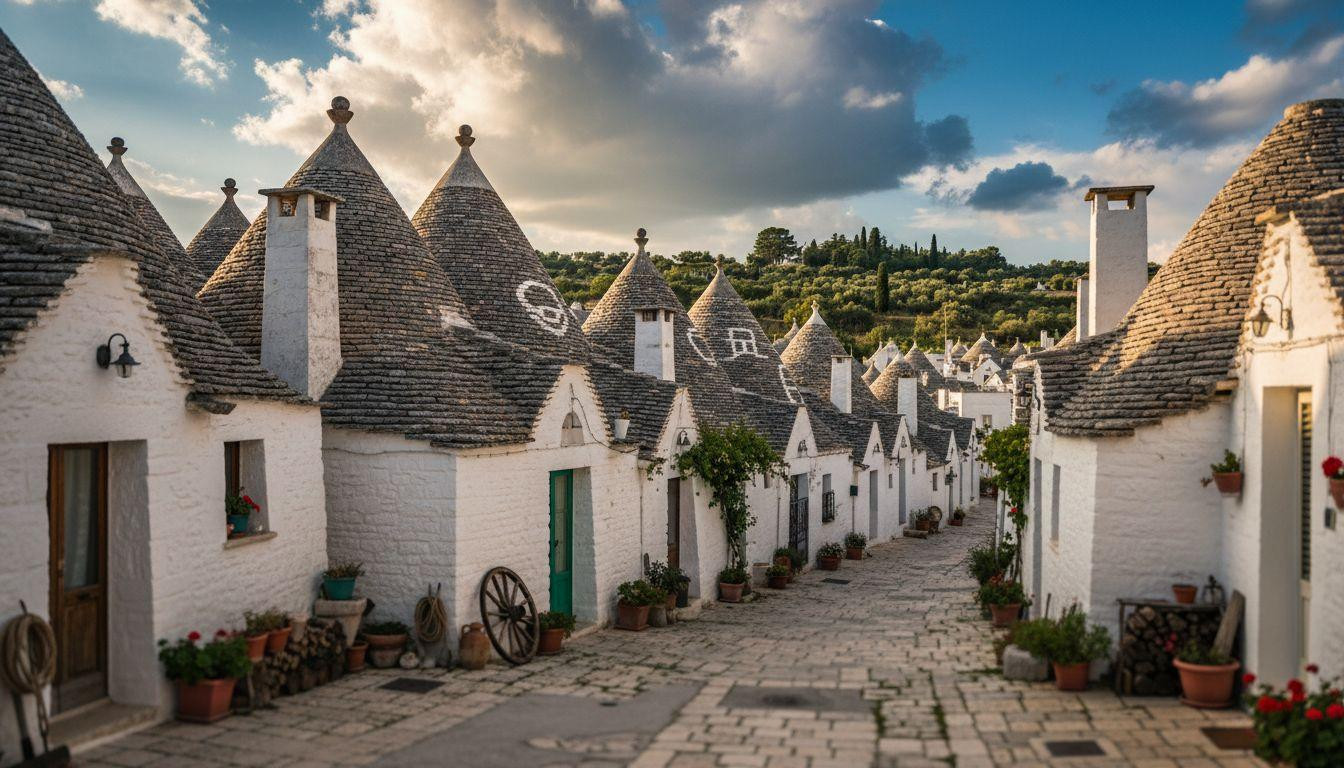
This Italian countryside village rises from olive groves in perfect limestone cones. Over 1,500 trulli houses cluster on Puglia hillsides, their gray pointed roofs piercing golden twilight. Built by peasants to dodge 17th-century taxes, these UNESCO structures still shelter families today.
The white walls glow against darkening skies. Alberobello preserves Europe’s most complete collection of prehistoric dry-stone architecture. Few Americans discover this Itria Valley gem, 34 miles south of Bari Airport.
The hillside where stone cones replaced roofs
Rione Monti spreads across the main hill with 1,030 trulli packed tight. Each cone sits on circular limestone walls up to 9 feet thick. No mortar holds these structures together.
Master craftsmen stack flat stones in spiraling corbelled layers. The technique dates back 4,000 years. Gray limestone slabs (chiancole) tile each cone, shedding rainwater down grooved channels.
Carved pinnacles crown every peak. Christian crosses, pagan symbols, and family crests mark ownership. The white walls gleam from annual lime washing, a tradition peasants maintain across generations.
Rione Aia Piccola’s authentic quiet
The residential zone holds 590 trulli where locals still live. Morning walks here reveal laundry hanging between cones. Children play in narrow alleys while grandmothers tend herb gardens.
Tourist shops vanish in this quarter. Only the soft sounds of rural life echo off limestone walls. These hilltop villages capture similar golden hour magic across Mediterranean stone.
The 17th century tax loophole that built a town
In 1620, feudal lords demanded taxes on permanent dwellings. Clever peasants built removable houses instead. When tax collectors approached, villagers quickly dismantled their roofs.
The cone structures looked temporary to authorities. Families hid in forests until inspectors departed. Then they rebuilt overnight using the same stones.
Why peasants built removable houses
The Kingdom of Naples taxed only permanent settlements. Trulli appeared as temporary agricultural shelters to avoid these levies. Local tourism boards confirm this tax evasion strategy worked for 177 years.
King Ferdinand IV finally freed Alberobello in 1797. The first legal house (Casa d’Amore) still stands near the town center. Its name means “House of Love” celebrating newfound freedom.
From poverty symbol to UNESCO heritage
UNESCO recognized Alberobello in 1996 for preserving prehistoric building techniques. The corbelled dry-stone method represents humanity’s oldest construction knowledge. These rural slums became architectural treasures.
Today, heritage protection laws govern all modifications. Only certified trullaro master craftsmen can repair the cones. This Austrian peninsula showcases similar UNESCO-protected vernacular architecture.
Walking through living history
Trullo Sovrano stands as the only two-story example in town. Built around 1900, it houses original furniture and farming tools. Entry costs $2.20 for self-guided tours.
The thick walls create natural air conditioning in summer. But winter visitors discover these homes become “excruciatingly cold” according to recent traveler accounts. Interior fireplaces struggle against 9-foot limestone barriers.
Main activities beyond the cones
Museo del Territorio offers free weekend admission to local history exhibits. Folk dancing workshops teach traditional Puglian steps. Ceramics shops sell hand-painted pottery crafted in family studios since the 1950s.
Guided tours cost $11-22 per person for 90-minute walks through both districts. This French village provides similar artisan craft experiences in Mediterranean stone settings.
Local food and trulli dining
Orecchiette pasta with turnip greens costs $12-20 in trulli restaurants. Fresh burrata stracciatella cheese arrives daily from nearby farms. Capocollo cured pork and olive oil tastings showcase Puglian specialties.
Many trulli house family trattorias serving recipes passed down through generations. Meals average $17-28 per person, well below national Italian prices.
The twilight you came for
Belvedere Santa Lucia provides panoramic views over both trulli districts. Golden hour arrives around 6:30pm in May and September. The white cones catch orange light while shadows stretch across olive groves.
Winter visits (December-February) offer complete silence and minimal crowds. January temperatures average 46-54°F with occasional frost touching cone peaks. This 1890s hamlet captures similar preserved architecture in coastal fog.
Piazza del Mercato frames trulli silhouettes against sunset skies. Professional photographers recommend arriving 30 minutes before sunset for optimal lighting conditions.
Your questions about Alberobello answered
Can you stay inside a trullo?
Yes, converted trulli offer accommodation from $66-110 nightly for basic B&Bs. Restored agriturismi cost $132-220 per night. Luxury trulli conversions exceed $275 nightly with modern amenities hidden within traditional stone.
Is Alberobello too touristy?
Rione Monti feels commercialized with souvenir shops filling every cone. But Rione Aia Piccola maintains authentic residential character. Visit early morning (7-9am) or late afternoon (5-7pm) to avoid tour group crowds.
How does it compare to Tuscany hill towns?
Alberobello costs 30-40% less than San Gimignano for accommodation and meals. Bari Airport (34 miles away) offers cheaper access than Florence. The architecture feels more unique than typical Tuscan stone towers.
Steam rises from morning coffee in the quiet squares. Limestone walls hold centuries of peasant ingenuity. These cones shelter secrets worth discovering before the crowds arrive.