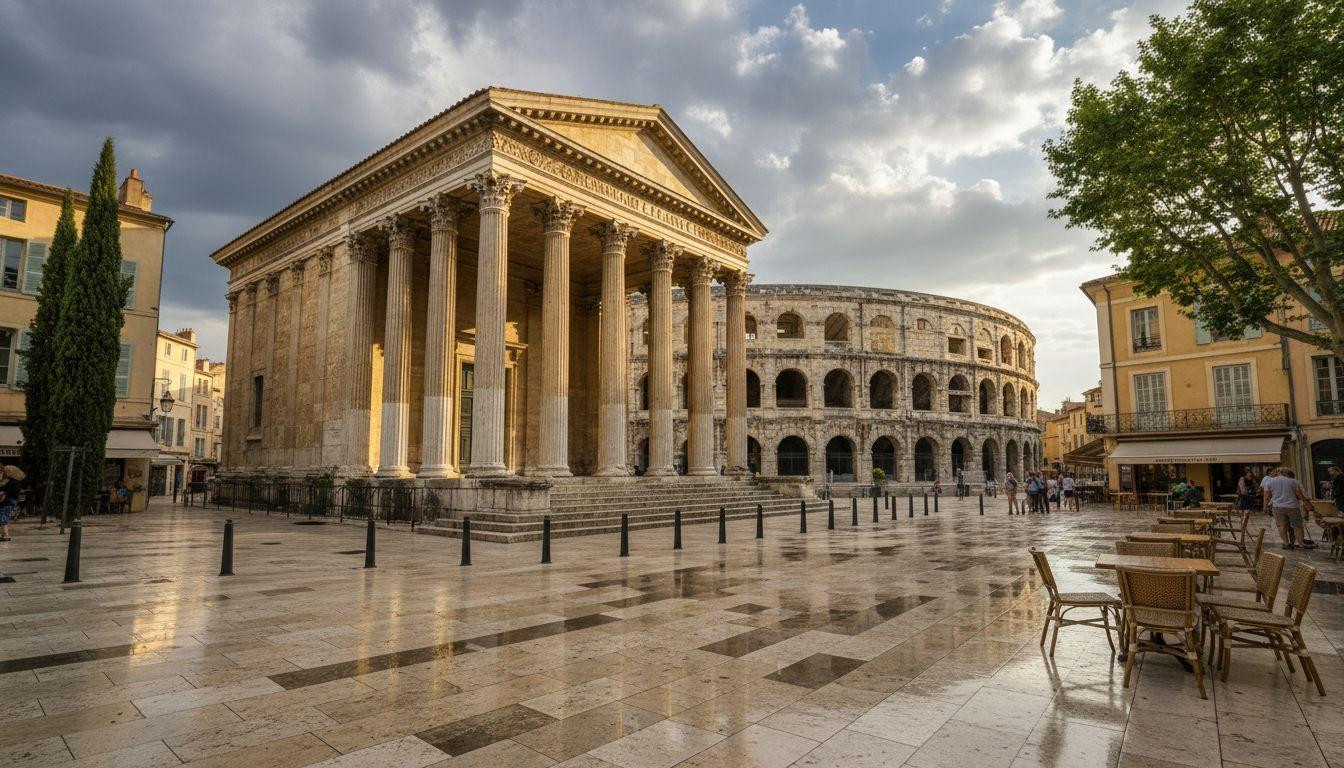
Forget Paris where Roman ruins cost $270 hotels and crowd control while Nîmes keeps the world’s best-preserved amphitheater in Mediterranean silence for $86 rooms. Built around 70 CE, this southern French gem delivers complete Roman monuments at half Paris’s price with zero queues.
Why Paris disappoints Roman history lovers
Paris fragments its Roman heritage across expensive museums and partial ruins. The Arènes de Lutèce seats barely 15,000 in crumbling condition while charging $13 entry fees.
Sainte-Chapelle draws 10,000 daily visitors to medieval Gothic architecture. Wait times stretch 30-60 minutes during peak season. Hotels in the Latin Quarter demand $220-330 nightly rates.
The Cluny Museum displays Roman bath fragments in glass cases. Visitors pay $11 to view incomplete archaeological pieces rather than walk through functioning ancient structures.
Meet Nîmes: Rome’s lost twin
The Arena that rivals the Colosseum
Nîmes Arena originally seated 24,000 spectators using 60 ingenious passageways for crowd control. Underground lifting mechanisms hoisted wild animals to arena floors during gladiator games.
Today’s 13,000-seat capacity hosts concerts while preserving Roman engineering. Audio guides explain gladiator stories as families explore intact corridors and nosebleed seats overlooking golden limestone walls.
The temple better than Rome’s Pantheon
The Maison Carrée survives as the most complete Roman temple worldwide. Built 16 BCE under Emperor Augustus, its Corinthian columns catch late afternoon light across renovated plazas.
Continuous use as temple, church, and city hall preserved perfect proportions. Travel guides confirm this rivals Europe’s most stunning architectural monuments while costing $7 entry versus Paris crowds.
The Nîmes experience delivers authentic Roman immersion
Pont du Gard’s mortar-free marvel
Located 14 miles northeast, this UNESCO site stands 160 feet tall without using mortar between limestone blocks. Built 19 BCE, the largest Roman arch spans the Gardon River in engineering perfection.
Families walk top tiers during golden hour when tour buses depart. Entry costs $11 adults, $3 children with picnic areas and swimming spots closed January but beautiful coastal towns nearby offer year-round activities.
Walkable Roman geometry
All monuments lie within 1.5 miles in pedestrian-friendly zones. The Jardins de la Fontaine surrounds sacred springs with 18th-century canals and free playground access.
Tour Magne tower requires climbing 140 steps for panoramic views over Mediterranean countryside. Medieval transformation stories reveal how residents built homes inside Arena walls from 4th-19th centuries.
Practical advantages stack up quickly
Direct trains from Paris Gare de Lyon take 2 hours 45 minutes starting $27 advance bookings. Daily frequencies include 10-15 departures with SNCF, OUIGO, and TGV operators.
Budget hotels downtown cost $86-130 nightly versus Paris’s $220-330 rates. Family restaurants serve brandade de Nîmes (UNESCO regional specialty) for $16 plates while other Roman heritage sites charge double.
Mediterranean climate provides 300 annual sunshine days with ideal April-June and September-October seasons. Languedoc wines cost $5-9 glasses near Arena while avoiding summer’s Les Férias bullfighting crowds.
Three-monument passes cost $32 families (two adults, two children) compared to individual $50+ Paris museum entries. Jardins de la Fontaine offers free stroller-friendly paths with budget alternatives throughout southern France.
Your questions about Nîmes Roman heritage answered
How do transportation costs compare with Paris tourist zones?
Advance train tickets start $27 from Paris while local transportation remains minimal due to walkable distances. Rental bikes cost $11 daily for families exploring 1.5-mile monument circuits.
What makes Nîmes Arena superior to Paris Roman sites?
Complete preservation allows visitors to experience gladiator passages, underground animal lifts, and 24,000-seat capacity. Paris offers fragmented ruins requiring imagination rather than immersive exploration.
When should families avoid crowds while maintaining good weather?
April-May and September-October provide 64-77°F temperatures with minimal tourists. January-March offers 46-54°F weather with 70% hotel availability and 40% price reductions compared to summer peaks.
Late afternoon winter sun casts amber light across Maison Carrée’s limestone facade while Arena passages whisper Mediterranean winds through empty corridors where Roman engineering still echoes.