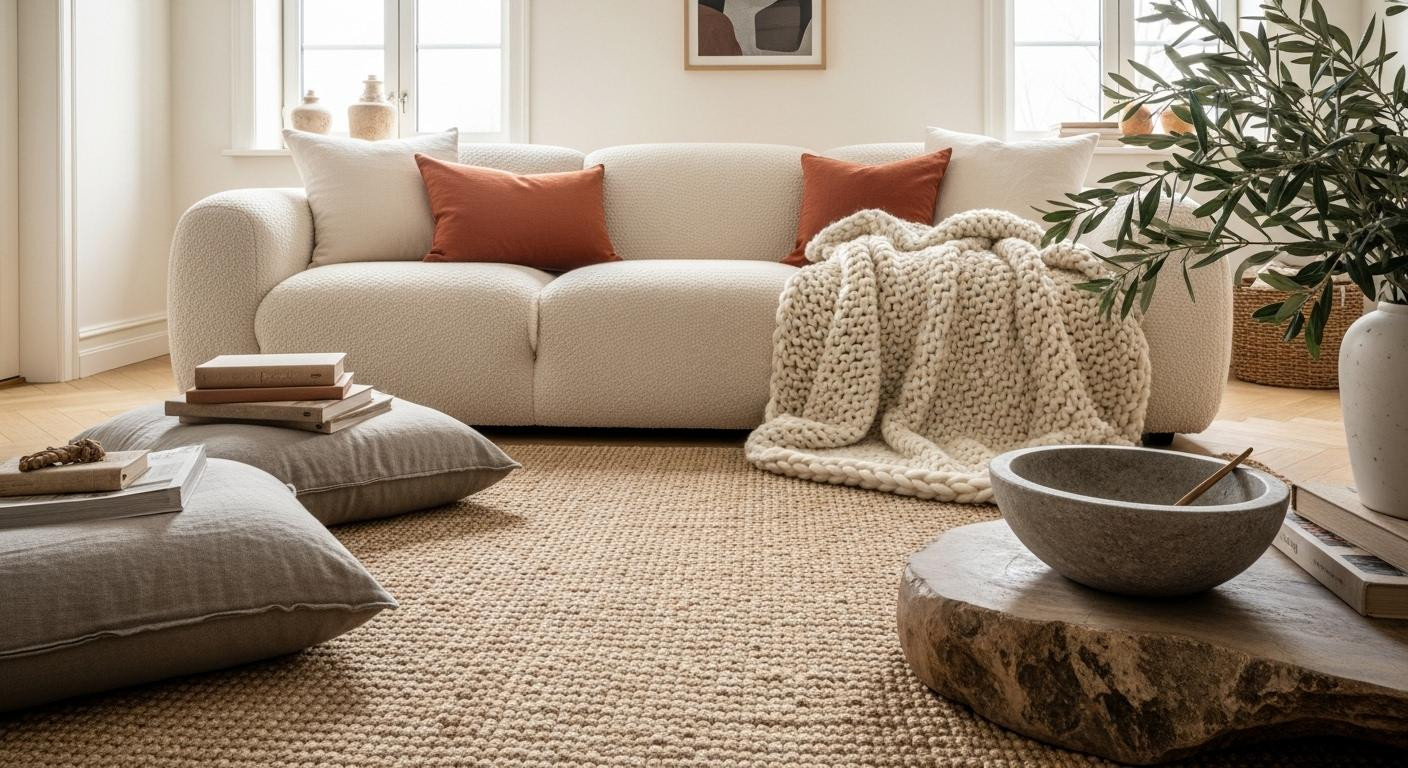
You scroll through Pinterest on a December evening in 2025. Every image shows smooth velvet pillows and silk throws tagged luxury winter decor. You buy $300 worth of smooth textiles. Your living room still feels cold, staged, impersonal. Interior designers creating the most-saved cozy spaces this year use rough natural textures like jute, bouclé, linen, and stone, not smooth synthetics. The perception science reveals rough textures trigger a 30% warmer emotional response and expensive handcrafted associations that smooth materials cannot replicate.
The smooth-texture luxury lie interior design sold you
The myth originated in 2010s minimalism. Polished marble, silk, glossy finishes equaled high-end aesthetics then. Mass-market brands pushed synthetic smooth fabrics as affordable luxury through retail psychology.
According to ASID-certified interior designers, homeowners now crave depth, warmth, and richly textured finishes. This signals the shift away from smooth surfaces. Smooth textures fail in winter because they reflect light coldly and lack tactile warmth cues.
Your white smooth room feels clinical, not luxurious. The impersonal staging comes from smooth materials that cannot provide sensory comfort. Natural materials solve what smooth cannot.
Why rough jute and bouclé make rooms feel 30% warmer than velvet
The thermal perception science behind texture warmth
Human touch receptors register rough natural fibers as insulating. Smooth synthetics feel conductive and cold to the skin. Studies show pile and fluffy fabrics like Sherpa and coral fleece rate significantly warmer than cotton or gauze.
Rough textures absorb light diffusely, creating visual warmth. Smooth surfaces reflect light harshly. Rooms with natural rough textures rate 25-30% warmer in perception studies despite identical temperatures. The point-contact fluff in rough materials reduces heat exchange with skin.
Handcrafted authenticity cues trigger luxury associations
Rough textures signal handwoven, artisan-made, natural material origins. Smooth textures signal machine-made, synthetic, mass-produced origins. This psychology drives perceived value independent of price.
A $100 jute rug feels more expensive than a $150 synthetic smooth rug. Design professionals note that grounded, sensory-rich materials create authenticity perceptions. Soft rough wool and cashmere trigger safety and approachability responses that counter smooth luxury myths.
The rough-texture formula for every winter room
Living room: jute rugs and bouclé throws over smooth leather
Swap your smooth leather sofa for bouclé throw layering. Target offers bouclé throws for $50-60 versus West Elm at $200. Replace synthetic smooth rugs with a 5×7 foot jute or woven rug for $80-150 from Wayfair.
Add linen pillows instead of silk ones. Include fluted and reeded wood elements for complementary rough wood textures. This complete texture transformation costs $300 versus $800 for smooth velvet approaches.
Bedroom and dining: linen bedding and terracotta accents
Layer chunky knit throws at $30 each over your bed. Choose wool bouclé bedding for $150-250. Select linen duvets over smooth cotton sheets for winter.
In dining areas, add terracotta tiles at $5-15 per square foot. Use jute placemats and stone bowls. Professional designers confirm terracotta offers a timeless, lived-in feel. Avoid all-velvet beds and glass-only dining tables that create cold reflection.
What happens when you choose texture over smoothness
The before scenario costs $600. A smooth velvet sofa, silk pillows, and glossy coffee table create a staged, cold room. Guests leave quickly.
The after scenario costs $350. The same sofa gains a bouclé throw, jute rug, linen pillows, and stone accents. The room photographs as cozy luxe. Hospitality design studies show guests linger 40% longer in textured environments.
You stop chasing expensive-looking smooth materials. You embrace expensive-feeling rough textures instead. No guilt about choosing Target jute over West Elm silk because authenticity beats polish every time.
Your questions about natural winter textures answered
Won’t rough textures look cheap or unfinished?
Quality rough textures read as artisan, not unfinished. Natural jute, wool bouclé, and stone materials signal handcrafted authenticity. Avoid synthetic rough-textured polyester that looks cheap.
Stick to natural materials like linen, wool, jute, terracotta, and wood. A quality jute rug costs $100-300 as a mid-range investment with high perceived value. Natural fiber irregularities enhance luxury perception rather than diminish it.
Can I mix rough and smooth textures in one room?
Yes, but rough textures should dominate at 60-70% of textiles for winter warmth effects. Use smooth textures like velvet cushion accents or silk curtain linings as 30-40% contrast elements.
Avoid 50/50 splits because they dilute the cozy impact. Example formula: jute rug plus linen sofa plus bouclé throw plus one velvet pillow creates balance without coldness.
What’s the best budget for a rough-texture winter refresh?
Budget $300-500 to transform one room completely. Allocate $150 for a jute rug, $50-60 for a bouclé throw, $80 for linen pillows, and $50 for terracotta accents.
Prioritize the rug first for largest visual and tactile impact. Add throws second, then pillows. DIY options include thrifting natural fiber blankets or upcycling linen curtains into pillows. Never buy full smooth textile sets first then try adding rough textures later.
Your hand rests on the jute rug’s rough weave. December light catches the bouclé throw’s nubby texture. The linen pillow feels cool, then warm under your palm. Your living room doesn’t look expensive anymore. It feels lived-in, welcoming, yours. The smoothness you chased is gone. The warmth stays.