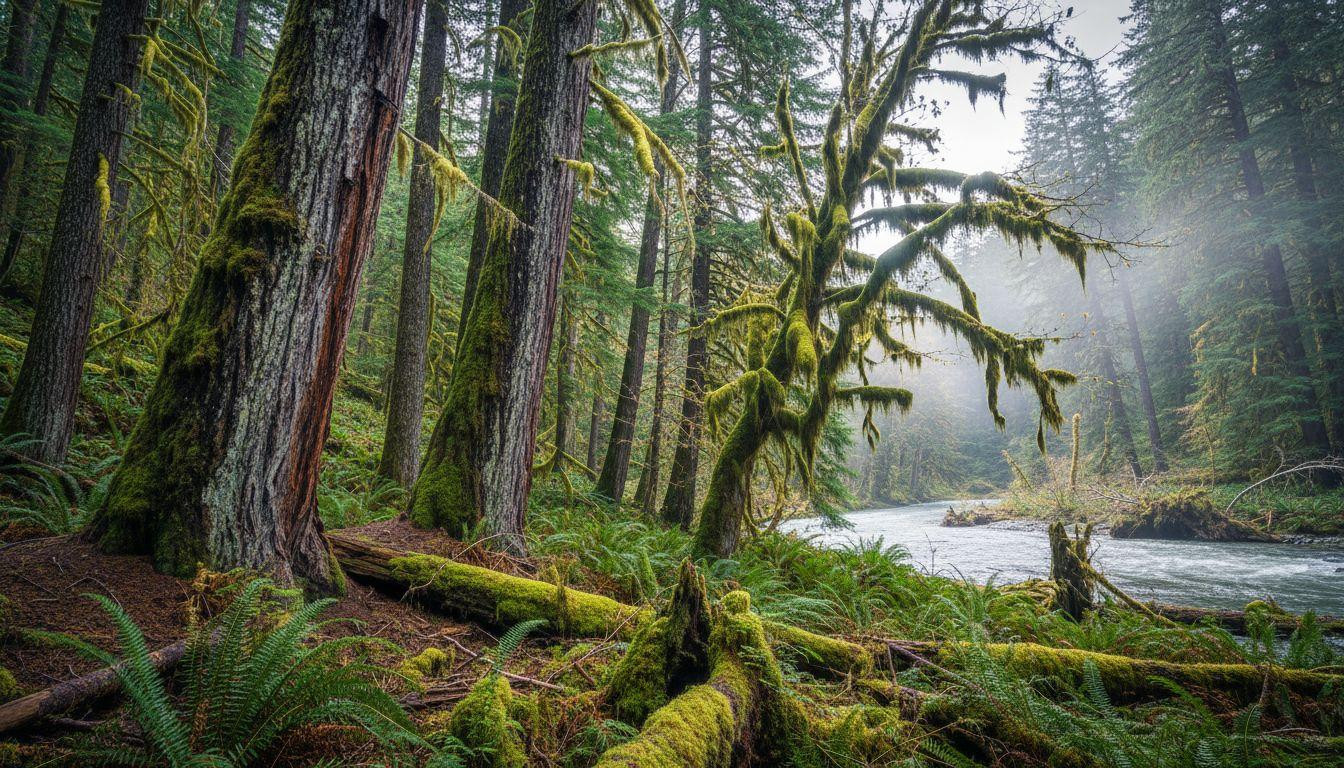
Winter rain transforms the Hoh River Trail into something extraordinary. When most Pacific Northwest trails empty out, this temperate rainforest becomes more vivid, more alive. The milky-gray glacial river rushes beside moss-draped giants over 1,000 years old. Summer crowds dwindle to just a trickle of visitors. What emerges is Olympic National Park’s most accessible winter wonder, where storm-enhanced greens create an otherworldly walking experience just 4 hours from Seattle.
5 zones where Hoh River winter trail keeps ancient rainforest empty
Each zone offers distinct encounters with this UNESCO World Heritage ecosystem. From the visitor center gateway to the elk highway turnaround, winter reveals layers invisible during crowded summer months. The trail stays flat for the first 5 miles, making it surprisingly accessible for families and casual hikers seeking serious natural drama.
Zone 1: Visitor center gateway where ancient forest begins
The trailhead sits at 578 feet elevation near the Hoh Rain Forest Visitor Center. Parking stays nearly empty in winter months compared to summer’s hour-long waits. The nearby Hall of Mosses loop (0.8 miles) provides a perfect warm-up walk. Massive Sitka spruce and Western hemlock tower overhead, some dating back over 1,000 years. Roosevelt elk often graze in meadows visible from the parking area during early morning visits.
Arrive before 8am to secure parking and avoid even minimal winter crowds. The $30 daily park pass or $55 annual pass covers entry. Restrooms stay open year-round, though the visitor center closes December through February.
Zone 2: First mile river valley where moss beard territory unfolds
The trail’s first mile showcases the rainforest’s signature look. Bigleaf maples wear thick moss coats like green fur. Sword ferns carpet the understory in dense, prehistoric arrangements. The open forest floor allows clear views of the rushing Hoh River through winter mist. Similar ancient tree experiences exist in California, but none match the Hoh’s accessible winter solitude.
Winter rain intensifies all colors. The greens become electric, almost fluorescent against gray skies. Bring waterproof boots for muddy but flat terrain. The region receives 140-170 inches of rain annually, with winter storms delivering 10-15 inches monthly.
Zone 3: Three-mile camp zone where glacial silt encounters begin
At the 3-mile marker, the trail reaches established backcountry camping areas. The Hoh River bends closer, revealing its distinctive milky-gray color from glacial silt. Water temperatures stay ice-cold year-round, fed by Olympic Mountain glaciers. Camping permits cost $8 per night plus $6 processing fee, reserved through Recreation.gov. Winter availability stays high due to low demand.
River crossings become dangerous during winter high water. The water remains undrinkable without filtration due to glacial sediment. Other glacial river destinations offer similar dramatic water features, but few remain so accessible during winter months.
Zone 4: Five mile island turnaround where elk highway activity peaks
The trail’s popular turnaround point sits at 5.3 miles one-way (10.6 miles round-trip). Roosevelt elk use this area as their “elk highway” during winter months. Herds move freely without summer hiking pressure. The round-trip hike takes 5-7 hours at moderate pace. Return before 3:30pm during December and January to avoid hiking in darkness.
This zone offers sunny lunch spots and views toward Bogachiel Peak. Winter elk sightings increase dramatically compared to summer months when human traffic disperses wildlife. The animals can weigh over 700 pounds and show little fear of quiet hikers during winter encounters.
Zone 5: Winter storm drama where rain intensifies everything
Pacific storms create the trail’s most dramatic moments. Rain saturates moss to peak vivid intensity. Mist shrouds the forest canopy while the Hoh River’s volume increases to thunderous levels. December 2025 flooding temporarily closed the area, demonstrating nature’s winter power. Winter weather adventures elsewhere require snowshoes or extreme cold tolerance.
Post-storm clarity reveals the rainforest at its most beautiful. Colors intensify, air freshens, and wildlife emerges. Check trail conditions before departure, as flooding can close access roads. Upper Hoh Road stayed open as of December 31, 2025.
Planning your Hoh River winter escape
Seattle to Hoh River Trail takes 4 hours via Highway 101. Gas costs approximately $100-200 round-trip for 2025 prices. Forks provides the nearest lodging 18 miles away, with budget motels at $80-120 per night and mid-range options at $150-200. The town population of 3,335 offers basic services including restaurants serving fresh seafood and Dungeness crab ($25-35 per meal).
Winter temperatures range from 35-45°F during daytime with frequent rain. Warm winter destinations cost significantly more, making the Hoh’s budget-friendly access appealing. Pack rain gear, waterproof boots, and layers for changing conditions.
Your questions about Hoh River winter trail answered
What makes winter the best time for Hoh River trail visits?
Winter transforms the experience completely. Recent visitor surveys confirm crowds drop to a “trickle” compared to summer hordes. Rain enhances color saturation in moss and ferns while elk move freely through the area. Temperatures stay mild (35-45°F) compared to freezing mountain alternatives. The trail remains accessible when snow closes higher elevation destinations.
How does Hoh compare to other Olympic Peninsula winter destinations?
Hurricane Ridge requires shuttles and snow gear for winter access, while Hoh stays car-accessible year-round. North Cascades rainforest areas demand longer drives and more remote logistics. Quinault rainforest receives more visitors even in winter. The Hoh offers the peninsula’s most isolated winter rainforest experience with minimal effort required.
What practical considerations matter most for winter Hoh visits?
Trail conditions stay generally safe with proper preparation. River fording becomes impossible during winter high water, limiting access beyond 8 miles. Daylight hours shrink significantly in December-February, requiring early starts for longer hikes. Weather can change rapidly, making layers and rain protection essential for comfort and safety.
Morning mist lifts from ancient moss beards while the gray-green Hoh rushes past. Winter rain has awakened the forest’s deepest colors. Elk tracks mark muddy trail sections where massive hooves passed silently through the night.