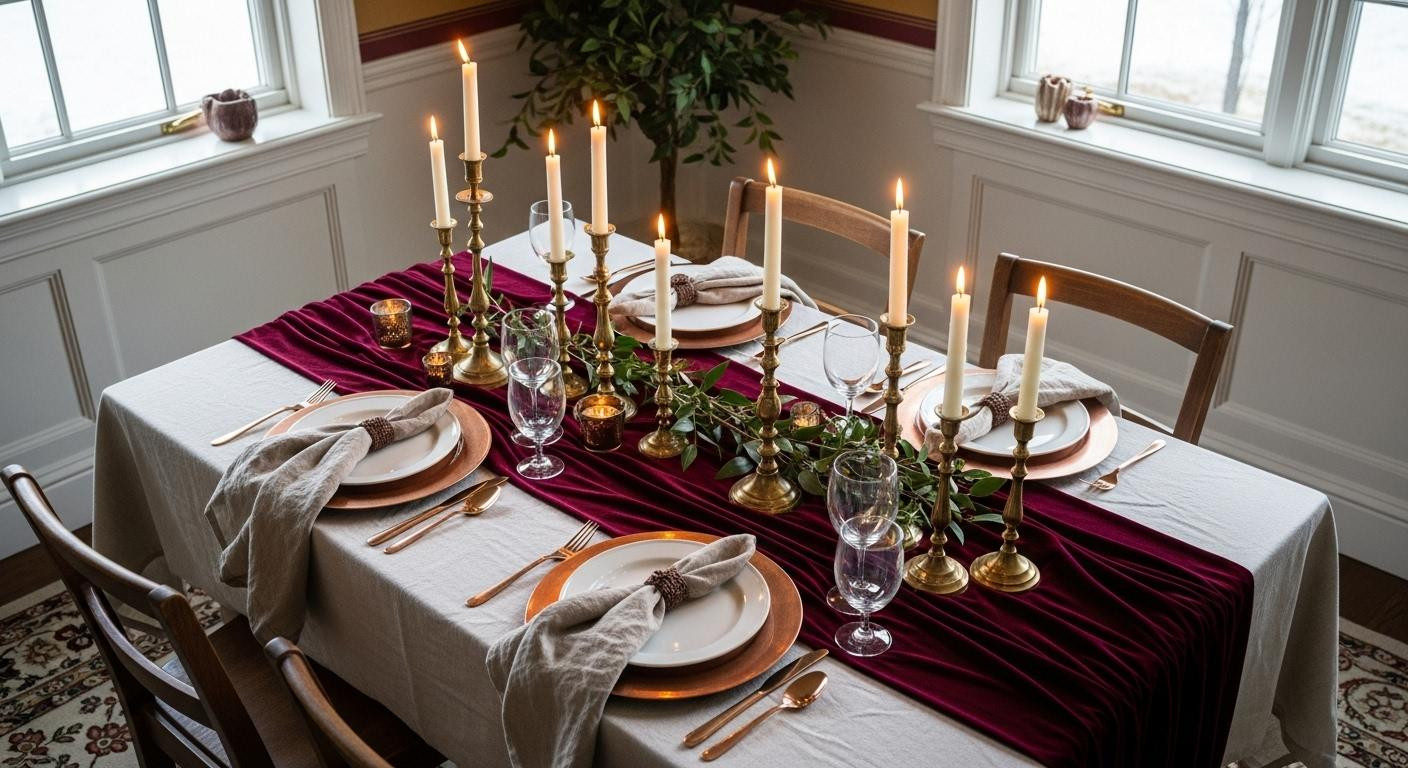
You’ve pinned 47 white winter tablescapes. Every saved image glows with ivory linens and cream candles. Your own dining room follows the formula, yet when guests arrive at 7pm in December darkness, the table feels cold instead of welcoming. Interior designers creating 2026’s most memorable winter dinners use the opposite approach. Deep, dark foundations make candlelight pop 40% brighter and rooms feel 5 degrees warmer. The science isn’t imagination. It’s thermal perception research and light physics proving what hospitality experts already know.
Why white winter tables feel cold not cozy
White and light surfaces reflect 80-90% of visible light. This creates visual brightness but psychological coldness in winter darkness. Cool-toned whites register as 3-5 degrees cooler than warm-toned darks in low-light conditions. Design professionals featured in hospitality publications confirm that winter tables benefit from heavier textures and candlelight to brighten dark evenings. The acknowledgment reveals an important truth: dark bases need brightening through contrast, not replacement. This contradicts Pinterest advice pushing all-white winter elegance as the only sophisticated choice.
Common wisdom suggests bright tables feel more welcoming. The opposite proves true once sun sets at 5pm. White tablecloths in December evening light appear stark and institutional. Dark dining rooms feel 30% warmer because warm-toned darks absorb ambient room light while creating high contrast zones. Your guests lean in naturally. Conversations deepen within ten minutes of sitting down.
The dark table physics that changes everything
How candlelight reflects 40% more dramatically
Dark surfaces like deep burgundy velvet or forest green linen absorb ambient room light. They create high contrast with candlelight, making flames appear 40% brighter perceptually. Light physics explains the effect: white surfaces scatter light broadly across the room. Dark surfaces concentrate reflection at the light source itself. Fifteen candles on a navy tablecloth create more visual impact than thirty candles on white linen. The flame becomes the star instead of competing with reflective fabric.
The intimacy boundary effect
Dark table linens create visual boundaries in open-plan spaces. The dining zone becomes a separate room within your larger area. This boundary effect triggers psychological intimacy that white tables never achieve. Interior design experts specializing in entertaining note that unexpected colors feel invigorating as we head into 2026. Dark choices break white winter monotony while defining conversation spaces. White tables visually bleed into surrounding areas, losing focal power. Your eye has nowhere specific to land.
The transformation happens within minutes of dimming overhead lights. Strategic lighting layers work harder against dark foundations. Brass candleholders multiply reflections across deep surfaces. Metallic chargers catch and bounce light upward toward faces. This creates the flattering glow restaurants charge $200 per person to achieve.
The 3 dark foundations that work not black
Deep jewel tones for winter warmth
Burgundy, emerald, and sapphire create winter magic without funeral heaviness. These jewel tones reference trending ’80s puffy bow aesthetics and bold textures like velvet appearing in 2026 tablescapes. Quality runners in these colors range from $30-80 depending on material and size. Velvet absorbs light beautifully while adding tactile luxury. Guests naturally reach out to touch the fabric. Polyester-blend options offer wrinkle resistance and machine washability for stress-free hosting.
Tartan and rich plaids anchor tradition
Vibrant stripes in unexpected colors dominate 2026 table trends. Hunter green and navy-based tartans bridge counter-intuitive dark approaches with familiar winter patterns. Plaid works year-round now instead of feeling strictly holiday-specific. A $40 tartan runner over your existing white tablecloth creates instant transformation. The pattern adds visual interest while the dark base provides warmth. Professional event stylists confirm that tartan reflects newness when used in non-traditional color combinations.
Materials matter more than price points for photographability. Washed linen in deep tones creates approachable elegance at $50-150 across major retailers. Wool-blend napkins add texture without high maintenance requirements. Budget-friendly setups achieve luxury looks through smart material mixing rather than expensive single pieces. Your $35 velvet runner looks identical to designer versions costing $120.
What actually makes dark tables feel magical
The transformation mechanism isn’t dark alone. It’s dark plus strategic warm light creating drama impossible with white foundations. LED snow projectors and interactive digital elements work as accents against dark bases. Your guests arrive expecting standard dinner. Instead they step into a velvet-dark sanctuary where candlelight catches metallic chargers and conversation drops to intimate volumes. The memorable quality comes from sensory contrast, not Instagram-bright uniformity.
Elevated vintage candleholders placed above sight-line create floating light points. Grouping pillars, votives, and tapers in odd numbers adds rhythm across the dark surface. Brass and copper accessories multiply reflections through the space. Woodland textures like birch bark runners ground the look in natural materials. The dark foundation makes every accent element work 40% harder than it would against white.
Your questions about how to create a winter dinner everyone remembers answered
Won’t dark colors make my small dining room feel smaller?
Counter-intuitively, dark table linens in small spaces create depth when paired with vertical candlelight and metallics. Keep walls light while the table goes dark. This creates focal hierarchy that makes rooms feel larger by drawing eyes downward to intentional zones. You’re not exposing cramped wall-to-wall space. The boundary effect concentrates attention where you want it: on food, faces, and conversation.
What if I already bought white winter decor?
Layer dark runners over white tablecloths for instant contrast. Use white as the plate layer over dark placemats. The combination creates dramatic effect while using existing pieces. Add brass candleholders to amplify warm reflection off both surfaces. Your $80 investment in a burgundy runner transforms your entire $200 white tablescape without waste.
How do I shop for dark table linens that don’t look formal?
Choose matte-finish dark linens like washed linen or cotton velvet over shiny satin. Pair with rough textures like jute placemats to keep the vibe approachable. Target $30-50 per linen piece for quality that photographs well without professional lighting. Machine-washable options in polyester blends eliminate dry-cleaning costs while maintaining color depth through multiple uses.
December evening at 7pm. Your hand reaches for the dimmer switch. The dark burgundy runner swallows room light completely. Then you strike the first match. Fifteen candle flames multiply across the table’s deep surface. Your dining room transforms from space to sanctuary. This isn’t Pinterest perfection attempting impossible brightness. It’s physics making magic through intentional darkness.