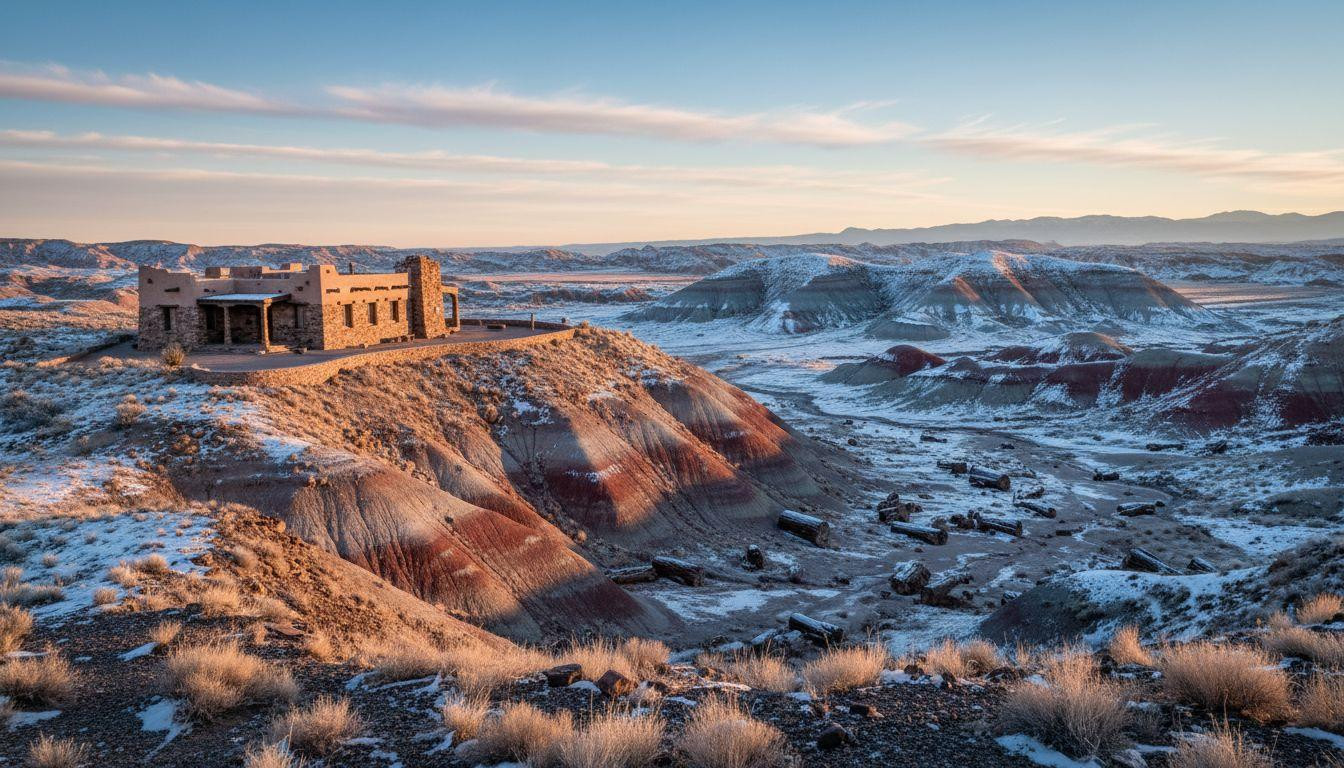
Winter transforms Arizona’s Painted Desert into something extraordinary. Snow dusts ancient badlands where crimson and lavender rock layers stretch toward empty horizons. Most visitors stick to summer overlooks, missing the desert’s most peaceful season. December through February brings solitude to 146 square miles of high desert wilderness, where free backcountry permits unlock camping zones few Americans discover.
The secret lies beyond roadside viewpoints. Remote badlands areas require hiking permits but reward with genuine wilderness immersion. January 2024 brought only 21,564 visitors to the entire park, compared to Grand Canyon’s 175,848 in the same month.
Tawa Point overlook: Pigmented brilliance without crowds
Morning light reveals the Painted Desert’s true colors at Tawa Point. Pewter, amber, and rose sedimentary layers emerge from winter mist at 5,400 feet elevation. The overlook sits just off Interstate 40, accessible via the park’s northern entrance.
Free parking accommodates RVs and cars year-round. Rangers recommend arriving before 9am for optimal lighting and minimal wind. Winter temperatures range from 21°F at night to 48°F during the day, requiring layers for exposed rim walking.
Visual drama enhanced by snow
Snow accumulates 2-3 inches monthly from December through February. White powder highlights the badlands’ natural striping, creating contrast impossible in summer heat. Visibility extends over 100 miles on clear winter days.
Access without permits
No permits required for overlook visits. The paved rim trail extends half a mile with gentle grades. Photography peaks during golden hour, approximately 7:30am in January.
Backcountry wilderness zones: True desert solitude
The Painted Desert Wilderness Loop offers 7 miles of unmarked backcountry hiking. Free permits allow dispersed camping in remote badlands beyond any visible infrastructure. Route-finding skills become essential as official trails disappear.
Winter camping zones remain completely empty most weeks. Rangers report fewer than 50 overnight permits issued annually for these areas. Below-freezing nights demand cold-rated sleeping systems.
Red Basin Clam Beds: 225-million-year fossils
This 8.5-mile backcountry route leads to Triassic fossil beds. Ancient clam shells emerge from sedimentary rock formations dating to when Arizona sat beneath prehistoric seas. GPS navigation required as terrain lacks trail markers.
Carry all water for multi-day trips. No natural sources exist in winter backcountry zones. Cell service disappears beyond the first mile from park roads.
Painted Desert Inn: Historic refuge
The 1920s pueblo-style inn anchors Kachina Point with National Historic Landmark status. Interior murals and period architecture provide shelter from winter winds. Museum exhibits detail Route 66 heritage and indigenous cultural connections.
Winter hours run 8am to 5pm daily except Christmas. The inn’s porch overlooks create the sensation of flying over red hills, as one visitor described after three days exploring the area.
Holbrook gateway and practical planning
Holbrook provides the only nearby accommodation, sitting 20 miles west of park entrances. This railroad town of 5,000 residents offers budget motels from $60-90 nightly during winter months. Route 66 diners serve Navajo frybread and mutton stew.
Park entry costs $30 per vehicle for seven days. America the Beautiful annual passes provide better value at $80. Winter camping permits remain free but require advance registration with park rangers.
Gas stations in Holbrook charge approximately $3.50 per gallon. Stock up before entering the park as no services exist within boundaries. Phoenix Sky Harbor Airport sits 3 hours south, with round-trip flights averaging $100-200.
When desert silence meets ancient time
Blue Mesa’s 1-mile loop trail winds through badlands troughs where purple and blue clay creates an otherworldly landscape. Petrified logs scattered throughout the high desert represent the world’s largest concentration of fossilized wood. Winter snow transforms these 225-million-year-old trees into artistic sculptures.
Official tourism data shows winter visitation drops to under 10% of peak summer numbers. Puerco Pueblo’s 600-year-old petroglyphs receive fewer than 20 daily visitors in January. The contrast with summer’s 90-100°F heat makes winter the overlooked season for serious desert exploration.
Your questions about Painted Desert winter answered
Do I need special gear for winter camping?
Cold-rated sleeping bags handle nighttime lows of 21°F. Layered clothing systems work better than heavy coats for temperature swings of 30 degrees. Carry extra water as desert air dehydrates faster in cold, dry conditions.
How does winter visitation compare to other Arizona parks?
Petrified Forest attracts 520,491 annual visitors versus Grand Canyon’s 4.7 million. Winter months see the lowest crowds, with backcountry areas essentially empty. Most visitors concentrate at overlooks, leaving wilderness zones to serious hikers.
What makes the colors more vibrant in winter?
Snow enhances contrast between white powder and mineral-stained rock layers. Clear winter air improves visibility while eliminating summer heat shimmer. Iron oxides creating red and orange hues appear more saturated against blue winter skies.
Steam rises from warming rocks at sunrise as snow melts into ancient sediment. The high desert’s winter silence amplifies every footstep on frosted petrified wood. This is Arizona’s most peaceful national park, where time moves at geological pace.