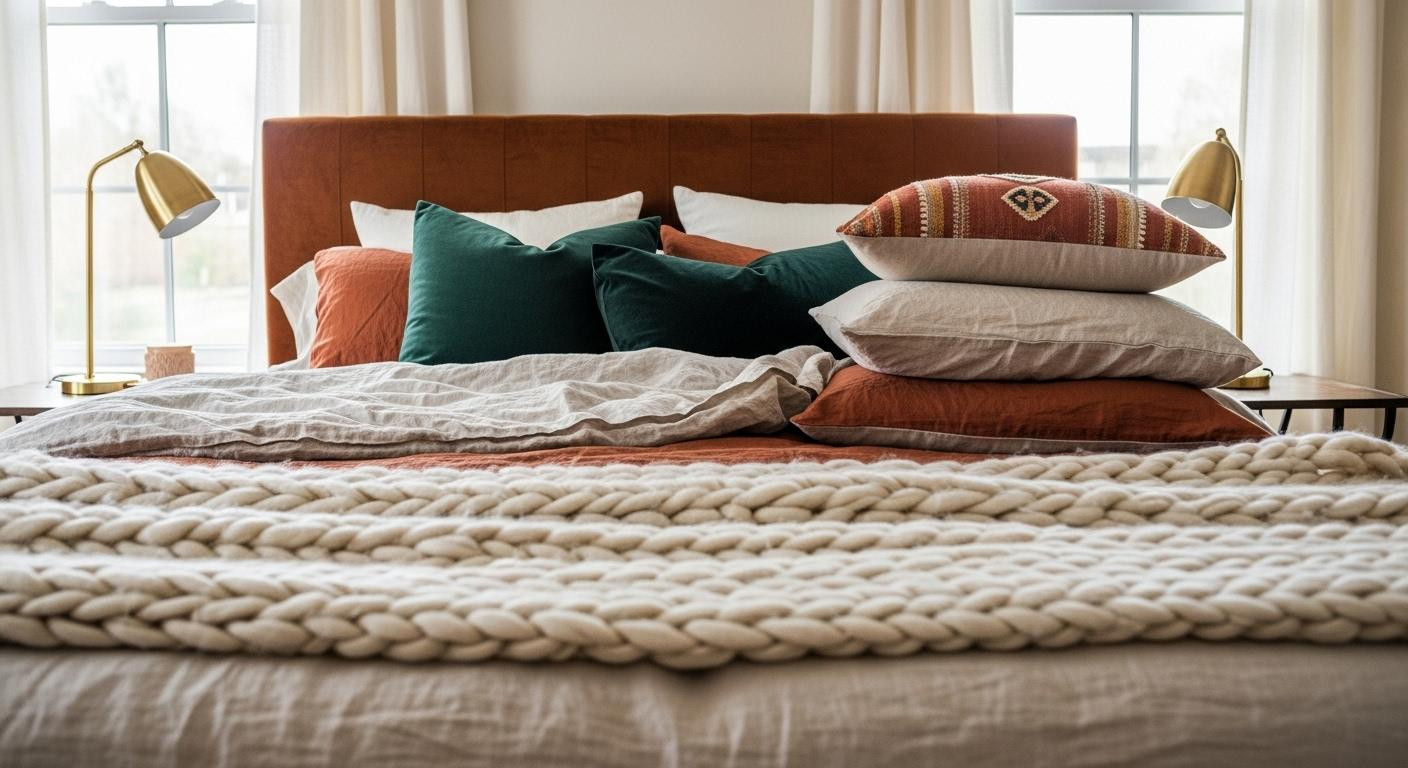
Your fingertips graze the velvet headboard. Morning light catches textured linen layers stacked across the bed. The room breathes calm before you’re fully awake. This isn’t a filter or luxury hotel suite. It’s five deliberate sensory choices working on your nervous system the moment you open your eyes. The transformation costs under $500 and takes one weekend to install.
The first layer: light that moves, not glares
Snowy morning magic starts with diffused light. Harsh overhead fixtures flatten rooms into clinical boxes. Sheer linen curtains scatter natural glow across textured walls instead. The physics is simple: soft fabric breaks light into gentle rays that shift with clouds outside. Your eyes relax instantly without squinting.
According to lighting designers with residential portfolios, ambient sources create dimensional atmosphere versus single-point glare. Target sells dimmable bedside lamps for $30 each with 2700K bulbs that mimic sunrise warmth. Pair these with $50 linen curtains from IKEA hung floor-to-ceiling. The combination transforms flat brightness into enveloping glow. Pinterest users saved winter bedroom lighting setups 2.3 million times in December 2025 for this exact effect.
Contrast reveals the power: white overheads blast sleep-disrupting blue tones at 3000K. Layered amber sources at 2700K trigger melatonin production naturally. Three-point lighting systems elevate this further with hidden LED strips behind headboards.
Texture layers that talk to your skin
The velvet-linen-wool trinity
Your hands need three distinct surfaces to explore. Smooth velvet pillows provide visual luxury at $20-80 from Wayfair. Mid-texture linen duvets offer breathable comfort between $50-150 at Target. Chunky merino throws add sculptural warmth for $100-200. The contrast creates sensory interest versus monotonous all-smooth or all-nubby bedding.
Design professionals featured in home publications confirm varied textures invite tactile engagement. Natural fibers like linen and wool provide friction that slows racing morning thoughts. Synthetic satin slides past touch without registering emotionally. The unreal quality emerges from this deliberate material conversation. Hotel bed styling techniques prove budget textiles achieve luxury perception through layering strategy alone.
Why your hands need something to discover
Interior designers specializing in sensory-rich environments note textured bedrooms calm nervous systems faster than visual-only spaces. The velvet headboard invites unconscious stroking while reading. Linen sheets create gentle resistance during movement. Wool throws demand fingertip exploration of their chunky weave. This tactile engagement grounds anxious minds in physical present moment.
Slick synthetics eliminate this grounding effect entirely. Your hands find nothing to hold attention. The brain keeps spinning without sensory anchor. Investing $170-430 total in natural-fiber textures transforms beds into interactive sanctuaries versus passive furniture.
The color temperature paradox
Why snowy doesn’t mean white
The warmest winter bedrooms avoid stark white entirely. Creamy beiges and terracotta tones create cocooning glow instead. Design experts with client portfolios observe cool whites reflect harsh light that amplifies seasonal bleakness. Warm neutrals absorb and soften illumination into enveloping calm.
Color psychology research confirms this counter-intuitive truth. Deep blues and forest greens trending in 2025 evoke chalet sanctuary vibes. Burgundies and chocolate browns add thermal warmth perception without raising thermostats. Soft neutral palettes outsell stark schemes because humans crave visual warmth during cold months.
The zero-dollar fix living in your pillowcases
Renters transform existing beds by swapping pillow colors alone. Three warm-toned cushions from Target cost $45 total. Add one terracotta throw for $50 at Wayfair. The color temperature shift registers immediately without painting walls or buying new furniture. This $95 intervention makes rooms feel ten degrees warmer through perception alone.
Compare this to replacing entire bedding sets at $300-500. Strategic accent swaps deliver equivalent emotional impact for one-fifth the investment. Professional stagers use this technique before home showings to add instant warmth.
The depth illusion: why flat fails
Single-plane beds pushed against walls read as two-dimensional furniture. Canopy frames and floor-length curtains create foreground-middleground-background visual layers instead. Design experts note canopy beds establish dramatic focal points that evoke nostalgic coziness. IKEA sells frames for $199 versus West Elm’s $800+ versions with identical dimensional impact.
Stacked pillows add sculptural depth at mattress level. Textured accent walls behind beds provide dimensional backdrop. The physics works through shadow play: multiple surfaces at varying distances scatter light into soft gradients. This depth makes 10×12 foot bedrooms feel like enveloping sanctuaries versus cramped boxes. The unreal aesthetic emerges from dimensional luxury previously exclusive to hotel suites.
Your questions about this snowy morning bedroom answered
Can I create this in a rental without painting?
Yes, completely. Focus on removable textile layers like curtains, bedding, and throws. Swap lighting fixtures to plug-in dimmable lamps without hardwiring. Peel-and-stick textured wallpaper costs $50 per roll for accent walls behind beds. This landlord-safe transformation stays under $400 total while creating deposit-protected magic.
What if my bedroom gets no natural light?
Triple your warm-toned artificial sources instead. Use 2700K bulbs exclusively, never 3000K+ cool temperatures. Install three separate fixtures: bedside lamps, LED strips behind headboards, and corner floor lamps. This $80-150 setup mimics diffused daylight even in basement bedrooms. Avoid cluttering dark rooms with excessive textiles that absorb limited light.
How do I keep it cozy without looking cluttered?
Limit pillows to five maximum and throws to two. Each textile must serve functional purpose: tactile variety, visual depth, or thermal warmth. Quality over quantity prevents decorative accumulation. Professional organizers with certification recommend editing down to highest-impact pieces only. One merino throw outperforms five acrylic blankets in both sensory experience and visual elegance.
Tomorrow morning, December 31st, you wake in your own transformed space. Soft light catches the velvet accent you added yesterday. Your hand reaches for the chunky wool throw draped across the foot of the bed. The cold hallway stays outside your sensory sanctuary. This unreal feeling belongs to you now.