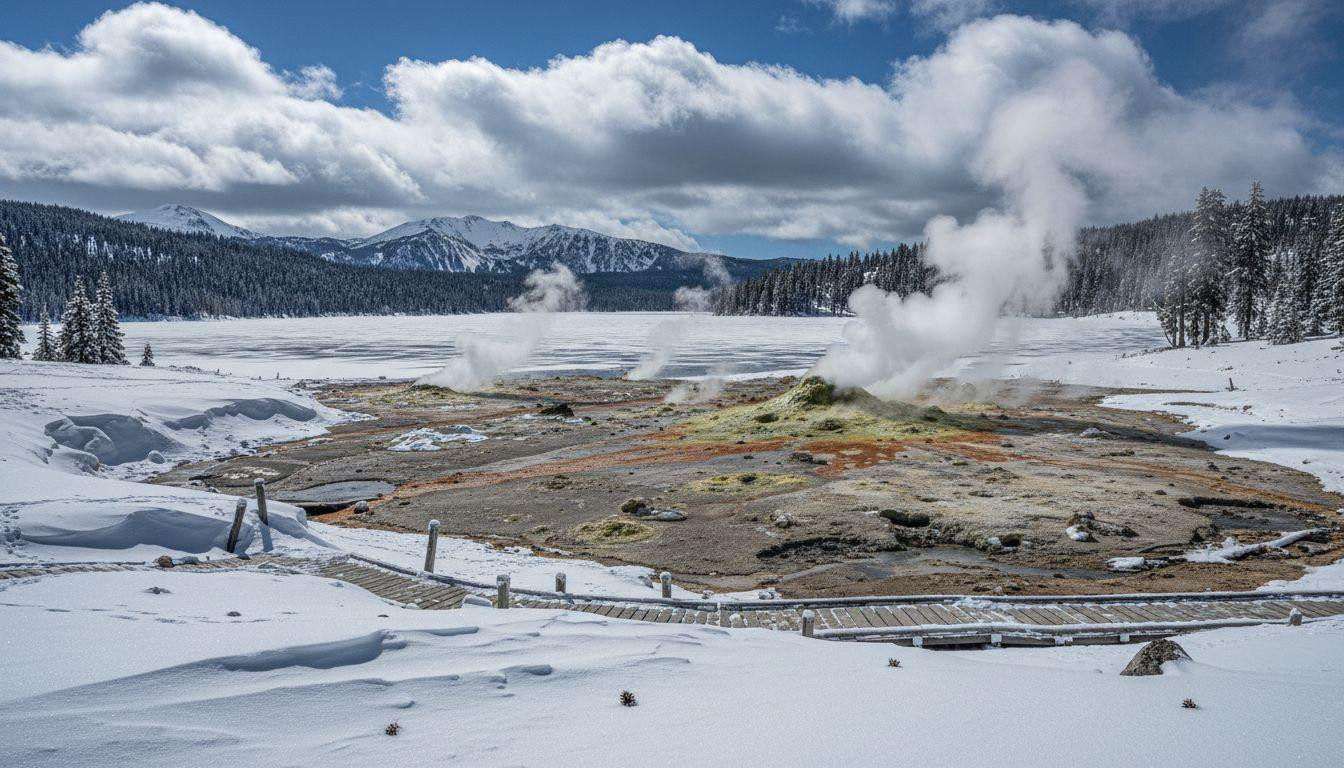
Steam columns pierce through 30 feet of snow at Bumpass Hell, where California’s largest hydrothermal basin creates an otherworldly winter scene. Sulfur-yellow vents hiss against pristine white drifts while frozen Lake Helen mirrors the pale sky. Most visitors experience this volcanic wonderland only in summer crowds, but winter transforms it into an expedition destination for snowshoe and ski adventurers willing to navigate buried trails.
The Bumpass Hell Trail officially closes each November when snowpack buries the boardwalks. Yet the thermal features keep steaming through the coldest months, creating a surreal landscape where fire and ice coexist at 8,500 feet elevation. Winter entrance fees drop to $10, reflecting the park’s transformation into a backcountry experience requiring avalanche awareness and thermal safety knowledge.
Where fire meets ice in the Cascade Range
Lassen Volcanic National Park protects remnants of ancient Mount Tehama, where the 1915 Lassen Peak eruption shaped today’s volcanic landscape. Bumpass Hell sits within this geothermal wonderland where minerals paint canyon walls in vivid hues. The basin contains dozens of active fumaroles, mud pots, and boiling pools that maintain temperatures near 196°F year-round.
Winter access requires driving Highway 36 to the park’s southwest entrance near Mineral. The main park road closes beyond the visitor center, creating a gateway to California’s volcanic heritage accessible only on foot. Snowpack reaches 30-40 feet by March, completely burying the summer boardwalk system that normally guides 300+ daily visitors during peak season.
The thermal spectacle emerges through snow
Steam plumes against winter silence
Big Boiler, the basin’s most active fumarole, creates towering steam columns visible from miles away. Sulfur deposits paint the snow bright yellow while iron oxides add rust-orange streaks around thermal vents. The contrast between boiling mud pots and surrounding snowfields creates visual drama impossible to witness in summer months when boardwalks and crowds dominate the scene.
Morning light transforms steam into ghostly curtains that rise 50 feet before condensing in the thin mountain air. The sulfur scent carries further in cold conditions, mixing with the crisp alpine atmosphere. Winter storms can create whiteout conditions within minutes, making the thermal activity both beacon and hazard for over-snow travelers.
Frozen Lake Helen backdrop
Lake Helen typically freezes solid by December, though thermal inflows keep sections partially open near active vents. The frozen lake creates a glacial blue canvas that amplifies the steam’s visual impact. From the basin’s overlook, visitors see endless Sierra Nevada peaks stretching beyond the steaming foreground, a perspective hidden by summer foliage and crowds.
Navigating the winter approach
Over-snow travel requirements
The 3-mile buried trail becomes a backcountry route requiring intermediate snowshoe or ski skills. Avalanche transceivers and rescue gear are essential on slopes approaching the thermal basin. Local outfitters in Mineral and Chester offer guided winter tours ranging from $70-200 per person, depending on group size and services included.
Most independent travelers start before dawn to reach the basin during stable morning conditions. The thermal crust beneath snow creates hidden dangers where thin ice forms over boiling pools. Winter alpine environments demand navigation skills and emergency preparedness that summer hiking doesn’t require.
What winter reveals
Winter solitude replaces summer’s parking struggles and crowded boardwalks. Temperatures range from 10-25°F during December days, with overnight lows well below zero. The thermal features create localized microclimates where steam generates fog banks and ice formations impossible to observe during accessible seasons.
Wildlife tracks crisscross the snow between thermal areas, revealing how animals navigate this volcanic landscape year-round. Lodging in Mineral ranges from $80-140 nightly, with most accommodations offering snowshoe rentals and trail condition updates.
The quiet revelation of volcanic California
Dawn at Bumpass Hell reveals steam columns backlit against purple mountain silhouettes. The only sounds are thermal hissing and occasional snow settling from nearby trees. This isolation creates an almost lunar landscape where geology performs its ancient show without human interruption.
Compared to Yellowstone’s winter geothermal areas, Bumpass Hell offers intimacy over scale. While Old Faithful attracts snowcoach tours and crowds, Lassen’s thermal features reward adventurous travelers with solitary encounters rarely possible at major national parks.
The original Kendall Bumpass fell through thermal crust here in 1864, losing his leg to scalding water. Winter visitors face similar hidden dangers where snow masks unstable ground around active vents.
Your questions about Bumpass Hell winter trail answered
Can I legally access the thermal basin in winter?
The National Park Service allows over-snow travel but strongly recommends guided tours or extensive backcountry experience. Wilderness permits aren’t required for day trips, but avalanche safety gear and thermal awareness are essential. The park emphasizes current condition checks before attempting winter approaches.
How does winter access compare to summer hiking?
Summer offers easy 3-mile family hiking on maintained boardwalks with parking often full by 9am. Winter transforms this into technical backcountry travel requiring specialized gear and skills. The thermal features remain equally active, but snow creates expedition-level challenges replacing casual recreation.
What makes this different from Iceland’s winter geothermal areas?
Bumpass Hell sits in an alpine lake and peak environment rather than Iceland’s open volcanic plateaus. The US park emphasizes safety regulations and seasonal closures while Iceland’s geothermal fields offer year-round vehicle access. California’s thermal basin provides more intimate scale with Sierra Nevada mountain drama as backdrop.
Steam rises through snow in perfect silence, creating moments when volcanic California feels like another planet entirely. The thermal hiss echoes off frozen peaks while sulfur scents drift through thin mountain air.